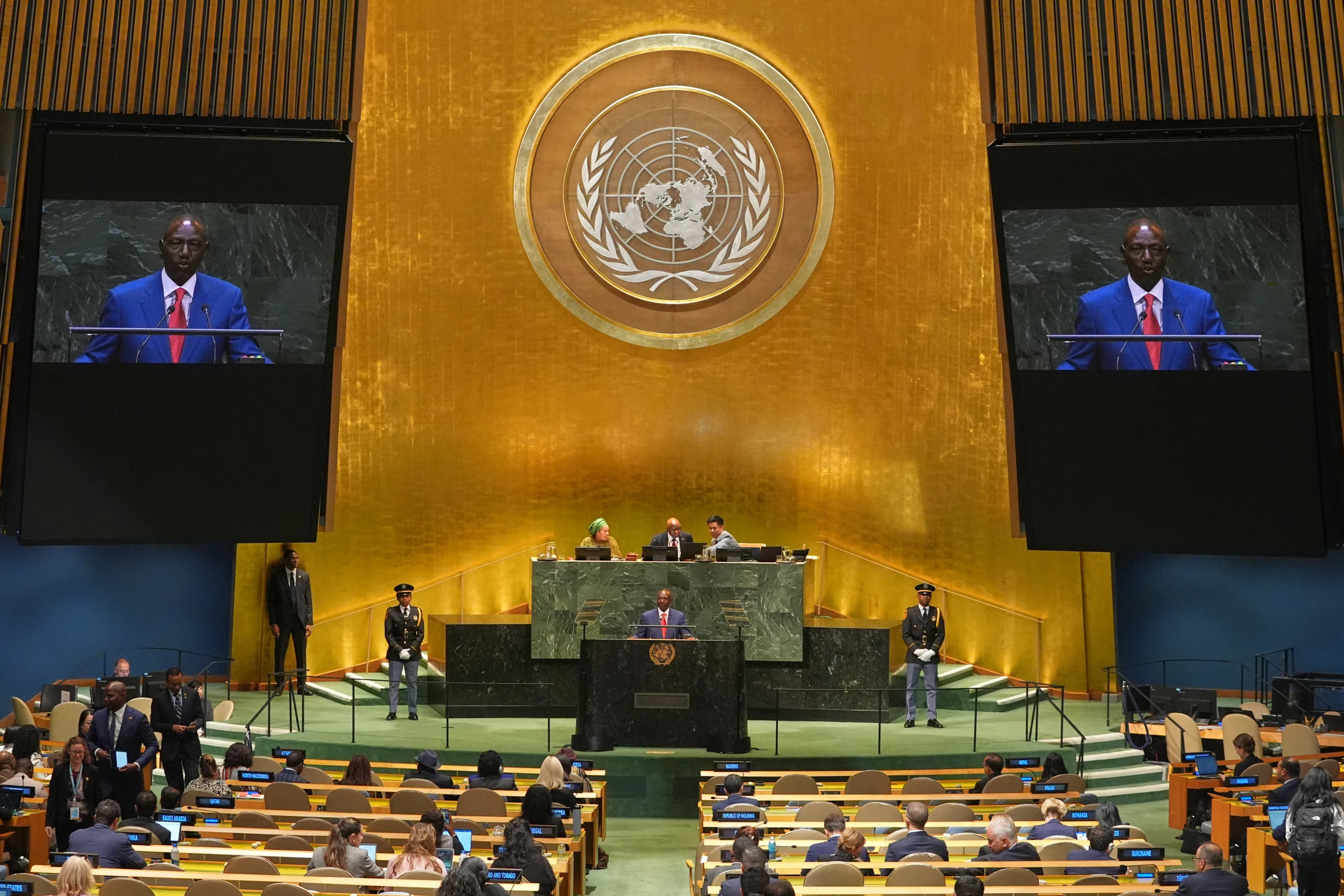
The speeches came one after another: Kenya, Botswana, and Namibia. Same building, same podium, more or less the same sentence. the continent that takes up most of the Security Council’s working day has no permanent place on it.
This is the 81st General Assembly. The complaint is older than the complaint’s own grandparents.
Here is the shape of the thing. The Security Council has 15 seats. Five are permanent and come with a veto: the United States, Russia, China, France, Britain. The other ten rotate, elected for two years at a time, and Africa holds three of them at any given moment. Three rented chairs at a table where five people own the building.
A rotating seat lets you talk. A veto lets you stop the room. Africa has never had the second one.
What the rotation actually costs
Think about what lands on that agenda. Peacekeeping mandates for missions staffed largely by African troops. Sanctions regimes on African governments and the people who trade with them. The legal definition of who counts as a legitimate authority after a coup, which is not a small question on a continent that has lived through several in the last five years.
Decisions on all of it are shaped by countries that will never live with the consequences. When a mandate is written badly, no one in Paris feels it. Someone in Goma does.
Sixty years of asking nicely
The demand is not new and it is not vague. African leaders raised it soon after independence, while the ink on flags was still drying. In 2005, the African Union turned it into formal policy at Ezulwini, in Eswatini: at least two permanent seats with full rights, veto included, plus additional rotating seats. That position has not changed in twenty-one years.
Kenya’s William Ruto put it plainly at last year’s assembly, calling the exclusion unacceptable and unjust, and noting that Africa supplies some of the largest peacekeeping contingents while remaining the only continent locked out of permanent membership.
This year, South Africa arrived pushing the same line through the intergovernmental negotiations, its ambassador in New York, Mxolisi Sizo Nkosi, arguing that elected seats are not enough.
Why it never moves
The honest answer is that nobody hands over a veto because you asked well.
Changing the council requires amending the UN Charter. That needs two-thirds of the General Assembly, and then ratification by all five permanent members. Meaning: the five countries whose power would be diluted each hold a personal off switch for the process. It is a gate, and the gatekeepers are the tenants.
The United States said in 2024 that it supports two permanent African seats. Read the small print. Without the veto.
That distinction is the whole argument. A permanent seat without a veto is a guaranteed invitation to a meeting you still cannot stop. It is being in the room, on record, outvoted. Ezulwini asks for the veto precisely because the AU learned long ago that presence is not power.
And the part we don’t like saying
The blockage is not only in New York.
Ezulwini names no countries. It never has. So the question of who actually sits in those two chairs, Nigeria, South Africa, Egypt, Kenya, Ethiopia, Algeria, has no agreed answer, and every plausible candidate has a case and a rival. Outside Africa, other blocs are pushing their own reform packages, India and Brazil and Japan and Germany among them, each with a counter-bloc organised to stop it.
The result is a negotiation that has been running for three decades without producing a single negotiating text anyone will sign. Everyone agrees the council is out of date. Nobody agrees on the replacement.
This week’s noise
António Guterres opened this General Assembly for the last time. His term ends on December 31, and he used the occasion to say what he has been saying for years: the council was designed in the aftermath of the Second World War, most of Africa was still under colonial rule when it was built, and the continent still has no permanent representation. He returned to it the next day, calling a 21st-century council without permanent African representation unjust and indefensible.
Days earlier, at a forum on the assembly’s margins, he extended the argument to money, saying the international financial architecture was built by the rich for the rich and needs to answer to developing countries, Africa in particular.
A secretary-general on his way out has the freedom to be blunt. He also has no vote.
What happens if nothing happens
Here is the part that should interest anyone under 30 reading this from Lagos or Nairobi or Accra.
The institution does not have to be reformed to be bypassed. The African Union already sits in the G20 as a permanent member, which took less than a decade of pressure, not sixty years. BRICS has expanded and keeps taking calls. Regional blocs are cutting security arrangements without waiting for a resolution from New York.
If the council keeps stalling, it does not become more important. It becomes more ceremonial. The speeches keep happening in that hall, and the actual decisions migrate somewhere else, to rooms with fewer cameras and no veto at all.
That is not a win. A world where the rules are made in ad hoc coalitions is not obviously better for a continent that has spent eighty years asking for the rules to apply to everyone equally.
But it is what stalling produces.
The 81st General Assembly will close this week. The photographs will be good. The council will meet again on Monday with the same five countries holding the same five vetoes they were handed in 1945, when most of the continent now demanding a chair did not yet exist as independent states.
Ask again next September.