

Ezra Olubi, billionaire and co-founder of the payment platform called Paystack is currently in the middle of allegations of employee abuse, co-opting of queerness to avoid accountability and mistreatment of domestic staff.
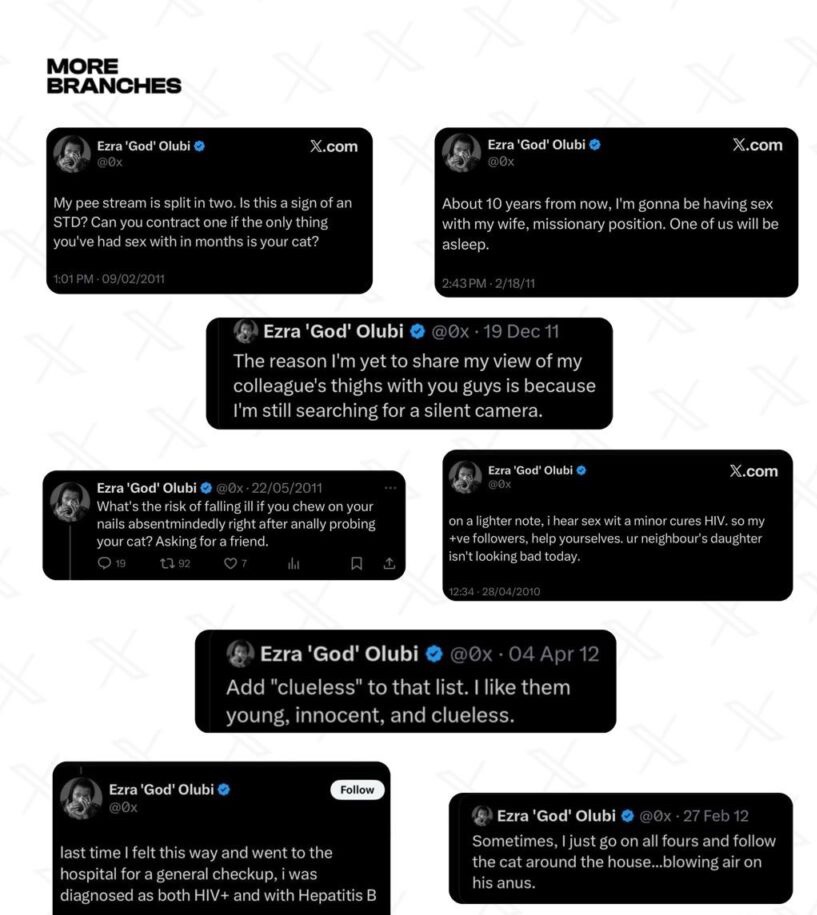
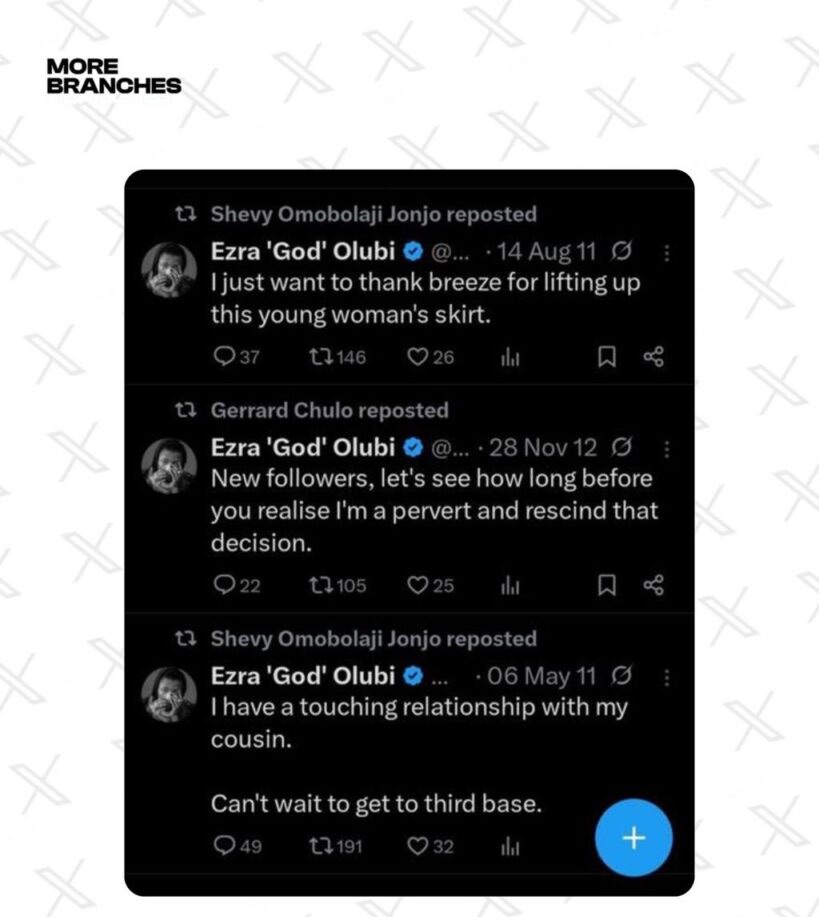
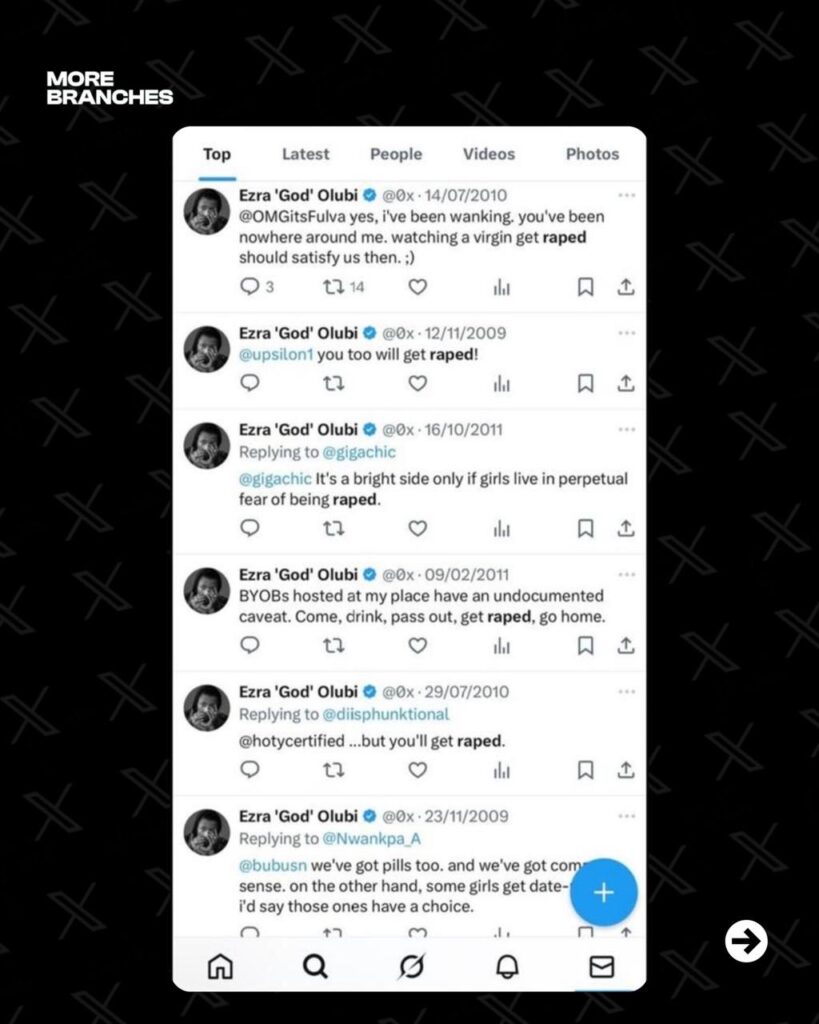
Recent discoveries of old tweets of his have also revealed disturbing accounts of pedophilia, zoophilia and rape apology.
This is what More Branches knows about the recent events if you missed it.
How It Started
- It started when Max Obae, an investor and ex-partner, made a cryptic tweet talking about wealthy Nigerians treating their domestic staff poorly.

- This was then followed by other more direct tweets mentioning how the unnamed individual in question hung around feminist women and used that to protect themself.
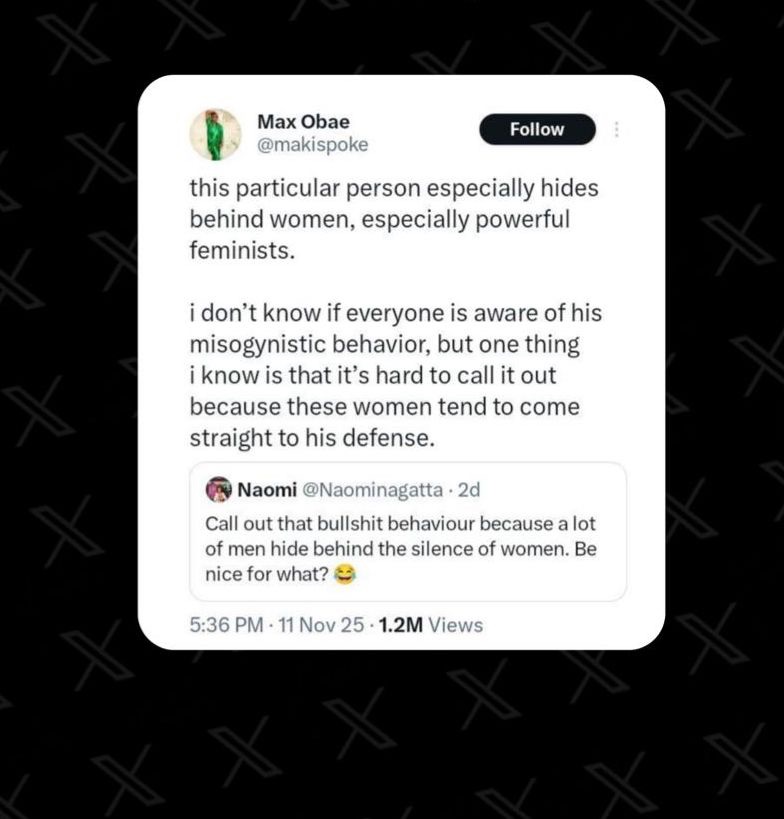
- Following the above, X users began to make references to who it could be and then Ms. Obae revealed how the person in question tried setting her up for a drug search at the airport.
She also alleged that the person in question sleeps with their female subordinates.
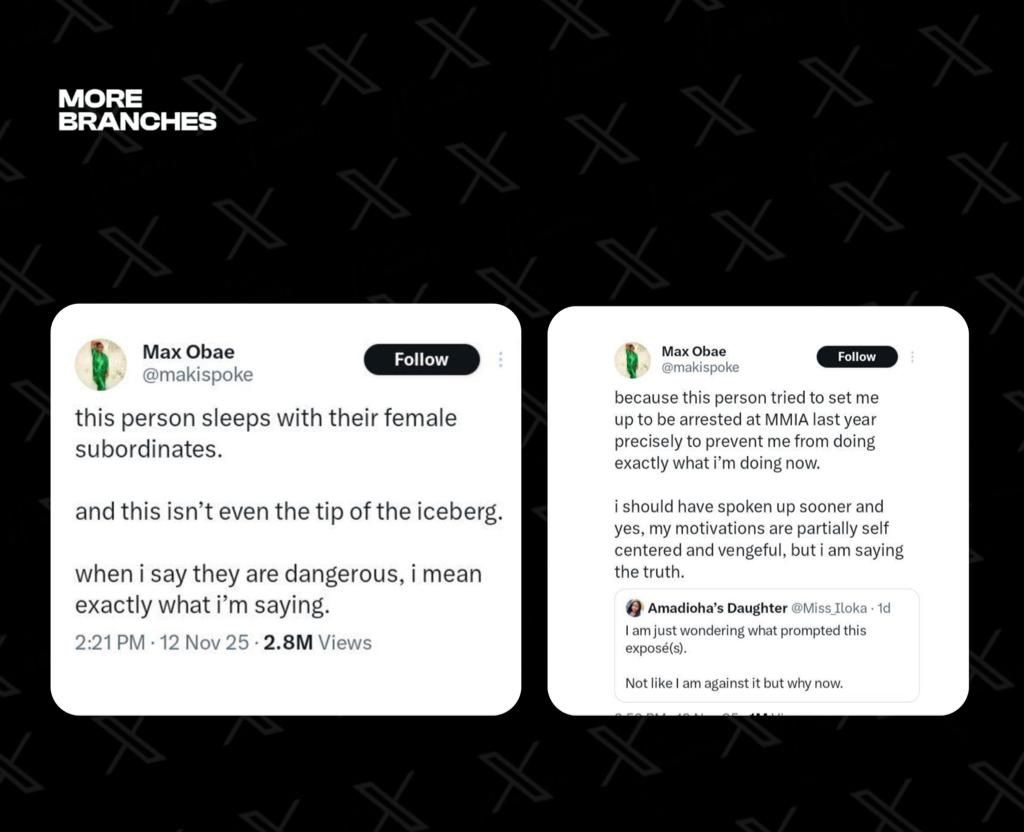
- Following the above, Ms. Obae also mentioned how the individual called himself a “God”, an allusion to Mr. Olubi’s Twitter name.
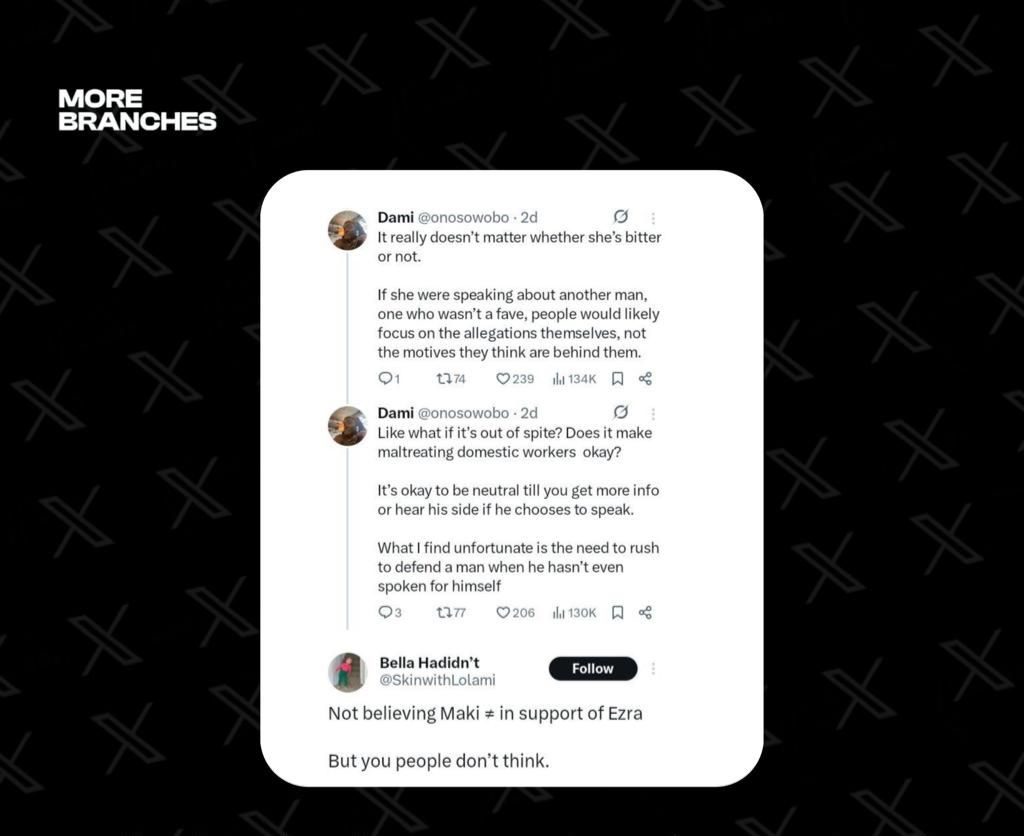
At this point, X users were not in doubt about the individual in question and several opinions were shared. Some disparaged her and some mentioned the importance of supporting even women not liked by the public.
- Around this period, a space was held by Ms. Obae where she detailed observing him treat his staff poorly amidst other allegations.
What Is Happening Currently?
Currently, Mr. Olubi has deactivated his Twitter account but this was not before some of his old tweets were discovered.
Some of the tweets spoke on pedophilia, bestiality and rape.
Mr. Olubi has been suspended by Paystack where he is the co-founder and CTO.
Allegations like this are, sadly, nothing new especially when they involve the rich and influential. They reveal how deep rape culture and the abuse of power runs in Nigeria, where misconduct is often excused until the damage becomes impossible to ignore.
The constant demand for a “perfect victim” and the use of progressive branding to mask misogyny only does more harm to vulnerable groups. We must get serious about dismantling abuse by confronting these patterns head-on, calling out the systems that enable them, and refusing to let status or wealth shield anyone from accountability.
Whatever comes next, conversations like this matter. They help shape the kind of professional environments and community norms we are willing to accept.