
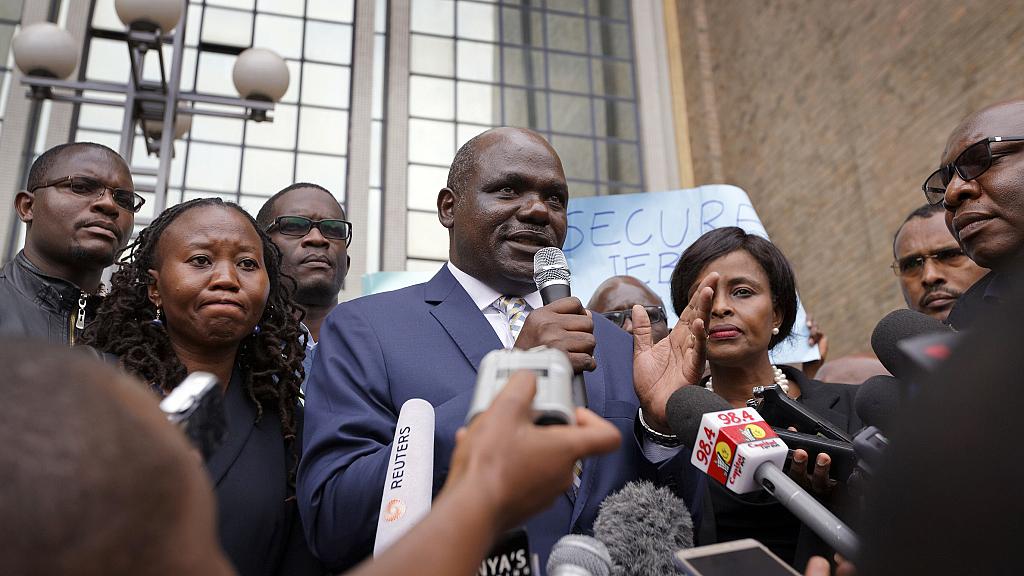
East Africa’s biggest economy, Kenya confirmed through a statement from it’s Independent Electoral and Boundaries Commission (IEBC) chairman Wafula Chebukati that the country plans on using blockchain technology to offer real-time results, as part of reform efforts to enhance the integrity of voting.
He said the technology will be used to enable presidential candidates to securely access results. Blockchain is a distributed-ledger technology that’s used to verify and record cryptocurrency transactions to boost transparency and reduce perceptions of opacity, Bloomberg Technology reports.
Kenya like most African countries has had widespread rigging and irregularities in its election process since the country adopted multi-party democracy in 1991.
Last year, opposition leader Raila Odinga rejected the outcome of two presidential polls with the first annulled by the Supreme Court, which cited massive irregularities. The violence that accompanied the disputed 2007 election left at least 1,100 people dead and displaced an estimated 600,000 others.
Based on this update from Kenya’s Electoral Commission, the Agency is looking at potential of using Blockchain technology to enable Presidential candidates to securely access results in realtime pic.twitter.com/7iKX8sEkWw
— Samira Sawlani (@samirasawlani) August 20, 2018
Kenya’s government claims it wants to promote and encourage blockchain technology for a wide array of applications, including land registry and voting.
Kenya has a Kenyan Blockchain Association. President Uhuru Kenyatta recently launched a blockchain and artificial intelligence (AI) task force for the purpose of deploying blockchain technologies within the countries existing economic framework. The eleven-member team is mandated with the task of creating a 15-year roadmap that will help Kenya reduce political corruption and so-called “red-tapism”, AfricanNews reports.
Kenya won’t be the first country to use Bitcoin technology for its election, earlier this year Sierra Leone, a country of about 7.4 million people went to the polls on March 7 and became the first country using blockchain technology for its elections. the country recorded votes at 70% of the polling to the blockchain.
The tech, created by Leonardo Gammar of Agora, anonymously stored votes in an immutable ledger, thereby offering instant access to the election results. Gammar and his team plan on expanding their product to other African countries and, eventually, to the rest of the world.
Anonymized votes/ballots are being recorded on Agora’s blockchain, which will be publicly available for any interested party to review, count and validate. This is the first time a government election is using blockchain technology. Sierra Leone wishes to create an environment of trust with the voters in a contentious election, especially looking at how the election will be publicly viewed post-election. By using blockchain as a means to immutably record ballots and results, the country hopes to create legitimacy around the election and reduce fall-out from opposition parties,” said Gammar.