
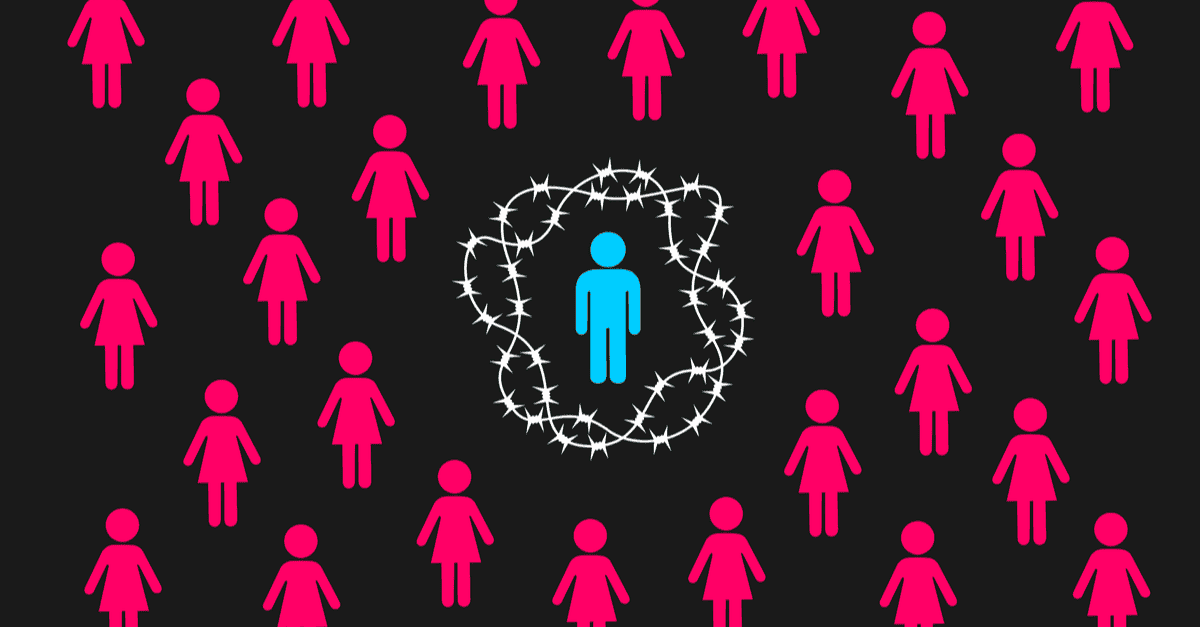
According to a report by DOHS, two women have been killed every week this year in Nigeria alone. Most of these murders are committed by men the victims knew—often partners or family members. Meanwhile, female representation in Nigerian politics is abysmally low, leading to a government that is largely indifferent to feminist issues. The promises of increasing female representation have fallen flat, leaving issues like femicide, child marriage, and the education of girls largely ignored.
But society doesn’t only fail women; it also fails men. Male homicides have only increased from the 73% recorded in 2013. Men over 35 are more likely to die by suicide, and the rate of college-educated men is declining. This is happening alongside a rise in college-educated women—an unprecedented shift in a world where women were never meant to take up space in higher education. These trends exist side by side, creating a volatile atmosphere where men feel increasingly alienated.
Somewhere on X (formerly known as Twitter), your favorite influencer is typing out how women are too emotional, illogical, and constantly manipulate men. At the same time, they argue that women are cold, calculating predators who use men for financial gain. Elsewhere, another influencer claims to pity feminists because, in his mind, they’re easy targets for men to exploit sexually. And across the globe, a third influencer blames a recently murdered woman for her own death, warning that other women like her will “get what’s coming to them.”
Welcome to the manosphere.
The Manosphere and Male Vulnerability
The manosphere refers to various online communities of men that promote masculinity, misogyny, and opposition to feminism. Popularized by figures like Andrew Tate, these spaces include Men’s Rights Activists (MRAs), Involuntary Celibates (Incels), Pick-Up Artists (PUAs), and other groups who claim to fight for male liberation but, in reality, perpetuate hatred toward women.
In Nigeria, the manosphere is alive and well on X (formerly Twitter), where male influencers thrive on stoking male frustration and channeling it into misogyny. These communities thrive specifically on male vulnerability. And while vulnerability doesn’t mean blameless, it does mean men are more susceptible to radicalization through sexist rhetoric. The result? Women pay the price for men’s unresolved frustrations.
The global rise of mass shootings and femicide is a testament to this. In 2014, a 22-year-old man, fueled by his hatred for women, killed six people and injured 14 in California before being praised as an incel hero in online communities. Here in Nigeria, the alleged killer of Christianah Idowu, the 76th victim of femicide this year, was also an active participant in these manosphere circles on X.
The coexistence of the manosphere and the continuous rage of men is no accident. These spaces claim to liberate men from patriarchal pressures but instead reinforce harmful gender roles. In reality, they push men further away from women—and from themselves.
Men who join these communities often report feeling worse about their looks, finances, and self-worth. Why wouldn’t they? These spaces teach men that to be respected, they must be ruthless, dominant, and wealthy. If they aren’t successful, it’s women’s fault. Women become the enemy, the scapegoat, for men’s inability to meet impossible standards.
It’s a cycle of self-sabotage. Instead of addressing the real issue—the oppressive systems that hurt them—men are taught to focus their anger on women. They’re told to hate the very people whose liberation could actually set them free.
Patriarchy Hurts Men Too But It’s Not Women’s Fault
The manosphere helps men misunderstand the critique of patriarchy as an attack on men or masculinity. But nothing could be further from the truth. Patriarchy harms men just as much as women, creating rigid gender roles that limit human expression for everyone. Sex-role stereotypes demand that men be dominant, stoic, and successful—and when they fail, they’re offered domination over women as a sad compensation.
Instead of redefining what it means to be a man in a world where women are finding new ways to define themselves, the manosphere encourages men to revert to outdated power dynamics. This opposition puts men and women at odds, when in reality, their struggles are linked.
(A man complaining that women are not complaining about fuel prices yet they can vote. Is the problem fuel prices or women being able to vote?)
Feminism didn’t create insecure men. Those men have always existed. As Jack Sawyer wrote in his essay “On Male Liberation,” “The battle of women to be free need not be a battle against men as oppressors. The choice about whether men are the enemy is up to men themselves.”
Accountability and True Liberation
No one should be forced into restrictive roles to define their gender identity. Bell hooks argues that patriarchy’s greatest lie is convincing men that their oppression is the natural order—that stoicism and dominance are inherent to being a man. But this oppression not only limits women, it also limits men’s humanity.
Men are often seen as the victims of war, poverty, and violence—yet men are also the primary perpetrators of that violence. They are the ones funding the war machine, shaming other men for not “measuring up,” and ignoring sexual assault against their own gender. In this sense, men perpetuate their own suffering.
True male liberation requires freeing oneself from sex-role stereotypes. Men must recognize that feminism is not the enemy but a fuller concept of humanity. Feminism sees men as both strong and weak, just like women, because true freedom means rejecting the binary roles forced on us by patriarchy.
Men Are Not Trash
Men are not trash, but they are sad. And yet, that sadness is no excuse for misogyny or violence. Men need to understand that they feel trapped because of the very system they uphold. They must hold themselves accountable for the harm they inflict on women and for perpetuating their own suffering. If men are ever to break free from patriarchy’s chains, they must first confront their own role in maintaining it.