Tag: moneyflow

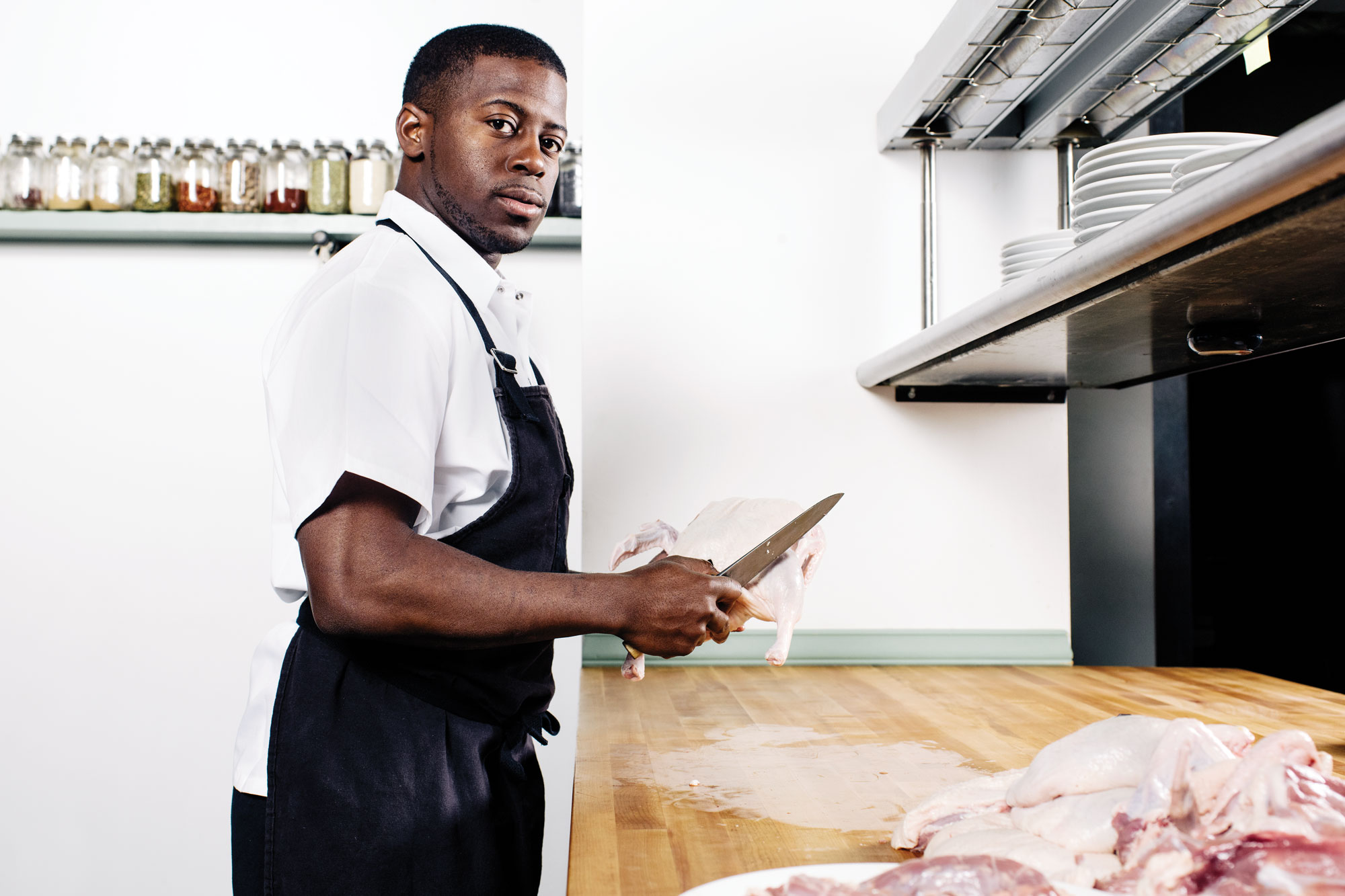
  • Money Flow #006: This Chef Fulfilled His Dream Of Running His Own Restaurant

    Money Flow #006: This Chef Fulfilled His Dream Of Running His Own Restaurant

    Money Flow is a series intended to understand how entrepreneurs within Africa interact with money and how it affects the health of their businesses


    Tell me about your business.

    I work as a fulltime chef. It’s not the type of business that you will work today and you won’t work tomorrow. Even when you take a day off, you still have to be in the kitchen to be sure of what’s coming out of it. It’s food. It can easily be compromised. 

    What’s your financial background like?

    The family I was born into didn’t have everything at their disposal. As a child, I knew that I had to show my zeal before I could get support from anyone. I had the vision that, at a certain age, I wanted to own a restaurant. It’s crazy but I started it and at some point, they supported me. 

    Do you remember the age you had that vision?

    I was 21 at the time. 

    Do you remember when you were doing around that time? 

    I was helping someone set up his own food business. 

    What was that like?

    It was in Lagos. I didn’t think I could pull it off but we did it. The restaurant is still in business but I left to start mine.  

    Did you start your business immediately after?

    It took me a year. I was 22 at the time. 

    What was the process of starting your business-like?

    I have been a food entrepreneur for about 4 years now. Before starting my business, I worked as a kitchen staff somewhere and so far, it’s been crazy. Sometimes you win some, sometimes you lose some. Because I had experience working in the food industry, I was able to understand where a food business could go wrong and I decided that it was something I could do. I am the kind of person that is open to working with different sets of people. I did not feel judged. I worked in a restaurant as a kitchen assistant. I also worked with so many other chefs. I was able to piece everything together to start my business. I would go to different restaurants trying out their meals. I also went around Lagos looking for a good space. 

    How long did that take?

    I had someone that had space at a university but the person closed down for some unknown reasons. I spoke to the person and he believed in the vision, so he leased it to me. But in 4 months I had to leave. 

    Why?

    There was a political thing going on and they wanted me out of the school. The school is like a country on its own. No matter who I talked to nothing changed. 

    I am sorry about that. How long did it take to find a new place? 

    A month. But it took a year to build it up to the way I wanted.  

    How much capital did you have at the start of your business? 

    I had over 3 million. Once you start, you can’t go back. You have to pay rent and the electricity bill is counting. I had been saving money and at some point, I asked my family members for a loan. 

    How much does your business make monthly?

    Gross sales amount to 4 million. 

    What are some of the lessons you have learned on your journey? 

    Making mistakes in business is inevitable because if you don’t make mistakes you won’t learn. It’s not perfect. As I said, I have been in the food industry for a while before I built my own restaurant. I have been able to work with different companies and this helped me reduce the level of mistakes I was prone to making. When you are able to do that, it helps you on the journey to building something standard and consistent. When your business is doing great, you need to be extra conscious of the people around you. Because not everyone wants to see you win. Some people will try their best to bring you down. 

    How do you deal with the competition? 

    When you want to start a business, you need to do a market survey of similar businesses that are already existing. All you can do is to stand out with whatever you are doing. At this point, you might need a professional. In my case, I used a food consultant. I was never in competition with anyone because the kind of meals I make are quite different. It’s not easy to get my type of meals elsewhere and that’s why I made it available. 

    Do you have a financial advisor? 

    No, I don’t but I studied accounting in school. I have a very great knowledge on how to manage the financial aspect of a business. 

    What’s your pricing model? 

    My restaurant is a bistro. Bistro is an inexpensive restaurant that serves quality and affordable meals. Pricing isn’t hard for me because of my background in the food industry. There are some factors you need to consider before selling your meal at a particular price. First, the prices of the ingredients you use, your rent, your environment, VAT, etc. All these things need to be put into consideration before deciding on your product or service. 

    What would you say about building a business in Nigeria?

    Doing business in Nigeria is a great thing. You just need to get it right. The problem with young entrepreneurs is that they do not make enough sacrifices. They think if they have the money, they can just jump into establishing the business. You need to understand the nature of the business you want to run, you need to work with companies that are in line with what you want to establish. You need to understand all the nitty-gritty if not, you would end up doing trial and error. It’s not bad to try though. Opening a  business is risky but you can reduce the level of risks. Doing a market survey, working at a kitchen outlet to know their lapses and everything, those are prerequisites for opening a food business. Opening a business in Nigeria can be gangsta but trust me, if you get it right, the sky is your limit. 

    What has been your biggest challenge so far?

    No matter where you are, regardless of the country — the UK, United States, challenges always arrive. It can’t be perfect. If it were, there would be so many businesses still running. It’s a general thing. I think Nigeria is the best place to start a business. All you need to do is make sure you have your VAT, your LIRS, and the others. This way you won’t have problems with Government agencies, because that’s the biggest challenge you can have. 

    What financial advice do you wish you knew at the start of your business? 

    I think the journey was kind of smooth for me. Although I didn’t have all the funds I needed. Before you start your business, you should have 70% of the funds. I didn’t have that. Maybe like 40%, so it took longer than expected. 

    What’s your favorite quote about money? 

    I think with money and the right experience, you can get to wherever you need to get to.

  • Money Flow #005: How The Side-Hustle Became A Full-Time Job

    Money Flow #005: How The Side-Hustle Became A Full-Time Job

    Money Flow is a series intended to understand how entrepreneurs within Africa interact with money and how it affects the health of their businesses.  


    Tell me about your business. 

    My business is a hair company focused on making hair extensions for black hair. So we produce hair that matches black hair texture. I am talking about 4c, 4b, 3a, 3c, etc. We also produce hair modelled after straight, relaxed hair. We provide protective styling options. Our products include wigs, ponytails, and clip-ins.  My company helps black women live their best life. 

    Is your business your full-time job or side hustle?

    It’s full time. It started as a side hustle though but as we scaled, I decided to commit myself 100%. 

    Can we talk about the journey from side hustle to full-time business? 

    Before I started my business, I worked as head of digital marketing at a digital marketing agency. The experience was good for me. Because of my job, I was always interested in online communities. I tested the products my business created on one of the communities I was developing. It was a brown girl page where I posted things about black beauty, skin tips, inspiration, you know stuff like that. The company was supposed to be a side hustle. Although I knew that it was the kind of thing I wanted to spend my time doing. As we grew and demand grew, I decided I wanted to commit fully to it so I resigned from my day job. Also, I did not want to waste my employer’s time and salary. You know when you are doing something exciting, you think about it all day.  I felt like it wasn’t fair to keep going to work every day when all I cared about was my business. Plus, the business was scaling to a point where I knew it needed devotion.

    What was your financial background like? 

    My dad was a consultant and my mum was a businesswoman but financially, things weren’t stable. You know how business is; earning isn’t steady until you get to a particular level. Sometimes things are rosy and other times, things are just there. It’s why I won’t say I was born with a silver spoon. My parents were just able to afford the necessary things and at times, they had to go out of their way to afford those things. 

    What is your history with entrepreneurship?

    Funny but true, I always thought entrepreneurship was never for me. I always pictured myself working in the corporate world. My passion led me to entrepreneurship. 

    Your passion?

    I love authenticity in terms of culture. I mean, the good parts of culture and who we are as black people. I felt that it was important for us to embrace our roots. Also, I have always liked online branding, marketing, and community. It is evident in the way we have grown my business. We have a community first policy. We believe in uplifting black women so we share Do-It-Yourself tips to help black women live their most authentic life.  

    How did you get the idea for the business?

    I started by solving my own problem. I wanted to wear hairstyles that looked just like my natural hair, but there were hardly any options in the market. I created protective hairstyles for myself and a lot of people liked them, including black women living outside Nigeria. It was clear that I could scale this product by leveraging on a network of hairstylists–give them access to a global market and help them make more money.

    How much did you have at the start of the business? 

    I started with $1,000.

    How much does your business make every month?

    We currently do $20,000 – $40,000 in revenue monthly depending on the season of the year.

    Tell me about your journey so far? Lessons, mistakes, and goals. 

    I have learned so much about marketing and customer behaviour. The tea about entrepreneurship is that you learn every day. Some days are better than the others and you have to keep your head up. It would be a mistake to spend time dwelling on something that can not be changed. As an entrepreneur, you can not afford to wear your heart on your sleeve. The ultimate goal is to be one of the top brands catering to black beauty. 

    Have you ever received a grant or loan? 

    Yes. At the start of my business, I got a loan from my friend who is now my husband. He gave me $500. 

    Are you open to sharing equity?

    I am open to sharing equity with investors. That would be in line with our vision as a company. As we grow to reach more markets, we would need more money and then we would be open to sharing equity with investors. There is no rush though. When it’s time, we want to be sure that both parties have value to offer. 

    What’s your pricing structure like?

    We are an analytical company. This means we factor in the entire journey of getting the product to the customer and based on other factors, we decide how much profit we want to make on the product. 

    What would you say about doing business today in Nigeria?

    It can be better.

    How?

    We need an enabling environment. We have an infrastructural problem in this country. If we have better infrastructure, definitely things will be better. An example is the transport system. Customers could order for something in Abuja and get it the next day. If Nipost was more efficient and more affordable, we would be able to ship worldwide with them instead of these private companies that are much more expensive. Also, I would say more transparency with funds available at banks. Another thing would be businesses sharing their journeys so that people can learn. Instead of  the typical God’s grace. I know that God’s grace plays a role but there are still practical steps that people can learn from. 

    What’s the biggest challenge you face doing business in Nigeria?

    Banking and Logistics. We receive lots of payments and banks are not as friendly to small businesses as we would like. Also, managing the delivery schedule is quite difficult.

    What’s the costliest mistake you’ve ever made? 

    A photoshoot I did but I eventually didn’t use the photos because they were below standard. It was at the beginning. We did not have proper mood boards for the shoot. After the shoot, I knew that the pictures were not the kind I would like to share with my customers and community. It was costly to discard those photos but it did not fit into our brand and we could not sacrifice that for anything. 

    What financial advice do you wish you knew at the start of the business?

    Start small and always test your ideas before going full scale.

    What’s your favourite quote about money?

    The Money wey we get e no go finish o. It’s a line from a Wizkid song that I find funny and deep.

  • Money Flow #004: Learning About Money, From The Entrepreneur Whose App Helps People Save

    Money Flow #004: Learning About Money, From The Entrepreneur Whose App Helps People Save

    Money Flow is a series intended to understand how entrepreneurs within Africa interact with money and how it affects the health of their businesses.  


    Tell us a bit about your business

    My business is an automated savings and investment platform that helps Africans better manage their finances by making it clearer and more transparent. Our platform helps Africans save and invest automatically. We are focused on low to middle income earners who are struggling to meet up with their responsibilities and payments because they have no way of saving up. 

    What was your financial background like?

    I had a very decent, fulfilling upbringing. We had everything we needed, went to the best schools, etc. My parents paid our fees promptly, so we actually didn’t experience any financial discomfort. 

    What is your history with entrepreneurship? 

    From an observational perspective, entrepreneurship has always been around me. All my life my mom ran, and still runs, a side business. Personally, I ventured into entrepreneurship about 7 years ago, right out of university.

    How old were you when you started your current business?

    I started my first company at 19, and the current one at 22.

    Tell me about your first business.

    Our first business was an employment platform that connected employers to pre-screened job seekers. We ran that from 2014 till mid 2016 before handing it off to a different team. We also had a couple of separate products that didn’t quite work out.

    How much did you have at the start of the business and where did the money come from? 

    At the start of our first business we had $25,000 in seed funding from an investor. And that pretty much kickstarted everything for us.

    What lessons have you learned on the journey so far?

    Do work you care about.

    Have you ever received a grant or loan? 

    No, I haven’t, but I know that for most of those applications, the key is a great application.

    How do you deal with the competition?

    Honestly, mine and my co founders’ strategy has always been to bullishly execute without paying too much mind to competition. I don’t think the goal is a monopoly, so I just work single-mindedly towards my goal and my vision regardless of what anyone else is doing. The standard to beat is the one set by me.

    What do you know about equity?

    Quite a bit actually, haha. I’ll say this though, you don’t want to have too much equity, but you DEFINITELY don’t want to have too little. Any other thing, you’ll have to pay for a consultation with me.

    How do you decide on the pricing of your products and services?

    A number of factors including the cost of producing that product or service, the problem my product or service solving, the alternatives that exist and their costs, and the perceived value of the product or service.

    What would you say about doing business today in Nigeria?

    It’s incredibly challenging because Nigeria is a tough place for anything. The lack of economic stability, reduced spending power, incredibly volatile regulatory policies all contribute to the challenging business landscape in Nigeria.

    What’s the biggest challenge you face doing business in Nigeria?

    First, funding. It’s stupid hard to get funding as a startup in Nigeria. I believe it’s a bit easier now, but when we started, it was more complex. And then being a black woman, the regular-degular mix of unmistakable sexism and racism–from the international folks, can make it really hard to just keep moving. But it’s rewarding to see the results of all that work.

    What financial advice do you wish you knew at the start of the business?

    Not really financial, but overarching business advice. Hire slowly, and only when there will be a perceptible addition to the bottom line, whether as a direct or indirect product of creating this new position.

    What’s your favourite quote about money?

    Money is only a tool. It will take you wherever you wish, but it will not replace you as the driver. –Ayn Rand

  • Money Flow #003: The Risky Businesswoman Surviving The Hair Business

    Money Flow #003: The Risky Businesswoman Surviving The Hair Business

    Money Flow is a series intended to understand how entrepreneurs within Africa interact with money and how it affects the health of their businesses.  


    Tell me about your business. 

    My business is a full-time job but also a side hustle. Let me explain. So my business is the dream, it’s the future. It’s my future. But to fund the dream, I need a 9 – 5 because there is the security of a paycheck at the end of the month, even though it is not enough. You know how business is; it’s great when it’s great. When it isn’t great, you are just going to be suffering. 

    What exactly does your business do?

    My business provides goods–weaves and extensions and services–wig making, hair laundry, coloring, and styling, to women in Nigeria and beyond. I cater to women of all age groups. The goal is to help more women get creative with their looks.

    How long have you been in business?

    3 years plus. 

    What was your financial background like? 

    I was definitely not born with a silver spoon. I was born with an okay-enough spoon to get me through, private primary school, government secondary school, one private university, another government University. So I can say my spoon was pretty bronze. My financial background was steady but rocky sometimes. My mum worked at this job which was great but it was a contract job. When there was no contract, no money came. My dad had a thing he was doing. It was personal business. It was a lab thing. It wasn’t great but it was good.

    What’s your history with entrepreneurship? 

    Listen, every time I tell this story, I laugh because it’s a funny one. The first time I was exposed to entrepreneurship, my mum had this poultry farm when I had just finished secondary school. We had land that was not in use at the time. My mum is a business woman. Actually, I was exposed to entrepreneurship from the womb. My mum has been selling stuff since I remember. There is no business you can name that my mother has not done. She has done it all.

    So yeah, she thought the land was wasting and we decided to start her own poultry farm. She started with 100 birds, I think they were broilers. And when it was time to sell it off, it became a problem. My mother would want to use us as free laborers. I mean, my brother would be by the side of the road shouting, “Buy your chicken” during festive periods. I just knew it wasn’t for me. My mother would ask me to do it and I would tell her I couldn’t do it. I couldn’t sell anything. Eventually, she had to hire people because it wasn’t working for us at all. That was my first exposure to entrepreneurship and I was like nope, not for me

    But let me tell you the funny story of how I got into the business. I was at 200 level in university. My great grandmother had just died. So I went to Anambra for this burial. While I was there, I asked my mother for money. She was the one we always asked for money because she made more money. They had sent me money before I came and I spent a week in Anambra for the burial. When my mother told my father that I was asking for money, he was like, “ah ahn, did we not just give her money last week?” She now rubbed his back and said, “Two more years and we will never have to give her money again.” I was standing just at the door to their room, overhearing this conversation and thinking so these people are planning to cut me off after I graduate. It hit me that I was going to be independent. 

    I started thinking of what would happen when I graduate and I want to buy things for myself and can’t afford it because my parents have cut me off. I was like nopes, we can’t have that. I started thinking of something I could do for myself. Something to fall back to–a bedrock. I thought about what I was good at. I wanted a hobby that would earn me money. I knew I was good at picking out nice hair. Even if I bought a weave for 20k, the way I would carry it, someone would ask if I had bought it for double the price. I know how many people I plugged to my plug when I was in Benin. So I thought, man, I could buy hair to sell. The business started as a poverty alleviation thing. When people ask, I say I got into entrepreneurship when I was trying to not be poor. I won’t lie to you, it wasn’t a passion thing. Even though I love hair, I didn’t start my business because selling hair is sweet. No, I started because I didn’t want to be hungry. I knew if my parents cut me off, I wouldn’t have anything, I started the business with buying and selling weaves which eventually became me making wigs myself. I got all the wig tools. I also ship in wig tools.

    How much did you use to start your business?

    When I had the plan, I told everyone about it but it seemed like a dream that would never come true. At 300 level, something happened. It was the year of MMM. When I knew about it, it wasn’t popular. There was a girl in my hostel. She had graduated from school a while ago. She was another entrepreneur that inspired me a lot. She used to make cakes. She made a lot of money from making cakes. She bought a car, a house and now she owns a bake shop. She doesn’t even know but I stan her. I was in her room one day and she was like ah, they’ve paid me. I asked her who was paying her, that I need them to pay me too. She gave me the MMM gist. Do you see how people are cashing out from Piggyvest referrals? That was me with MMM. I made money off that shit. I started putting money in MMM by April or May and by June I was telling people about it. I earned more on referrals. So at the start of my business, I had 100k but I did not put it all into my business because I needed to go to Lagos. I did not want the person I bought hair from in Benin to be my supplier because his hair was expensive. I didn’t want to start off expensive because nobody would buy it.

    I had a boyfriend at the time who helped, he was in Lagos, he went to the market with me. The 100k also included getting a hotel in Lagos for two nights plus transportation. He added about 50k so I had 150k at the start of my business

    Did you lose money to MMM?

    Yup, about 200k in December 2016.

    How did this affect you?

    It was bad, but I had a business. It wasn’t necessarily my business money I lost but it affected me. Also, indirectly because my boyfriend, at the time owed the business about 70k that he lost to MMM. I suffered that loss.

    What is your pricing model like?

    For my service, I monetize my effort, stress and time. For my products, I make sure I make a profit of at least N5000 on every sale. Also depending on how valuable my product is, I put my profit at any amount.

    How has the journey been so far?

    My entrepreneurial journey has been a lot. I did not know much. I was taking shit as it came. After sourcing for a supplier at Balogun market, I would buy hair from her to sell. After three months, I found out she was ripping me off. The hair I bought from her was too cheap for her to sell to me at that rate. It was crazy. Let’s say what I would buy for N5 is supposed to be sold at N1.50k but she knew I was new. Also, I came to her shop with a man. Don’t ever go anywhere to buy hair and carry your boyfriend. She took advantage of me. I make it a point of duty to make a profit of N5000 on any hair sale except during discount sales. Sales are great.

    If you used to get two customers before, during sales you get 10. I think, in retrospect, I should have done proper research.  I should have done feasibility studies, you know, proper business things before starting. But as I said, I started it to evade poverty. If you start a business to run from poverty, you will probably follow my footsteps. Also, I was so timid. Someone would buy something from me and come back to tell me it’s spoilt. It didn’t even have to spoil. They probably won’t brush the hair well but then they’d call me to cuss me out. Next thing you know I’m crying and asking them to send the hair back, not anymore. I find that people take advantage of refunds so now I don’t do it. I find other ways to compensate.

    What other ways?

    Other ways like a good discount on their next order. I could throw in a free closure or free service like wigging, delivery, whatever.

    Okay…

    But whatever you buy from me now cannot spoil. If it’s something that can spoil, I would let you know. I give my customers terms and conditions at the point of sale. I learned that people really just want to be satisfied. A satisfied customer does way more for you than any advertisement. I used to sell hair at my old school. It was a private school with rich kids. That really helped me. It was a huge platform for me. If I didn’t have it, Ò pa ri o. If I sell weaves to 2 girls in a Faculty as big as Law in that school, people would ask them where they got their hair from and then they would put me on.

    My greatest achievement is that I am still in business after all this time and obstacles. The hair business is very capital intensive. If you don’t have money, you can’t do it. That’s the truth. If you don’t have money, you will start with low-quality hair which is great because it’s cheap and people will buy it. But they will never come back because that first sale would color their minds about your brand. Another achievement is registering my business, getting a corporate account, and applying for funding. I am in the works of getting a POS now. I would have never imagined that I would get here so yay me.

    Have you ever received a grant or loan?

    Nope. I have been offered a loan once. The thing is the person was proposing a partnership. I have a problem with partnerships. I think it stems from how my business started. I told you I was in a relationship and he added some money to my capital. That made him think he was a partner and he started telling me that he needs to be making a profit. So I run away from partnerships. If you want to invest in my business, I want something like a loan that I could pay off. Proposing a partnership gets a no from me. I’m one of those people who would never publicly trade their company or sell shares to anyone. It’s solely mine. I built this thing on my hard work, my blood, my sweat, my sleepless nights, my almost failing exams. So, no partnerships

    How do you deal with competition? 

    It’s hard. I tell myself what’s mine is mine. Before it used to suck, especially when my friends buy hair from someone else. I would feel like dying. But now, I’m like who go buy hair from me go buy. I step up my marketing strategy on social media. Social media is my shop. I try to reach out to more customers and all. But honestly, it will come to you. Do the work you are supposed to do and hope it comes to you.

    Do you have financial advisors? 

    My financial advisors are my best friends. It’s funny because I can’t afford a real one right now. But when I need to make an expensive decision, I let them know and they give me great advice. At the end of last year, I wanted to buy a really expensive phone that worried my friends because it wasn’t necessarily a wise financial decision to make. But I knew it was going to help with my work. I’m on my phone 24 hours a day so I need a phone with optimized speed, battery life, and camera. I needed the best of the best. Besides running my business online, my 9 – 5 requires me to be online. It’s content creation so I have to be online. A lot of my friends advised me against it. They suggested something just as good but cheaper. My brain wasn’t agreeing with what they were saying. So I found a way around getting the phone.

    How?

    I got a phone from the US. My cousin helped me buy it on credit. They give you a credit card and you have to pay it off over a specific time. That way I didn’t have to spend all that money at once. I am gradually paying it off.

    What would you say about doing business in Nigeria?

    It is really really hard.

    Honestly, if you have an alternative, don’t do it. A lot of people see me and think it’s glamorous. I have helped so many women get into the hair business but I also know three who have stopped because dem no fit. Even me, I no fit. I honestly don’t know how I’m still here but thank God I guess. Doing business in Nigeria is a shitshow. Logistics services will fuck you up. I saw a tweet that said, “Vendors propose, Delivery people dispose”. It’s so true. I sent out a wig on Wednesday. By Thursday morning, the dispatch rider called the customer to say his bike had some faults but he would still deliver. That package didn’t get delivered till Friday. I was just frantically texting him. Business in Nigeria makes you a crazy person. 

    What is your biggest challenge in Business? 

    Logistics. Logistics. Logistics. Eventually, when I have left this ghetto 9-5 behind, my goal is to have a logistics company that works for only me. I have cut the one I am working with off so many times and threatened to stop doing business with them. But I still use them because they are the best out of the rest. And that sucks. Also, scammers. So because my business is online, I suffer a lot. They are people who have money and want to buy but they ask, “is there pay on delivery” and I say no. And they say, “sorry, I have been scammed before”. There is no convincing them. I apologize and give them my word, that I would not take their money and run. It doesn’t change their mind though. Out of 10 people like this, only one took a chance on me and didn’t regret it. Scammers ruin things. Nobody wants to be giving someone on the internet over 100k to buy a wig and get scammed

    Your costliest mistake? 

    One time, I did a waybill with one transport company I won’t mention. They said the bus had an accident and it wasn’t insured. Then, I used to give the drivers the packages to deliver. I didn’t register it or insure it. It was over 200k but my luck was that this person was an understanding woman, so we split the bill 50/50. It had happened before. The customer was trying out a new product I had just bought and it wasn’t great. So she told me she understood that I didn’t produce the hair so she proposed splitting the bill. Some clients are angels. I almost lost over 200k but that woman split the bill with me.

    Something you wish you knew at the start?

    The first thing is to document everything. I didn’t do that before but now I have records. Another thing is having a rate card. Especially if you are providing a service like making wigs, hair laundry, treatment, etc. I didn’t have a rate card until this year. People would ask me to make wigs for them and because of friendship, I would accept N2000 from them, never again. If I could go back to 2016, I will tell myself, girl you better have a rate card. It’s not negotiable. It’s your service. It’s not like a product you are buying and reselling. You can bargain the price of my products but not my service. A client once asked to make their wig for free. I said I never work for free. Another advice; separate your personal finances from your business finances. Another advice I would give is to add the price of shipping to the product and then declare shipping free.

    What’s your favorite quote about money?

    ‘Money gives you the power to do whatever you want to do. I like the idea of being in complete control of my life.’ by Louise Mensch That’s me. I hate being at the mercy of anyone. So if my money can buy it, I will buy it. I love being able to control things with funds that’s why I love that quote

  • Money Flow #002: The Solopreneur Securing The Bag At All Cost

    Money Flow #002: The Solopreneur Securing The Bag At All Cost

    Money Flow is a series intended to understand how entrepreneurs within Africa interact with money and how it affects the health of their businesses.  


    Can you give me a brief summary of your business?

    I run an online natural hair and skincare product manufacturing business based in Lagos. We deliver nationwide and worldwide. Our products are handmade and all natural. We make soaps, body creams, hair creams, body oils, hair oils, facial masks, body scrub and many more from natural derivatives in Nigeria. 

    How long have you been in business?

    5 years.

    What was growing up like financially? 

    I grew up in an okay household. We were your average, middle class family. Well, until my mum lost her banking job and we fell into deep penury. I think that’s when I learned how to save money because no one was giving me pocket money anymore. I started depending on myself at 19. I learnt how to hustle and save from very small money. Till today, I don’t know how I did that. 

    What did hustle mean for you? 

    Hustling meant finding money anywhere where e dey. At a time, I was working ushering jobs. I made hair at some point even though I wasn’t so good at it. I was running a mobile hair service where I would come to your house and treat your natural hair.

    I did anything and everything I knew I was good at during that time to get money.

    Things were really hard. It was so bad that my dad would have to go to a party to get us lunch or dinner for the day. It is surprising that I didn’t do sex work because I was really desperate. Well, I didn’t because I couldn’t.  

    Now?

    We are still there but things are much better. I still try to save a lot and that helps. I hope to start investing too.  

    How much did you have at the start of your business? 

    One kobo I did not have. I used to braid people’s hair. It was home service so the price depended on what they wanted to do to their hair and their locations. The highest I ever got was N6000 — transportation included. A customer of mine whose hair I was to braid asked me for coconut oil. So I went to my supplier to get some.  

    You had a supplier at that time?

    She wasn’t a supplier then. She was just someone I knew sold the things I needed to work but now, she is one of my suppliers. 

    Okay. So…

    I went to my supplier to get the coconut oil. I bought that bottle on credit. I paid the woman after my customer paid me. There was about N200 gain on the transaction. That was how I started. She kept buying and soon enough other people started asking for coconut oil. And I would collect money, buy, brand and give to them.

    What would you say you’ve learned so far?

    I am still learning on this entrepreneurial journey. It is still a long, hard, complicated journey for me. I know I am still making mistakes. I just stopped documenting my orders. 

    Hmmm. Can you say what your average sales and expenses total is in a month?

    Honestly, I can’t say because I stopped taking records. I know it varies with each month. Some months are really high, others low. For my expenses, I don’t restock supplies every month. Just when my products finish. I can’t say how much either but I will put this in mind going forward. I know it’s bad but I hope I am able to get someone to help me manage my finances better, soon. Right now, things are rocky. I know I am supposed to pay myself a certain salary but I am just letting things go with the flow. I don’t mess with my business money though. I always keep a certain amount for whatever I need to restock and new supplies. 

    Can you give me a figure? 

    I try not to have nothing less than 100k saved in an account strictly for buying supplies. I want to get to a point where everything is documented accurately and I can pay myself a salary. A point where I can separate business from personal efficiently. That’s my goal. I am terrible with numbers. They scare me. Also school and side hustle and every other thing has gotten in the way. 

    Tell me about school and side hustle.

    My school was in a chill city. By chill, I mean when I was in school, I felt more relaxed. I live in Lagos so whenever I am in Lagos, I would have plenty of ideas on how to move my business forward. But in school, I was less bothered about my business. I would still market my products online but there was no motivation to push harder. The only drive was the fact that not selling products meant starvation. But in Lagos, my hustle spirit returns. I guess the environmental factors affected how I saw my business and how I treated it. 

    What environmental factors?

    Lagos has this spirit of hustle in it. By 5 in the morning, you can hear the city working but the city my school was in is the complete opposite.

    How did you cope?

    It was difficult because I could be having a class and a customer would be calling me about their package. Other times, it would be network or light issues so I wouldn’t be able to work for like three days. I would be thinking of alternatives like going to a friend’s house to charge with their generator. It was just very somehow but I pulled through. If I had to pick, I would definitely not manage business and school together. I am not great at multitasking. I know they said women are multitaskers but it’s not for me. But you know how it is in Nigeria, gotta hustle. 

    Is there anything different for you about doing business in Nigeria as a woman?

    I haven’t noticed any thing per say.

    Ever received a loan or grant? 

    Nope. A couple of years ago, I spoke to people who wanted to invest in my business. But I wasn’t ready because I was in school. 

    What were they offering? 

    I did not go far in the conversations because I did not understand it. They wanted to invest their money and then collect a percentage every month. I wasn’t an expert at my work at that time so I didn’t want to take the money. Also, I am quite scared of failing. If it’s my money in it, I can pick up and start over but what happens when it’s someone else’s money? I will now be in debt. No, thank you. I decided to wait till I was more stable and knowledgeable. The right time for investment for me would be when I am done taking formulation classes for my work and I am confident of succeeding at this. 

    What does financial success mean to you?

    Being able to afford any and everything I want. That’s it.

    How do you decide on the Price of your products? 

    I decide based on how much I spend on each product. When I need to make a certain product, I calculate everything I need to make that product, including the bottles or containers required. The total helps me decide how much each bottle should cost. Also the proposed profit after deducting the cost price helps me decide. 

    What’s the average cost of your product?

    N3500

    What would you say about doing business in Nigeria?

    It’s stressful. I hope things can get better. I hope the Government stops putting pressure on entrepreneurs. I don’t know what they want to gain but they need to calm down.

    What’s the biggest challenge doing business here? 

    Ease of logistics is a major challenge. Also getting loans. I haven’t applied yet but I have seen the process. It’s quite tedious. 

    Financial advice you wish you knew before starting your business. 

    Pay yourself a salary. I thought salary payment was only for 9 to 5 people. I wish someone told me that. I would have planned better. I wish someone gave me a talk on how to handle money, savings, investment, etc. I still wish someone would though.

    What’s your favourite quote about money?

    Best revenge is your paper by Beyonce.

  • Money Flow #001: The Entrepreneur Still Looking Up To God

    Money Flow #001: The Entrepreneur Still Looking Up To God

    Money Flow is a series intended to understand how entrepreneurs within Africa interact with money and how it affects the health of their businesses.  


    Tell me a bit about your business 

    My company is basically an online food production and delivery service. I make and deliver food within Lagos. 

    For how long now?

    Three years.

    What’s your financial background like?

    My dad is a civil servant. We were not poor but no excesses. I don’t consider myself rich, not even close. My parents paid for all my expenses while I was in school. At a point when I started making a small change, I told my dad to stop and he scolded me. His words were ‘it’s my responsibility to take care of you till you graduate, after that you can sort yourself’. I didn’t have any jobs in school, but I interned at a couple of places and had a few gigs here and there. Plus my fish farm started generating revenue when I was in 300level. 

    When did the fish farm come in? 

    I started the fish farm when I was in 200 level with proceeds from my gig and selling cold drinks in hostels at a N50 markup. 

    What kind of gigs? 

    Retail, software, middleman-ism. 

    What is the fish farming business like?

    I raised catfish, bought them as fingerlings and grew them to maturity before selling them off. The whole process took 3-6months. 

    What is your history with entrepreneurship?

    I have a long history of entrepreneurship. I have been doing gigs since I was sixteen. My first gig didn’t turn out nicely. The next one came when I was seventeen. I did software with some guys. That was my first million. 

    Tell me about the software. 

    It was a school management portal for parents and teachers.  We deployed it in a school and they paid per student. 

    Absolutely bonkers. lol

    Afterward, I ventured into agriculture, tech, and then food. 

    How much did you have at the start of the business

    My current business is started with zero. I leveraged what I already had in terms of skills. 

    What kind of skills are we talking about?

    Programming skills. I was good with C# and Database Administration. I also dabbled a bit in Java

    Okay. Go on…

    The business is web-based. I built the first version to a certain degree. I was getting commission off sales through the website. My initial cost was hosting and getting a  domain name. I didn’t have any other start-up costs. My entire business was based on leveraging other people’s startup costs to make a little margin. We grew gradually to where we are now. 

    How do you decide on the pricing of your product?

    This is more complex. Because we are a production-based model and we have multiple facets of production and delivery so our pricing model starts from top-down. Also, we are in a competitive industry. In the early days, I did a survey of people with similar businesses and took note of what they were charging. Then I did backward integration.

    Can you break down what backward integration means? 

    Sort of like starting at the end point and working backwards to see what makes up that end point. Like instead of buying eggs at retail, you start a poultry or get supply at wholesale.

    Okay go on. 

    I wanted X amount margin and great quality as well. I split 100% into part. The 100% being  the amount I was going to charge for my products. Production cost is X, staffing cost is Y, rent is Z, profit is A. Over time I have tweaked that according to economic realities. I ask myself if the business can afford to spend 20% of its revenue on staffing or 50% on production cost so this forces me to look for alternatives to secure the things we need.

    This also includes shipping from out of state just to keep the quality strong and cost low. After a point, I stopped looking at the competition and more at the quality of the product. I ask myself what is the best quality I can give at this price point. As a rule of thumb, I always make sure I have 30 to 45% profit margin on all of our products

    How do you deal with the competition?

    By staying innovative, avoiding stagnancy. 

    Do you have a financial advisor?

    I have mentors I run to when I am about to make a financial decision. Though they are not strictly financial advisors, I tell them my plans. They grill me on the reason for the expense and make sure there is a direct path from that decision to profit. 

    Have you ever taken a loan? 

    Yes, I have. 

    How did it go? Would you advise entrepreneurs to take loans?

    It depends. I would advise them to never to take loans for capital expenses, only operational ones. Also, only when you’re dead sure of your margins. 

    For example: taking a loan to buy equipment doesn’t make sense but taking a loan to buy raw materials does. Now, even when you take a loan to buy raw materials, the interest rate on the loan should never be more than 30-40% of your expected profit margin. Though, this is for production-based businesses. I can’t say much for retail businesses.  

    What’s the biggest challenge about doing business in Nigeria?

    Doing business in Nigeria is tough, very tough, you’re either a shark, or leeching. The Biggest challenge for me, is the amount of funds required and the difficulty in raising those funds, because you’re providing everything you need for yourself, from power to security.

    What financial advice do you wish you knew at the start of the business?

    When I first started this business, I put every other person’s financial well-being before mine. That means that I paid everyone else before I paid myself. It might sound noble but the problem with that is that when you don’t have a strict pay yourself first policy, what ends up happening is that your target subconsciously is every other person’s salary and you forgot yours.

    When you have paid everyone else and you don’t have funds, you start to dip into company funds to cover expenses and that is how people go bankrupt. The financial advice I wish I had at the beginning of this journey is pay myself first – responsibly, of course, and then pay people as you need them. That way attach the value to their contribution to your business and you can watch the value grow and unfortunate; id is not start doing this until a few years ago. 

    I have deliverables as well – Key performance indicators and when I meet those targets I deserve my pay.

    Secondly, never owe your staff. 

    Thirdly, never over promise your staff in terms of compensation. It’s better to come clean to say with our current projections,  this is how much we can but we are hoping with your addition to the team, we make a lot more and we will subsequently increase your salary and you have to keep to your word. If the revenue is growing as a result of certain input, you have to compensate accordingly. 

    Fourthly, when hiring, you need to be able to tie a direct path to revenue. From each hire So you are not just hiring people to reduce the workload from you but hiring people to generate more revenue. It could be customer service, technology, operations but all hire should be tied to revenue.