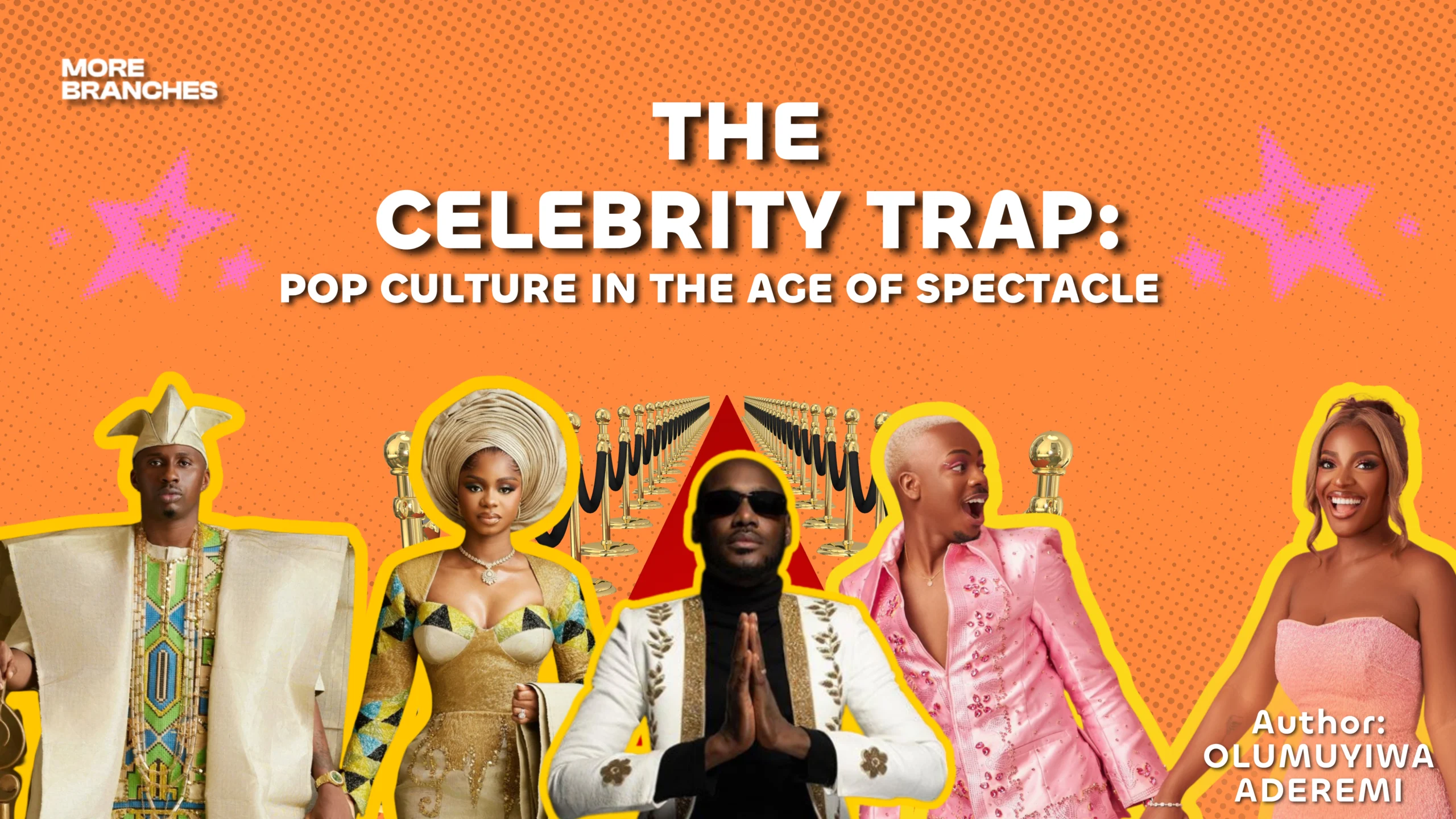
When Tanzanian singer Juma Jux and Nigerian socialite-actress, Priscillia Ojo, went public with their relationship in June 2024, the response was overwhelmingly warm. Their love story endeared them to the hearts of their fans as well as those who had never heard of them. By February 2025, when the couple celebrated their Nikkah ceremony in Tanzania, their journey to happily ever after was well-followed by their fans. Social media platforms/outlets like Linda Ikeji’s Blog, BellaNaija, among others, documented every detail. The coverage was so immersive that the internet painted their relationship as diaristic, and this has made onlookers somewhat possessed with the need to recreate the same when it came their own time at nuptials.
This may have also informed popular news and media outlet, Zikoko, to label their relationship as one of many “25 Nigerian pop culture moments that have defined 2025 so far”. As happy as many may be for the celebrity couple, the fact that their relationship was described as such depicts a skillful misconception that confuses many as to what Nigerian pop culture really is. More than this, it is evidence that the “popular” in pop culture is now defined by the actions of a few rather than the collective energy of communities, subcultures, and everyday people, which is very important for pop culture to thrive. It also paints pop culture as monolithic. One can’t help but ask: has Nigerian pop culture stopped being a reflection of the people and instead become a mirror held up to a handful of people?
Igwilo Ikechukwu and Vitalis Ogbo, both lecturers from Tansian University, Anambra State, in their 2018 paper, note that “Since culture is often seen as the sum total of the peculiarities shared by a people, a people’s value can be seen as part of their culture”. From this, it can be said that people are the most crucial component of culture; culture ceases to exist without the people.
Pop culture grounds itself on being the representation of the more popular aspects of what is regarded as a body of guiding rules and regulations of the general populace, regardless of similarities and differences that may exist, and this is very important in Nigeria’s heterogeneous society. Here, it is usually reflected in the genres of music, fashion and style, television and film, internet and digital culture, as well as sports, particularly to us, not celebrity weddings, breakups, police arrests, or feuds between brothers.
Historically, pop culture is known to have started from the margins rather than the spotlight. Streetwear, for instance, which started off as an expression of identity for those who felt they did not belong, gave popular designer Shawn Stussy the platform to reflect a tighter group of subculture in fashion and style for those who felt out of place. Though it took its time, streetwear made its way into Nigeria from as far back as 2010 and was seen as something for both the rich and middle-class, before being heralded as luxury in recent times, boasting of exclusivity, heavy pricing, and “no more for poor people”.
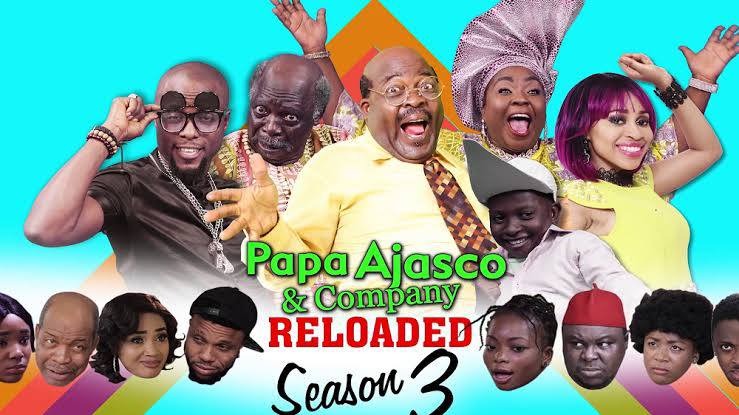
Television and film are also well-known in Nigerian pop culture, especially in how it is shaped, worded, and referenced. Sitcoms like Fresh Prince of Bel-Air, Super Story, Papa Ajasco and Company, or animated series like The Simpsons, Boondocks, and Family Guy entertained as well as engineered how people spoke, dressed, and established relations with themselves, especially among Nigerian Gen Z.Their catchphrases metamorphosed into everyday lingua, and their storylines were the cause of banter.
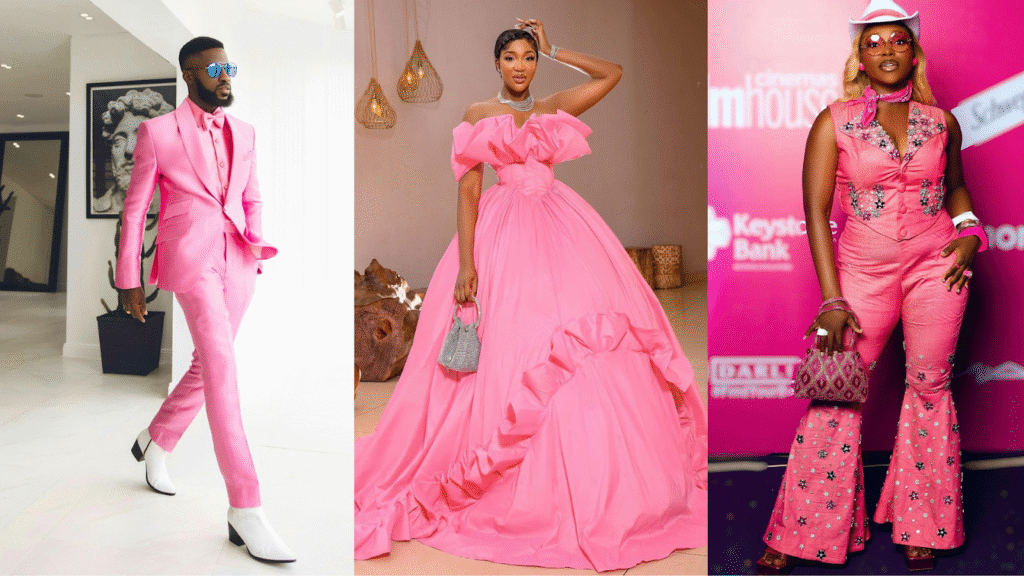
They represented the zeitgeist of the people’s imagination and proved that Nigerian pop culture used to be a shared inheritance of the majority, not a curated export of a quorum, as can be proven by Greta Gerwig’s 2023 movie, Barbie. On one hand, it was a cultural event celebrated with think-pieces on feminism, pink wardrobes, and reminiscent of one’s childhood, which catered well to the Nigerian audience.
However, its cultural density was manufactured via celebrity power and marketing. In this sense, Barbie was the perfect example of the present iteration of Nigerian pop culture in that it had the potential to inspire genuine participation by the grassroots in solidifying pop culture’s pièce de résistance, but was packaged as a spectacle for Nigerian celebrities.
Another example was the divorce process between 2Face Idibia and his ex-wife, Annie. In 2004, 2Face Idibia released African Queen from Face 2 Face. With his sonorous voice, this track regaled many women to wish for a man who showered them with a love so passionate that it could make a man dedicate a song just like it to them. For the men, it made them dream of walking down the aisle with a woman who made love burn brightly within their veins. The song’s effect cascaded into being a must-play for DJs at weddings. It also symbolised something of a never-ending affection towards Annie from 2Face, and that such affection would never waver.
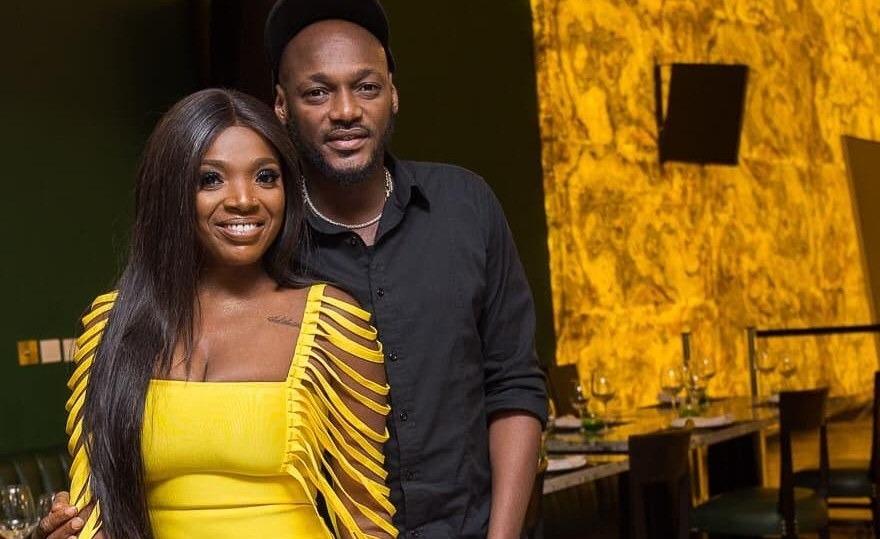
However, when news of their separation was released, it spread like wildfire and made most to believe that love no longer existed if 2Face, after having dedicated a song that earned him awards and international acclaim, could publicly divorce his muse for that track. Using the divorce between two individuals to reduce an emotion as strong as love to something that can cease to exist simply because the individuals involved hold celebrity status does more harm than good, causing many to believe that relationships must subscribe to societal expectations.
Using 2Face and Annie’s breakup as a yardstick to measure implies a redefinition of love by the current state of Nigerian pop culture as less about intimacy and more about emotional commodity, which is traded between celebrities and their fans.
There is also the case of popular ZaZoo-Zehh crooner, Portable. Since the release of the 2021 hit song, Portable has been in the eyes of the public, most notably since he bagged a collaboration on international artiste, Skepta’s, Tony Montana, released in 2024. A cursory look through social media would reveal that Portable has inspired many grassroots artistes to want something greater for themselves. However, his mannerisms and carriage as a person, i.e, evading police arrest, assaulting individuals, though innocuous, is more proof that being a celebrity means you can get away with anything, no matter how crazy it may be or sound. This is evident in his social media pages, which continue to experience a surge in followers and interaction with his content. And this has bled to every facet of Nigerian pop culture.
In Nigeria, beyond the pop culture recession championed by celebrities, the media, and algorithms have also propagated the omnipresence of the machinery of celebrity culture. Traditional outlets, those that once spread the stories of those at the grassroots, now turn to celebrity-driven stories to sustain attention. A divorce between two celebrities is framed as a cultural moment, a celebrity’s tweet is said to be shaping discourse, not because these events genuinely transform everyday life, but because they guarantee clicks, ad revenue, and visibility for these traditional outlets. Algorithms further deepen this divide as social media platforms are built on prioritising content from already-famous accounts, creating a merry-go-round where the actions of celebrities dominate feeds irrespective of cultural value. This loop effaces what Nigerian pop culture is. As a result, much of what passes for Nigerian pop culture nowadays is pop culture in its collective, loved sense, but its representation is no more than an endless recycling of celebrity imagery under the pretense of shared experience.
After all that has been said and done, to assume that Nigerian pop culture is completely in the hands of celebrities would be describing it as nondescript and betraying its eclectic nature, which continues to remain alive in the everyday practices of ordinary people.
The “celebrification” of pop culture also finds a home on TikTok. Viral sounds and dances are created by young, anonymous creators, but the latter only receive cultural credit when celebrities adopt them. This is cultural capital in its purest, unadulterated form, with grassroots creativity only visible when authenticated by celebrity performance. An amalgamation of these case studies reveals a pattern of experiences in that most modern cultural-defining moments do not build on the consensus of the majority but recycle celebrity mythologies. They are less about what people create together and more about how we are invited, or instructed, to watch.
Memes make more headlines than red carpet theatrics, often birthed by anonymous users whose humor, frustration, and irony are reinvented with creativity and wit to become the raw material of the internet. They make their way across diverse territories and languages, evolving collective reference points, humor, and speech long before a celebrity has the chance to repackage them.
This proves that mistaking celebrity stunts for the essence of Nigerian pop culture is to confuse visibility with influence. The virality that has become of TikTok being a recognised platform where artistes and celebrities push their content to be churned by people, unknown or not, is also proof that Nigerian pop culture is dictated by the general public, not a handful of people. The platform is home to individuals and unknown users with a strong sense of creative selfishness that compels them to continually create, evolve, and elevate. Consider the rise of the Ikorodu Bois, who started off with simple recreations of blockbuster trailers using everyday props, and this dexterity won them global attention and proved how creativity outside celebrity circles had the potential to redefine Nigeria’s cultural exports.
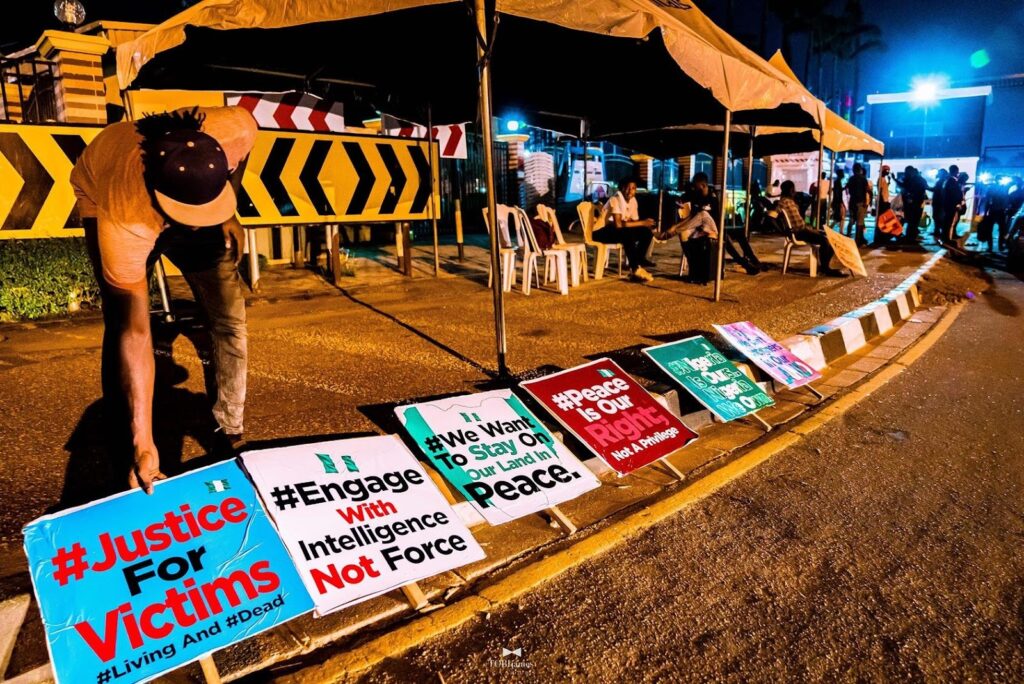
The #EndSARS movement is another illustration of how Nigerian pop culture is defined by the people rather than the elite. Ordinary young Nigerians came up with slogans like “soro soke” and “we move” to give the protest against the arbitrary use of power by the “defunct” SARS, its texture. It was only later that celebrities joined, only to amplify what was already in motion, and any celebrity who failed to recognise this movement was subjected to the court of public opinion, reputed for its ruthless and unforgiving judgment. This matters because it challenges the assumption that pop culture in Nigeria, or anywhere else, trickles down from the top and that a decentralised collective can generate protest and culture in the form of music, slogans, street art, and digital memes. In doing so, the protest blurred the line between politics and pop culture to remind that what the general public creates is more durable and resonant than fleeting celebrity spectacles.
If pop culture is mostly dictated by what a handful of people do, maybe the word “popular” is being misused. True pop culture is elsewhere, with the general public. As it stands, Nigerian pop culture is at a threshold where the people have to decide whether we are truly participating in culture or merely consuming the performance of a few. If it’s the latter, what does this mean for us? More importantly, are we ready to lose our agency, creativity, or even our understanding of what culture means?