
We often say that those who stand for nothing will fall for everything. In Nigeria, this statement rings true, as recurring events have led us to question why our principles never hold water.
Recent xenophobic attacks in South Africa targeting Nigerians and other Africans have caused the affected countries to reconsider their relationship with the country. Ghana responded quickly by petitioning the African Union to take action and summoning South Africa’s envoy, with Nigeria following suit a week later. Since then, both countries have made moves to repatriate their citizens. Countries like Malawi, Lesotho, Zimbabwe, Mozambique, and Kenya also issued warnings and urged nationals there to stay safe.
Despite the incidents that have led to physical and online harassment, violence, and multiple deaths, the response from Nigerians has shown anything but solidarity. So far, the reactions have varied: many have called out South Africans, reminding them of Nigeria’s heavy role in ending apartheid; some have moved to cancel vacation plans, and others wonder why Nigerians live and visit a country where its people despise their guts. Yet, for most of the populace, these attacks are the last thing on their minds, which isn’t far-fetched given the myriad of issues confronting us as a country.
While there isn’t much an ordinary citizen can do, it is expected of us as Nigerians to strongly re-examine our relationship with South Africa. During the AMVCAs, Kanayo O Kanayo, in his acceptance speech, took a stand against the ill treatment of Nigerians by South Africans. In a country where celebrities speaking against injustice and bad governance are so rare that fans thank them, it isn’t surprising that more people haven’t spoken up about the unfortunate events in South Africa.
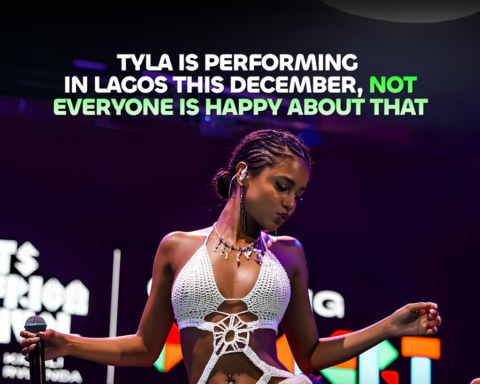
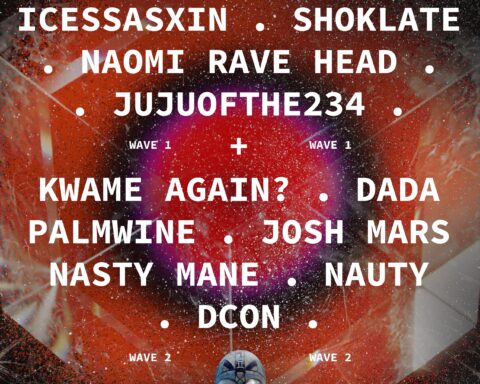
Lately, Nigerians have called out events like Purple and Monochroma for platforming South African DJs, especially since they haven’t addressed these attacks, and many are unsure of their stance on the matter.
Asake has also taken some heat for announcing Uncle Waffles as a special guest on his M$NEY tour, even though she’s from Eswatini, not South Africa.
Before then, the criticism of these collaborations has centered on the logistics involved in bringing these DJs to Nigeria, how these eventually reflect in the high cost of tickets, and the fact that Nigerian DJs are just as capable as their South African counterparts.
Some may argue that some aspects of this outrage may be well placed, but it is never sustained because, as a collective, we fall apart when it comes to standing on business. For events like Purple, which were held in Lagos and Abuja respectively, the ire witnessed when the promo video was posted by Album Talks on Twitter died out faster than expected and was quickly replaced with excitement—with people scrambling for last-minute tickets and asking what everyone was wearing for the event.
Every now and then, our principles are held to the test, and we are constantly found wanting. When individuals with questionable characters are elected into office, there’s hue and cry from some quarters, briskly followed by a resignation to fate and hopes that this tenure will favour us and our families. We rage on our keypads when our president asks us to pray for terrorists to see the error of their ways and security advisers call them our brothers, yet some of us still campaign for their party’s reelection.
When topics like tribalism, fraud, rape or corruption come to the fore, we hold space for whataboutism to thrive. The majority of us live in abject poverty and squalor, yet we follow the lives of politicians and their kids on social media, hailing their ostentatious lifestyles in the hopes of receiving the crumbs that fall from under their table. It is why we sink even lower by asking terrorists flaunting their loot for giveaways.
This is why we need to urgently fix our values. Our inability to unanimously agree that something is bad makes our fight for freedom and progress look like a pipe dream. When we carry this mentality into global interactions, we come off as repulsive to people from other nations. This, in turn, gives birth to statements like “don’t mind him, he’s Nigerian”, further fueling harmful stereotypes and racist sentiments.
We can agree that disunity is our greatest issue in Nigeria, stemming from our diversity in culture and religion. But our ability to somehow coexist as one nation for over six decades shows that there’s a chance that our fragmentation may be salvageable.
As we press for a new Nigeria, we must undergo a reengineering of our psyche at all levels and a return to the drawing board to determine what our national values will be. It is only then that peace and unity can truly reign.