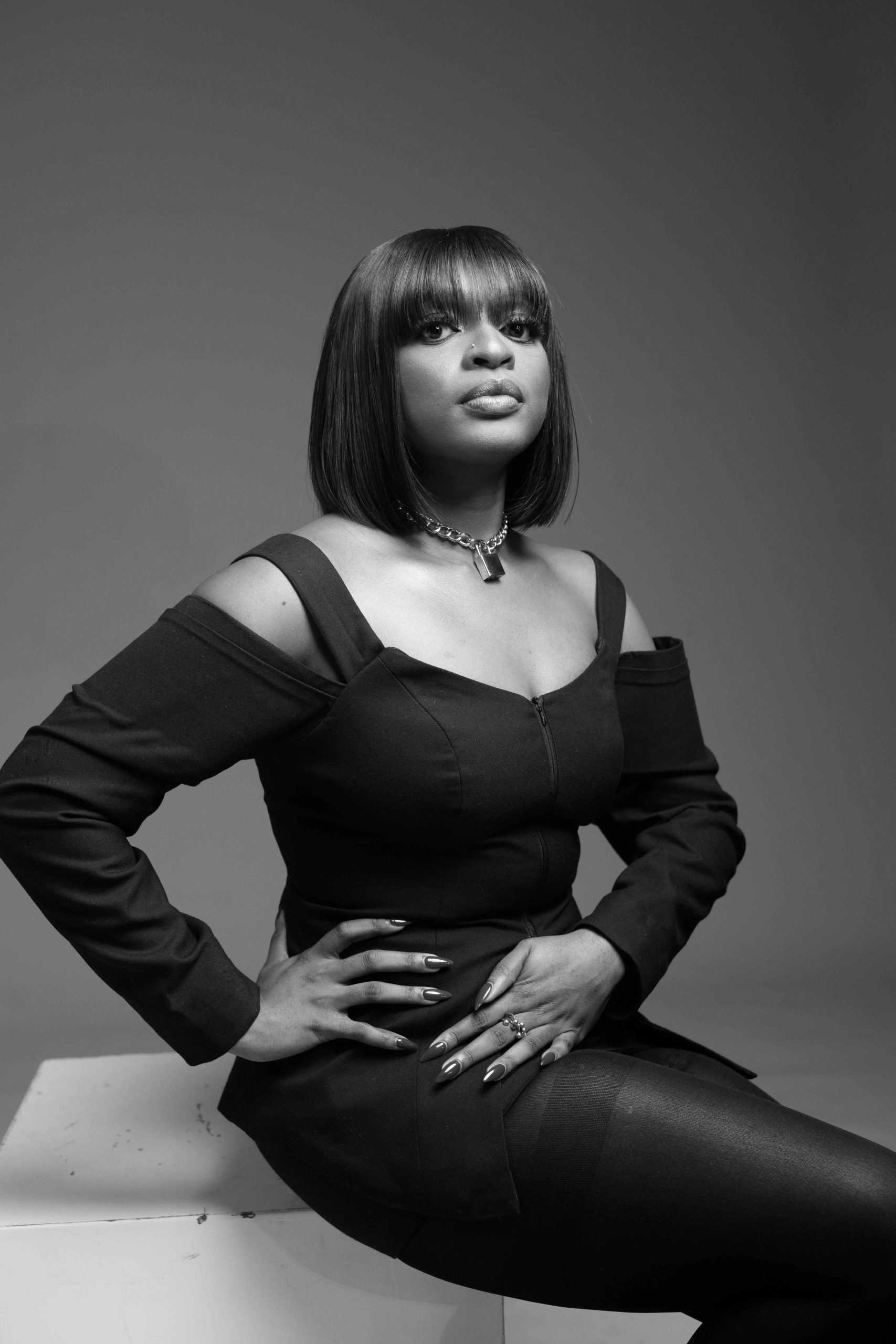
With over a decade of experience, Stephanie Okocha has built a reputation for her outstanding skills in A&R and talent development. Her journey has seen her collaborate with some of the most influential artists and brands, marking her as a key player in shaping the sound of modern Afrobeats. From her roles at Immensum Music and TheBasementGig to founding her own company, Panda Entertainment, a comprehensive 360-entertainment company that provides a wide array of services, from label management to event production. Stephanie’s journey is marked by an unwavering pursuit of excellence.
Currently managing multiple award-winning artist Simi and acclaimed producers, Yo X and Type A, she has a knack for identifying and nurturing emerging talent. Her collaboration with Tempoe has been particularly noteworthy, resulting in some of Afrobeats’ biggest hits in recent years. Additionally , she has worked with some of the biggest names in the industry including Ycee, Reminisce, Timaya, WurID, Finito and Uche Odoh. As a visionary in the industry, Stephanie is not just shaping careers; she’s helping redefine the landscape of Nigerian music.
MoreBranches caught up with the music executive as she spoke on her ten-year anniversary, journey and vision ahead.
Can you share your journey into the music industry?
It was in my third year in university, around 2013. An artist had a competition online which I applied for. We became friends, he invited me to the studio. I enjoyed the music-making process. He also allowed me to be a runner for them in an event. This made me curious about how everything works. After university, I applied for a job vacancy as a talent strategist in 2015. Before all of this, I wanted to be a musician but later pushed that aside. I worked in that position for a year and they wanted to promote me to a higher position. However, this was a new field so I felt like I was not ready. I stayed at home for nine months. One of my friends got me an interview with Osagie who I worked with for five years. After that, I became independent. Everything was aligned.
I’m curious, do you still sing?
No, I’m not singing anymore. I am keeping my talent.
Once again, I have to say congratulations on your journey. What do you wish you had known when you first started in the industry?
Funny enough, I do not know. I am not one to expect a lot. I come into a place wondering how something works. I won’t change anything, because like I said it aligned for me, I enjoyed my process. The first year working with Osagie, I didn’t work on the field. No music video/photoshoots. I did mostly admin, where it entailed the objective side of the music industry and this shaped my journey in more ways than I can explain.
You founded Panda Entertainment. What motivated you to start your own entertainment agency?
I worked with Osagie for five years. I could see evident growth. The fifth year, she wanted to expand and wanted us (the staff) to learn some more. She asked me if I wanted to manage someone, a producer and I said yes (I wasn’t doing anything else lol) She pushed me into the world and was one of the people to stir me to the right direction. She was pushing me to go out there. Creating Panda was for the ease of my independent job. I wanted my talent to grow, I could not just use my name. I needed an entity for the bigger goals. Once I started with my producer, I saw that there was a void for them. I became serious with this and started properly building the company and its identity. To answer your question, it’s ease and opportunities which propelled me to start this

What were some of the biggest challenges you faced when starting out, and how did you overcome them?
The challenges I faced in the beginning was underestimation. It’s how life works. If I am in a room with ten people, I will align with the person I know. When my bosses will send me somewhere, they would not answer me but rather prefer to speak to my boss. I was a tiny girl with a tiny voice which set me back a lot. The industry is a relentless place, the more you try to push that door, it will bust open except it’s not for you. I felt bad in the beginning but told myself that if there was no change. I would leave. But as you can see, it’s for me.
Looking back over the past ten years, what are you most proud of in your career?
I am proud of my consistency. I am proud I stayed. I did not see myself doing anything else. I did not allow the trials weigh me down. I started seeing results in my seventh year in the business. I am grateful I waited.
Over the past ten years, how have you seen the Nigerian music scene evolve?
Majorly, I am happy about the growth and acceptance of our sound. I am also happy with the connections it has brought which has aided the structure we have wanted. We are not there yet but we are in a better place. The afrobeats songs that are actually making waves are songs that are homegrown. I am glad that the people making it global are sticking to the roots of it. We are seeing artists such as Fireboy, Ayra Starr and Tems and many more doing it. I’m proud of it.

How do you identify and nurture emerging talent in the industry?
I like to say talent management is a spiritual thing because you can’t amplify what you are not attracted to. If you don’t know the product, you are unable to sell it. It’s way more than management. You need to be empathetic, have some sense of discipline, key to their emotional and mental side. For you to give so much to someone, you guys have to be aligned in energy. That’s the first stage to look for. Talent definitely. If the talent is there, that’s 50% as well as personality and grit. You need to want this more than I do. You have to keep your manager on their toes. The job of the manager is to help you amplify your goal, not for them to tell you their goal which you now aim to accomplish. A lot of artists don’t know what they want and when the managers start telling you what they want, the artist now feels lost. Those are what I look out for.
You’ve worked with some of the biggest artists and producers. What do you believe are the most important qualities of a successful artist/producer?
There are basic things but in the entirety of things, everyone is different. You need to know how to deal with everyone. It all depends. The basic things I mentioned earlier are some of the qualities. As a creative, you cannot do multiple things at the same time. This is just seen in some anomalies with some artists. Because of how fast and wide the creative industry is, you have to first get an audience off of one thing before you chase your other ambitions.
How do you build relationships with artists and producers?
That’s their job. My talents know how much I love them. You need to come into this with trust. It’s their job and once you trust me, I trust you. That’s the story. You trust that when you team says something, they have your best interests in mind.
What advice would you give to aspiring talent managers looking to break into the industry?
Find your niche and be consistent with it. You have to learn everyday. It’s a fast-paced industry and ever-evolving. You need to be up on trends in your niche and the basics in the music industry. You always have to be relevant. It’s hard work and a lot of mental and emotional work. Talent management is like having kids. You must be available for them. They bank on your energy.
What is your vision for the next decade in your career and for the Nigerian music industry as a whole?
I enjoy spotting opportunities, seeing them through and helping them achieve their goal. Those are some of the reasons I believe that makes me good. I want to keep doing that especially for the voiceless. Now I am glad that producers are no longer voiceless. I am happy that people understand the roles of producers and the weight they carry. For someone who is championing that cause, I am super excited. I also want to put help put other executives on. It’s a long term journey that’s worth it.