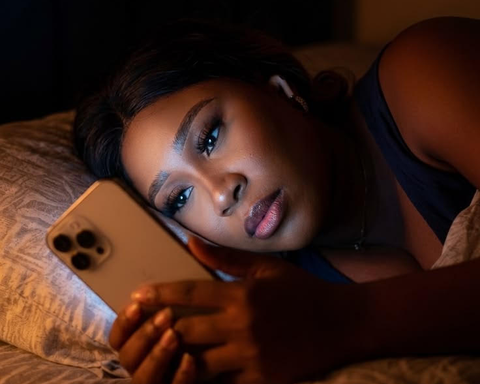
Although access to fast and secure internet is still a struggle for many Nigerians, there is no doubt that the internet and, specifically, social media are crucial parts of the 21st-century Nigerian lifestyle.
Nigerians now use apps like Instagram, X, TikTok, and WhatsApp to find opportunities, network with others, and scale businesses.
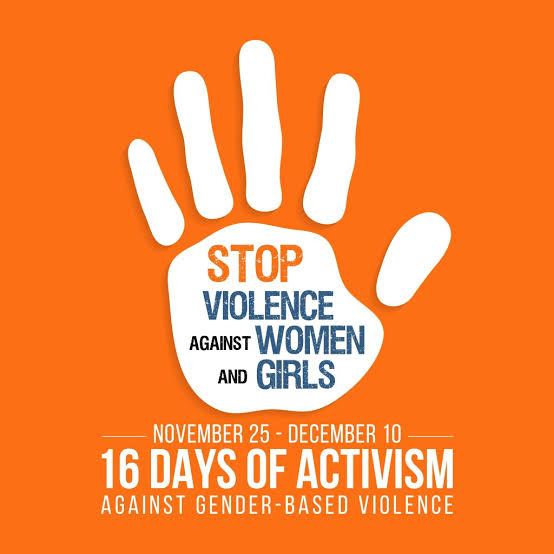
Every year from 25th November to 10th December, the United Nations earmarks 16 Days for organisations, activists, and feminist groups to speak on violence against women. This year’s theme spoke on the rising rate of digital violence faced by women.
To mark the just‑ended 16 Days of Activism, Nigerian women organised a cascade of events that blended high‑level policy talks, grassroots mobilisation and digital‑safety actions.
In Abia State, the Ministry of Women Affairs wrapped up the campaign with a massive walk against gender‑based violence that drew women’s groups, schoolchildren and community leaders. The ceremony also unveiled a new Sexual Assault Referral Centre in Aba (to open in early 2026) and a state‑wide GBV hotline, while the First Lady, Mrs Priscilla Otti, pledged continued support for digital‑violence prevention.
Delta State’s National Female Students’ Association (NFSAN) hosted a dialogue at the Government House in Asaba, focusing on the theme “UNiTE to End Digital Violence Against Women and Girls.” The session featured panels on online safety, a survivor‑story sharing segment, and the swearing‑in of new NFSAN executives.
At the federal level, the Ministry of Women Affairs and the World Bank convened a National Dialogue in Abuja and Lagos, launching the “Digital Harmony Programme,” a national roadmap on technology‑facilitated GBV, and the “Happy Woman App” to boost digital access for women.
Faith‑based gatherings added a spiritual dimension: a special mass at Christ the King Catholic Church in Abuja highlighted the rising tide of digital abuse and called for collective action guided by Christian values.
Civil‑society groups also joined the chorus. FIDA Nigeria ran awareness walks, legal‑aid clinics and skill‑building workshops for 60 women across five states, while the Women at Risk International Foundation (WARIF) organised the 7th Global No‑Tolerance March in Lagos and Abuja, drawing thousands to demand an end to all forms of violence.
However, a lot more needs to be done to adequately protect Nigerian women and girls from digital violence that can spill into the offline world. This is particularly because of the reality that the Nigerian online space is fast becoming an avenue that exists as an integral part of communication.
In issues of the online space and women, Nigerian women are not exempt from the wave of using the internet to document, share, and seek community. Female musicians like Ayra Starr can attribute her success to being noticed on apps like Instagram and a fan base that continually supports her. But an overarching question remains: How safe are Nigerian women online?
If we bring this theme home and localise it to the Nigerian music industry, one can see that the normalisation of bullying, harassment, and inappropriateness towards female musicians online has a ripple effect on how Nigerian women carry themselves.
For example, the earlier-mentioned singer and songwriter Ayra Starr has been the subject of multiple forms of online abuse. From rumours that she “smells” to tone policing and the most recent being an Instagram account undressing her photos using AI, if one does not speak on this digital violence directed at her, the message sent is that all women are fair game.
It is not only the use of AI tools through which Nigerian women encounter sexist bullying on social media apps. Incidents of revenge porn and using nude images to extort money from women are also quite common. There is also the lack of proper attention given to women whose businesses come under fire too, because such women stand actively for women.
The use of beauty standards as a form of bullying against women not considered beautiful is also a very common act on apps like X. For instance, a year ago, an X user identified as The Lady Vee, posted pictures that saw her receive bullying for being “ugly”. The trend saw a lot more women speaking up about the use of beauty standards to harass women.
In discussions about how women experience digital violence in and out of the Nigerian music industry, it is nearly impossible not to mention women like Tiwa Savage, who faced revenge porn. In 2021, she had an intimate video leaked to the general public. Although her career made a comeback after that incident, it leaves one to wonder at how many Nigerian women can come back from the loss of opportunities that happened due to intimate pictures of them that were shared without their consent.
What active steps are being taken to ensure that women in the music industry in Nigeria are free from digital violence and other forms of digital harm to their work? A good example of this is the singer Fave, who had her song remade by an AI account without her consent. If she could face that, what message does that send to women who want to break even in the music industry, especially as independent artists?
As we mark the last day of 16 Days of Activism, it is important that we take more active steps to address how women in and out of Nigeria’s music industry are at risk of online gender based violence and abuse.
Some steps that can be taken include reinforcing the legal frameworks regarding cybercrime. For instance, in addition to encouraging bystanders to report malicious accounts, more education regarding the Nigerian Cybercrime Act of 2024 should be done.
In it, it criminalises cyber-stalking, online bullying and non-consensual sharing of intimate images. Although critics have opined that clauses against online bullying in the Act can be used by misogynists to attack vocal women speaking on feminism, more women must know that non-consensual image sharing is criminal.
More awareness also needs to be brought to the general public on initiatives like UNiTE by the United Nations.
Through the UNiTE campaign and The Global Digital Compact initiative, the United Nations is urging countries, tech firms and civil society groups to strengthen law enforcement, provide safe housing for women experiencing online violence and embed safety by design features into the framework of social apps.
We must create a system where women’s voices are not pushed to the margins or even totally out of certain social media apps. We must be intentional about creating more cybersecurity laws that explicitly protect the rights of women and girls, such that sexist bullying online is unacceptable by law.