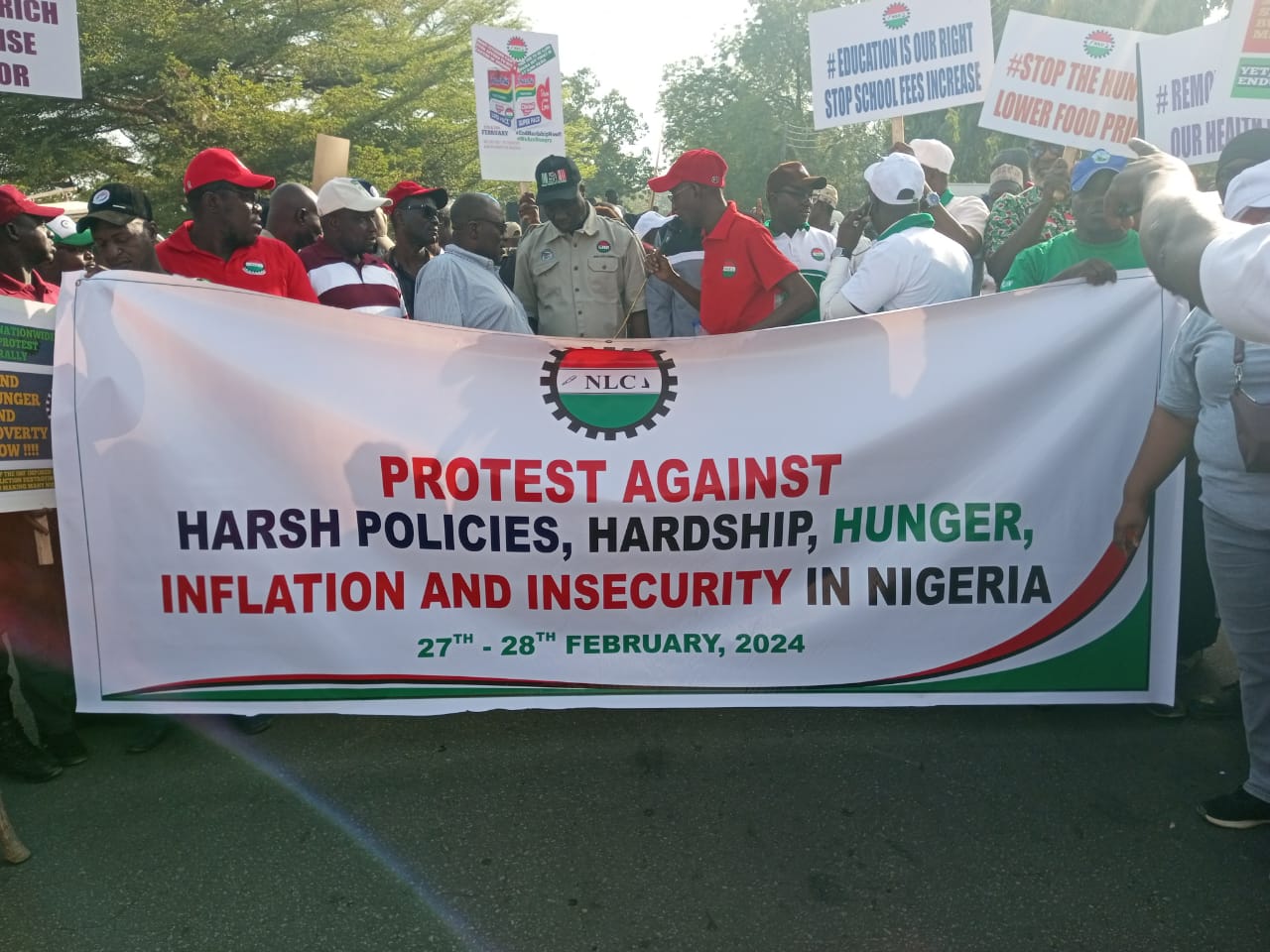
Nigerian workers, organized by the Nigeria Labour Congress (NLC), are staging protests in key cities across the country, including Abuja, Lagos, Port Harcourt, Ibadan, Kano, and other locations. The protests, which come after a failed meeting between the Federal Government and organized labor, are aimed at highlighting the economic challenges faced by workers.
Led by Secretary to the Government of the Federation, George Akume, the government delegation included the Attorney General of the Federation, Lateef Fagbemi, as well as the Ministers of Labour, Agriculture, Finance, Budget and Planning, and the Head of Service of the Federation. NLC President Joe Ajaero led the NLC delegation, while Festus Osifo led the Trade Union Congress (TUC) delegation.
The protests were triggered by the rising cost of living, inflation, and other welfare issues affecting workers. One of the key demands of the protesters is an increase in the minimum wage, which currently falls below $20.
The protests underscore the economic challenges facing many Nigerians, with the cost of petrol having more than tripled in the past nine months, and the price of staple foods like rice more than doubling compared to last year. These hardships have been exacerbated by the lack of an official salary increase to help workers cope with the rising cost of living.
Nigeria, like many other countries, has been experiencing economic shocks in recent years, with President Bola Tinubu’s economic reforms since assuming office in May 2023 being a focal point of contention.