In a stark sign of deepening infrastructure woes, Johannesburg, South Africa’s largest city with a population of around 6 million, is facing an unprecedented water crisis. Residents across the economic hub have endured weeks of water shortages, forcing them to rely on unpredictable deliveries from municipal tankers. This growing crisis threatens not only public health but also the political stability of the ruling African National Congress (ANC) ahead of May’s elections.
The city’s water woes stem from a confluence of factors. While hot weather has undoubtedly increased demand, the primary culprit is the crumbling water infrastructure, neglected for decades after the end of apartheid. A report by the national water department revealed a staggering 40% of Johannesburg’s water supply is lost through leaks, highlighting the dire state of the pipes.
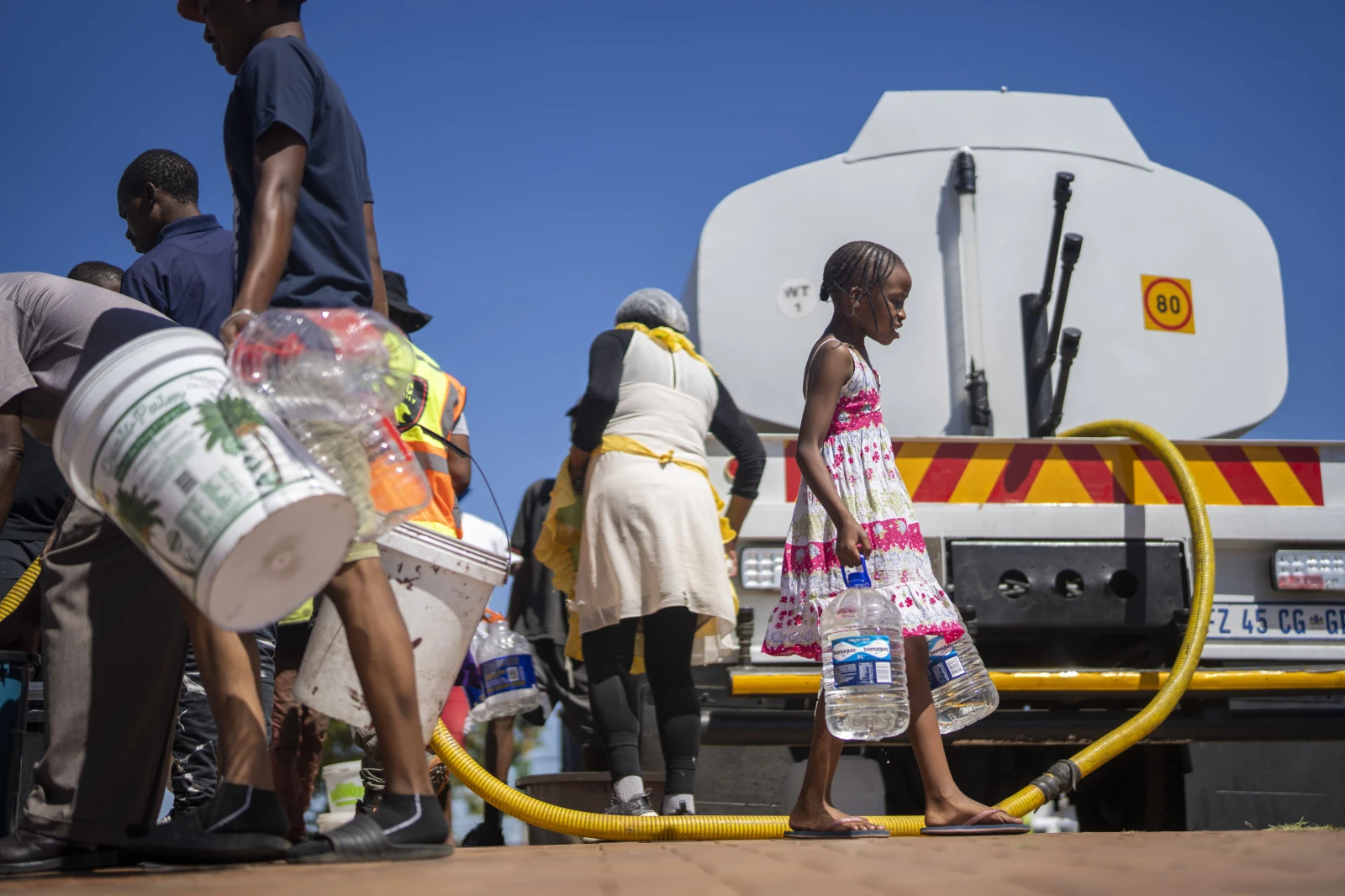
The crisis has exposed residents to a harsh reality – “watershedding,” a term mirroring the country’s long-standing power cuts (loadshedding). Tsholofelo Moloi, a resident of Soweto township, exemplifies the hardship. With dry taps at home, she, like many others, waits anxiously for the arrival of water tankers – their sole source of water for essential needs like cooking and hygiene. The exorbitant cost of bottled water, with a 5-liter bottle priced at $1.30, is out of reach for a significant portion of the population, where unemployment exceeds 32%.
Adding fuel to the fire, Gauteng province’s water management authorities warn that failure to conserve water could lead to a complete system collapse. This scenario would force authorities to shut down reservoirs below 10% capacity for replenishment, potentially leaving residents without tap water for weeks.
The crisis has sparked outrage and protests. Residents and activists accuse officials of mismanagement and a failure to prioritize infrastructure maintenance. The neglect is particularly galling as much of the infrastructure dates back to the post-apartheid era, a time of optimism and expansion of basic services to the Black population. The ANC, which rode that wave of enthusiasm to power, now faces the public’s wrath as citizens question their ability to govern effectively. Anger simmers not just at the ANC, but also at the broader political landscape, as residents of Johannesburg, governed by a coalition, wonder how such a critical issue could be overlooked in a major economic hub.
With World Water Day approaching on Friday, the crisis serves as a stark reminder of the need for responsible water management. However, immediate solutions are needed. Rand Water, the entity supplying water to Gauteng municipalities, pleads for reduced consumption as reservoir levels have dropped to a concerning 30%. The situation is further complicated by South Africa’s unreliable electricity grid. A recent lightning strike at a power station hampered operations at a major water pumping station, further hindering water distribution efforts.
As the crisis drags on, residents like Thabisile Mchunu, who has been hauling water in buckets for a week, are left with a grim uncertainty – “The sad thing is that we don’t know when our taps are going to be wet again.” The government faces a critical challenge – not only resolving the immediate water crisis but also regaining public trust as they head towards elections.