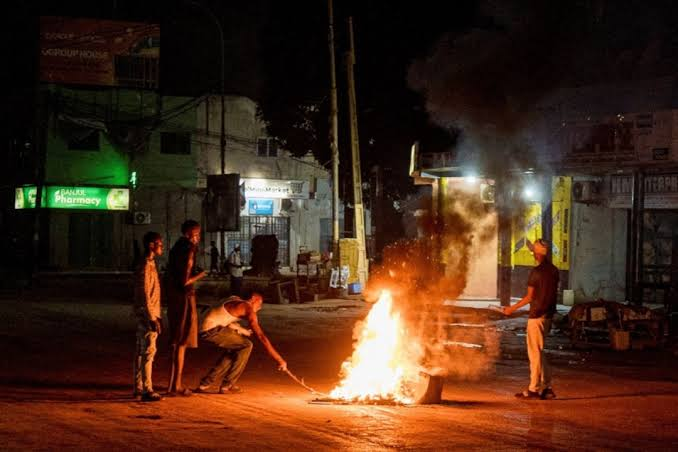
Extended blackouts lasting up to two days have paralyzed Gambian communities. These outages prompted thousands to take to the streets across the country. The government recently declared a national emergency over its failing power grid. Authorities subsequently banned unauthorized protests following days of violent demonstrations.
The infrastructure crisis heavily impacts the upcoming political calendar. President Adama Barrow is seeking a controversial third term in the December 2026 elections. He built his initial 2016 candidacy on promises of democratic reform. Barrow originally pledged to serve only one term before running again. Now, the power crisis fuels deep public frustration with his administration.
Protesters gathered overnight across several municipalities to demand immediate solutions. Demonstrators erected barricades, blocked roads, and lit fires at major junctions. Crowds chanted for President Barrow to step down immediately. Police deployed tear gas to disperse citizens marching toward state utility headquarters.
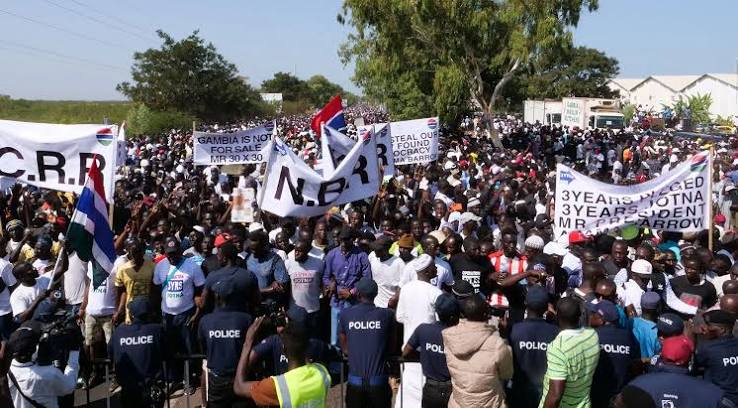
These prolonged outages severely disrupt daily life and the local economy. The extreme lack of electricity ruins perishable goods and damages businesses. Millions of dalasis are lost daily as households, hospitals, and telecommunications suffer. Surging demand and electricity import constraints have heavily strained the grid since June.
The Gambia Democratic Congress (GDC) opposition party previously warned of this economic fallout. They demanded full transparency and a comprehensive roadmap to fix the energy crisis. Meanwhile, the National Water and Electricity Company (NAWEC) attributed the operational failures to climate change and soaring temperatures. Officials also cited wider geopolitical disruptions affecting supply chains.
“Our business is stalling because of the lack of electricity,” said Nyima Sonko. She is a local fishmonger who spoke with Africanews. “All our fish is getting spoiled, and this is our only source of livelihood.”
Other vendors echoed this widespread frustration regarding soaring preservation costs. “We don’t have ice to keep our chicken meat cool,” stated market trader Jula Jagne. “We, the women of The Gambia, are tired.”
President Barrow visited utility facilities near the capital to address the failure. He defined the severe power outage crisis as a national security issue. Barrow pledged immediate government action to mitigate the economic damage. He promised to commission new generating units and stabilize the electricity supply by the end of October.
Despite government assurances, authorities announced a strict protest crackdown. The Inspector General of Police mandated approved police permits for all public gatherings. Officials reported vandalism at multiple utility branches and ruling party offices during the unrest. Police warned they will use necessary force against anyone staging unauthorized nightly protests.