With Artificial Happiness, Omah Lay reveals something that many of us are unable to come to terms with — “Igbo is telling on me”. On first listen, one might assume that the igbo is speaking to him and he is pleased with what it is saying. Like all other vices, it says “don’t stop”.
Yet, the song sits heavy with double meanings. It is an honest admission of a pleasurable yet temporary feeling that fades away when morning comes. It is a confession that igbo has changed his lifestyle.
Sadly, what he describes is dependence: a compulsory need to start his day with “one in the morning time…advantage to see money clear.”
When it comes to drug use and abuse, an issue that has transcended several civilisations and legal interdictions, one thing is certain: people will not stop using, willingly or not. Despite being criminalised in Nigeria, weed users make up the 4th largest consumers in the world.
In previous years, weed has been portrayed as a substance used by the most unsavoury characters. Nollywood films usually showed the wayward university cult boys or the spoilt rich babes smoking as a cautionary tale for their many impressionable viewers. These storylines ended with the same messaging — drugs will make you mad. But what is madness if not an interesting story for another day?
The music scene isn’t left out of this. Many Nigerian artists have mentioned weed in their songs as a source of comfort and a means of enjoyment. Artists like Fela Kuti never shied from an open use of marijuana, and his run-ins with the law for drug-related offences inspired songs like Expensive Shit.
While weed still carries the stigma of being the poster child for moral degeneracy in today’s society, it has taken an undeniable place in pop culture and even on screen. It is not unusual for artists to smoke weed in music videos, or for regular people to use weed in public or post about it on social media.
Nollywood also depicts substance use differently nowadays. Smoking igbo is not just for society’s rejects anymore. For instance, in the film Red Circle, it isn’t jarring to see the protagonist Fikayo casually light one up with her friend Venita, amidst lighthearted banter, their way of relaxing after a long day in their respective careers as a journalist and a struggling musician.
When highlighting the positive benefits of weed, many strong points have been made. But like any other psychoactive drug, extensive use takes a toll on one’s mental and physical health.
In therapy, one of the first breakthroughs people encounter when treating a substance use disorder is the attainment of insight. This means that the patient recognises their addiction, its consequences, and a desire for change. It is a difficult step that might take many months or even years to achieve.
We cannot advocate for safe drug use without admitting that, despite the mind-blowing highs that come with using weed, the results may tell on you. For some, the weed may “tell on them” through hallucinations, and for others, it could manifest in an unnatural dependence. Still, we must talk about it.
We shouldn’t praise weed for its organic and euphoric benefits, while shying away from the risks and negative effects that it brings to our minds and bodies. Preaching abstinence can be seen as a noble gesture (depending on who is doing it), but it is a quiet indulgence in hypocrisy. This is because not everyone is going to avoid doing drugs just because someone said so.
Rather, young people should know that substances like weed can trigger underlying mental health conditions, while being provided with safe spaces to discuss their experiences without fear of judgment or condescension. They should understand what using weed safely looks like, based on individual differences, and ascertain when it may be time to take a step back.
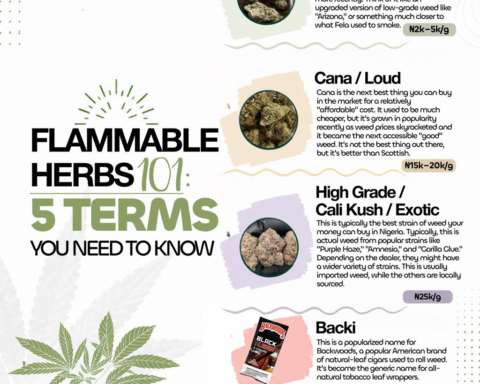
What does safe marijuana use look like? It is understanding the different kinds of strains, their potency, and their effects on one’s body. Moderation is also very important, whether you’re a newbie or a frequent consumer. Start with low doses and take things easy from there.
Diversify your mode of consumption; you can smoke a joint today and settle down with an infused bowl of pepper soup tomorrow. Exploring your options not only helps you discover what you like better but also helps in protecting your health. Check your weed sources regularly to make sure the quality is consistent and what you’re consuming isn’t tainted with any additives — this could lead to over- intoxication or much worse.
You’re a high-risk user if you’re below 21, pregnant, breastfeeding, or have a personal/family history of physiological or mental health issues. Our systems also build tolerance over time, so it is beneficial to take breaks as often as possible. If you also experience paranoia, anxiety, suicidal ideations, and increased heart rates very often when you take weed, it’s a sign to reconsider your habit.
Let’s face it, weed is a part of our many cultural experiences and is here to stay. If Nigerians are lucky, maybe we’ll see the decriminalisation of weed in our lifetime. Or maybe not. Until then, let’s be honest about our relationship with weed and indulge safely while making well-informed choices.