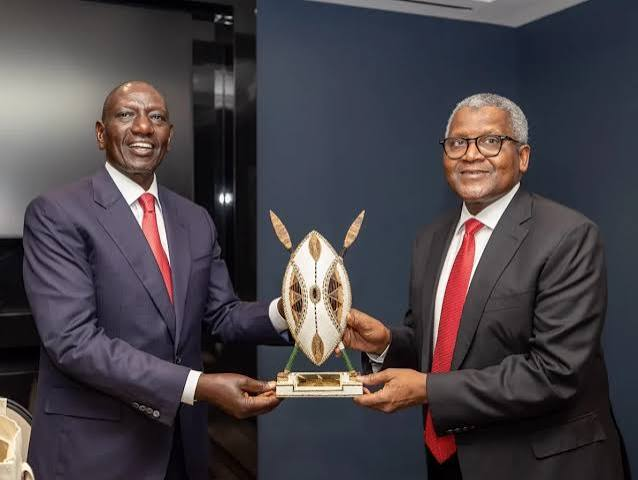
Dangote Group has signed a $450 million deal with Engineers India Limited, the state-backed Indian firm that oversaw construction of its Lagos refinery, to lead work on a new 700,000-barrel-per-day refinery and petrochemical plant in Lamu, Kenya. Construction is set to begin this month, putting a hard start date on a project that’s been in the works for over a year.
The numbers are staggering. Estimates for the full project—refinery, petrochemicals, and port infrastructure range from $16 billion to $20 billion, positioning it as East Africa’s largest refinery and Dangote’s biggest bet outside Nigeria.
But this isn’t just Dangote’s money. He’s offering Kenya, Ethiopia, and Rwanda a combined 30% equity stake worth roughly $1.5 billion — with Kenya’s share alone pegged at 10%, or about $500 million. Presidential economic adviser David Ndii confirmed the offer months ago, though it’s worth noting: none of the three governments have signed off on a final commitment yet. Kenya’s stake, specifically, is still under consideration, not locked in.
The strategic logic is straightforward; once regional governments put public money in, they become both customers and advocates for the plant’s success. The playbook also has precedent, as Dangote’s Lagos refinery has already saved Nigeria over $10 billion a year in forex by cutting fuel import dependence, a shift S&P Global cited when it upgraded Nigeria’s sovereign credit rating this year.
The refinery is designed to feed a much bigger map than Kenya alone; Uganda, Ethiopia, Rwanda, Tanzania, South Sudan, Burundi, and the DRC are all in the supply radius. If Lamu delivers even a fraction of what Lagos did, East Africa’s fuel import bill is about to look very different.
Execution risk remains real; debt financing, construction timelines, and crude supply chains all still have to hold. But with shovels now scheduled to hit the ground, this has moved from pitch to project.