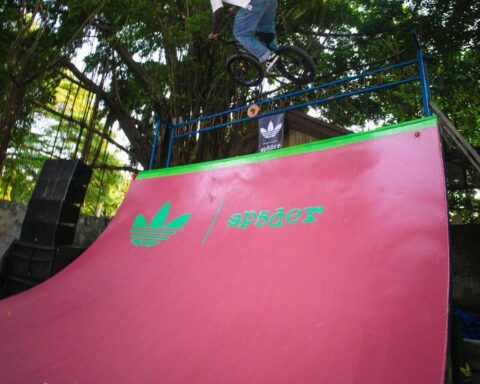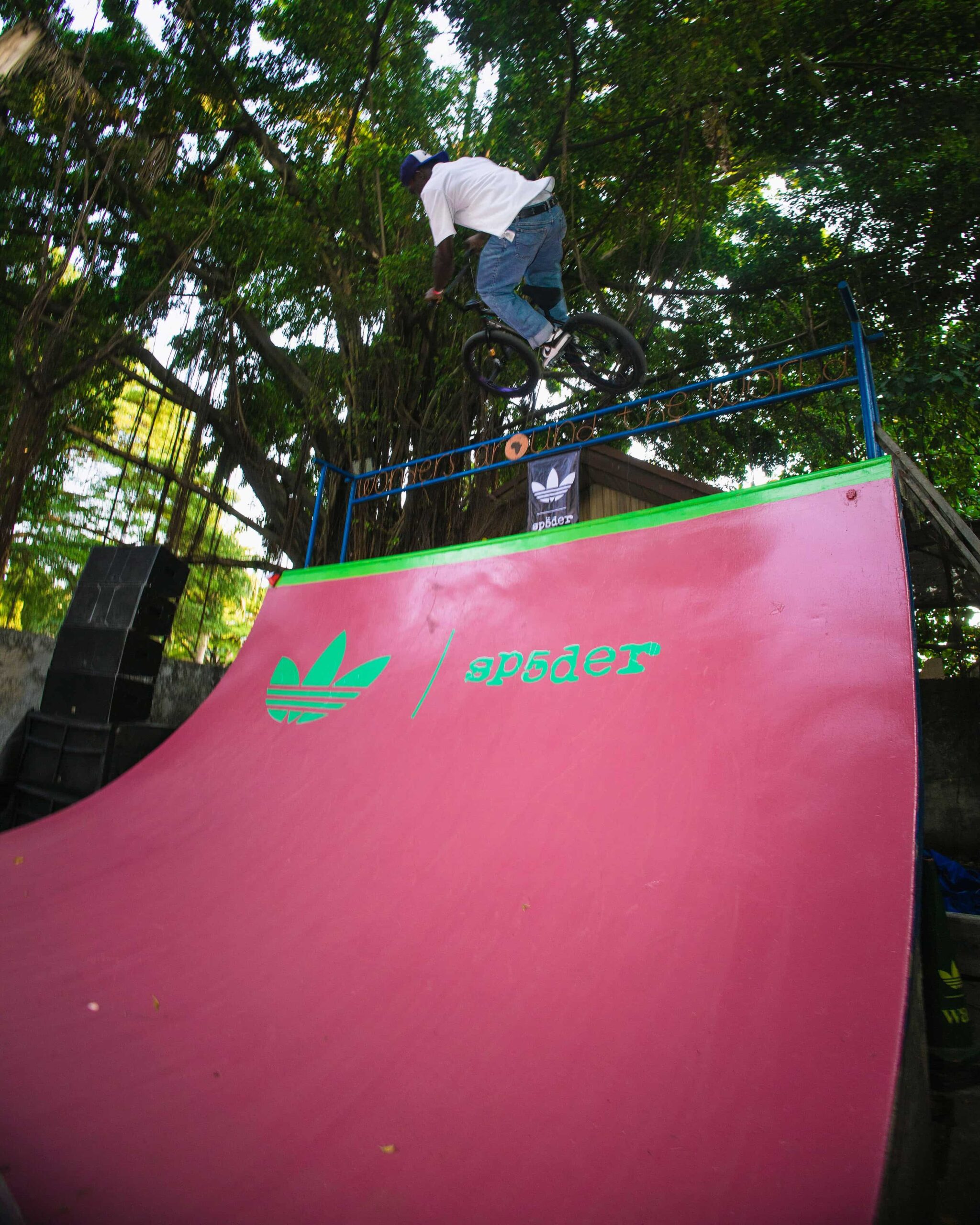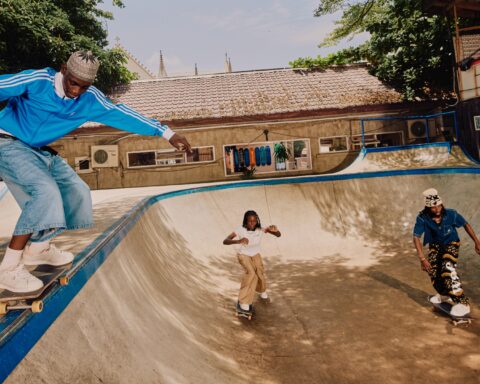
On Saturday 14th November, two thousand people packed a skatepark in Yaba to watch a BMX rider clear a pink ramp with the adidas trefoil painted across it. Two weeks earlier, on a runway at the Federal Palace Hotel, a designer sent out dresses cut from old football jerseys.
Both of those are the same story. They are just running in opposite directions.
The traffic coming in
Global sportswear has decided Nigeria is worth the airfare. In August the Nigerian Football Federation agreed a kit deal with adidas, ending a Nike run that had lasted since 2015.
The Nigerian Football Federation has agreed a kit deal with Adidas. Nike has supplied the Super Eagles with kits since 2015. The deal with Adidas will be worth $4.5m in cash annually and a further $4m in apparel. The agreement will also include a 20% royalty on retail sales. pic.twitter.com/yZRkHiIloz
— Łukasz Bączek (@Lu_Class_) August 31, 2026
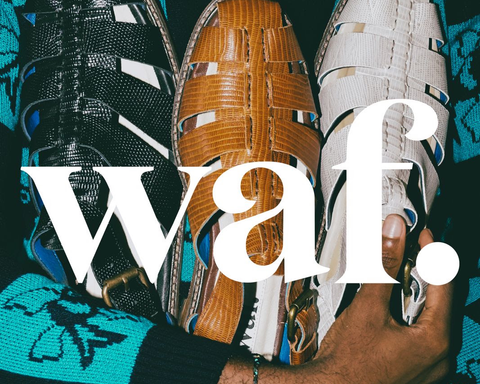
That was the headline move, but the quieter ones matter more. adidas gave the Superstar its first African edition this year with waf., the Lagos skate collective. In November, adidas and sp5der, Young Thug’s label, took over the waf. Skatepark for a capsule launch hosted by PATTA, the Amsterdam store that has spent twenty years deciding which streetwear scenes are worth taking seriously.
Zaylevelten set to headline the
SP5DER x Adidas event hosted by PATTA in Lagos, Nigeria📍WAF Skate Park
🗓️ 14th November pic.twitter.com/vmH2KQ2YQd— Horde (@wearehorde_) November 10, 2026
The event ran from 4pm until after 2am and hit full capacity. Zaylevelten, Luwa, Efmoon, Young Beejay and Tura performed. Laboomz, Indica, Sigag Lauren and Yosa played through the night. Nobody on that bill is a chart act.
ADIDAS X SP5DER X ZAYL10 X WAF pic.twitter.com/7erCWwCDW8
— Wacki3 (@wackmanwackie) November 16, 2026
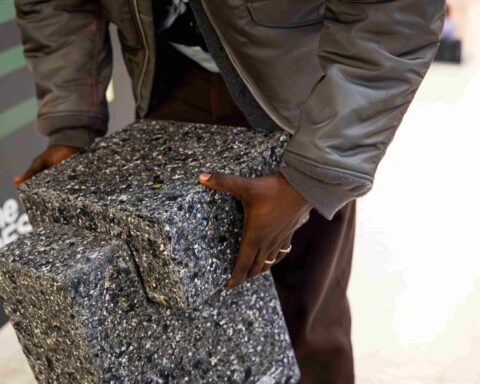
And this week Nike put out its first collaboration with Nifemi Marcus-Bello, a stool built entirely from Nike Grind, the recycled material the company makes from factory scrap and worn-out sneakers. It is on view at the Design Museum in London, where visitors sit on it.
What the brands are actually buying
It is not the market. Nigeria’s retail spend on a trainer priced in euros is thin, and nobody at adidas is modelling Lagos as a volume play this decade.
What they are buying is legitimacy, and specifically the kind that cannot be produced by a campaign. waf. spent fourteen years growing Lagos skateboarding from nothing, including raising a skatepark on the grounds of a former colonial prison at Freedom Park. That is not a brand story. That is a fourteen-year capital expenditure in time, made by people who had no reason to expect adidas would ever call.
The same logic applies to Marcus-Bello. Nike did not need a designer to make a stool. It needed a designer whose entire practice is an argument about where material comes from, so that the recycled-sneaker programme reads as philosophy rather than PR.
In both cases the brand arrived looking for something that already existed and could not have been commissioned.
The traffic going out
Meanwhile, and largely without reference to any of it, Nigerian designers have been taking sportswear apart.
At Lagos Fashion Week this year, under the theme CRAFTED: Heritage, Innovation, Circular Futures, Ajanéé showed Masquerading (Cloth as Spirit). The collection reconstructed existing garments, turning old sports jerseys into dresses and pairing them with sheer fabric, alongside reworked denim and repurposed material. The label is one of five Green Access alumni in the Irapada Circular Design Initiative.
Peter Oshobor, working out of Benin City, builds almost entirely from deadstock and displaced fabric, cloth that somebody else discarded. Street Souk, which in 2025 became the first streetwear label to show at Lagos Fashion Week, returned with four designers working through bomber jackets, detachable hoodies, experimental headwear and a leather reading of the agbada.
Reconstructed sportswear was one of the defining trends of the week. Not sportswear quoted as a reference, sportswear used as raw material.
One person sits on both sides
The clearest illustration is a single figure. Marcus-Bello co-founded waf., the collective adidas collaborated with. He also made the stool out of Nike’s shredded trainers. The same person is the reason adidas came and the reason Nike came, which says less about him than about how small the room is.
His own framing explains the rest of it. Marcus-Bello has spent years on the relationship between what gets consumed in the Global North and what becomes available for reuse in the Global South. That is the logic of the second-hand clothing trade, of the Lagos auto-parts market he cast aluminium from for his Oríkì series, and now of a stool in a London museum.
Ajanéé cutting up jerseys is that same transaction at garment scale. The material reaches Lagos because somewhere else finished with it, and a designer decides it is not finished.
Only one half of this is being watched
Search either story on X and the asymmetry is immediate. The adidas side has accounts across three continents posting about the capsule, the kit deal and the skatepark. The reconstruction side has almost nothing. A designer turning Premier League jerseys into eveningwear in Lagos generates a fraction of the conversation that a sneaker drop does.
That gap is the whole problem in miniature. The inbound trade is documented, valued and priced. The outbound one is treated as a craft practice.
The question for next year
Nigerian designers are sitting on the exact asset the global brands are flying in to buy, and most of them are not charging for it. One side is paying for access to cultural credibility. The other is sourcing its raw material out of a bale at Katangua and selling the finished garment into a domestic market that cannot absorb it at the price the work deserves.
adidas worked that out and signed waf. Nike worked it out and signed Marcus-Bello. The question for the next twelve months is which Nigerian label works out how to charge for the thing both of them already decided was worth the trip.