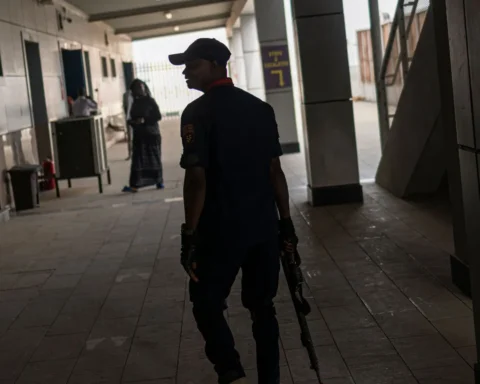
In March 2026, reports of fresh violence in Plateau State once again circulated across Nigeria. As they often do in the immediate aftermath of attacks, the casualty figures varied, with early counts placing the death toll at over two dozen and many more reported missing. Soon after, a curfew was put in place. For residents like me, this was not unfamiliar: it was part of a pattern that had defined life in parts of Northern Nigeria for over a decade. Many Nigerians are privileged to observe these events from a distance. In my case, it is a lived experience.
The first time I understood what it meant to run without asking questions, I was ten years old. In 2010, in Borno State, the sound came before the meaning; people screaming, feet moving before the mind caught up. I saw people running for cover and quickly grabbed my brother. We hid in our parents’ room. Even though we did not fully realize what was happening, we understood enough to know we were not safe.
Gunshots followed. They landed on the roof above us, loud and close. I remember looking up, not sure if the ceiling would hold. Then came the helicopter, flying low enough to feel almost within reach. Someone said it was a patrol, that it was there to ensure the attackers were gone. That moment did not feel like the beginning of anything, but it was. What followed would become part of a wider national crisis. For those of us who grew up within it, the experience came first, and the statistics came later.
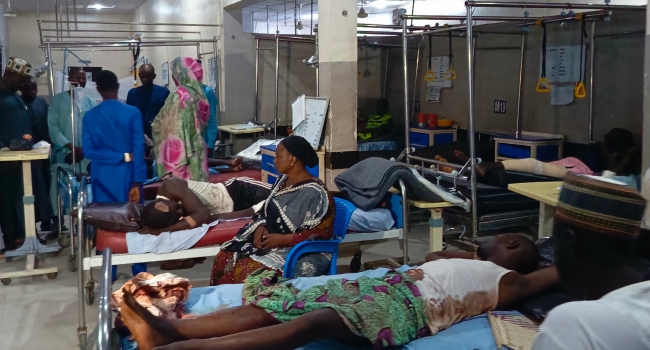
Over the years, the escalation of insurgency in Nigeria’s Northeast, driven largely by extremist groups, has resulted in thousands of deaths and the displacement of millions. Reports from organizations like Amnesty International and Human Rights Watch have consistently documented the scale of this violence and its impact on civilian populations. The scale of this crisis has been extensively documented, though numbers often struggle to capture its full weight.
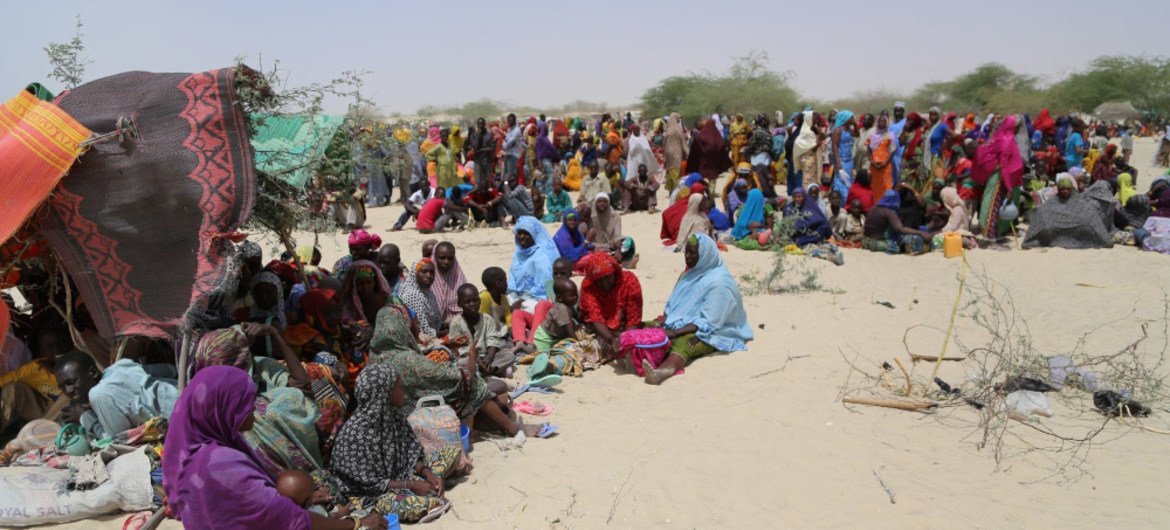
According to estimates by the United Nations Development Programme, the insurgency in Nigeria’s Northeast has contributed to the deaths of over 350,000 people, both directly and indirectly. At the same time, data from the International Organization for Migration and the United Nations High Commissioner for Refugees indicate that more than 2 to 3 million people have been displaced across Borno, Adamawa, and Yobe States, many forced to leave their homes multiple times in search of safety. These figures are often cited in reports and briefings, yet for those who have lived within this reality, they exist alongside memory, not separate from it. They represent real people, and must be treated as such.
My family eventually left Borno. Those who stayed longer were eventually forced out. I remember relatives who had to walk long distances after being displaced, searching for transport to take them somewhere safer. By then, we were in Bauchi. For a while, it felt like this distance would create safety. It did not.
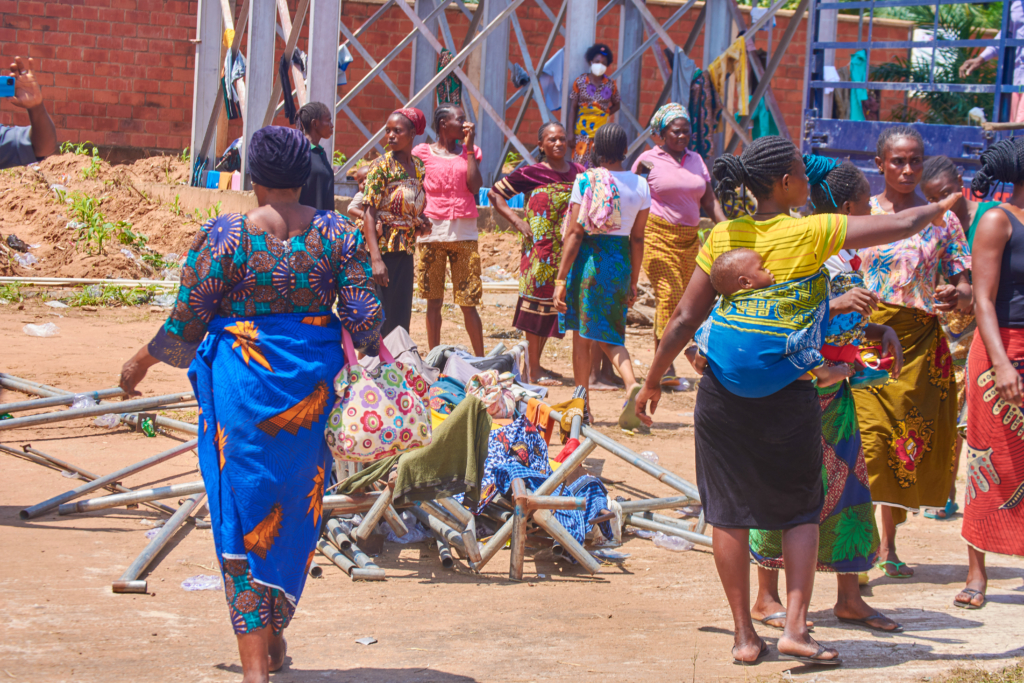
Even outside the immediate zones of conflict, the reach of violence was long. I remember hearing a bomb blast in Bauchi and feeling something shift inside me. My body reacted before my mind could process what had happened. I did not know it then, but I would later find out that it was a condition medically described as Post-traumatic stress disorder (PTSD).
Research has shown that prolonged exposure to conflict environments can lead to lasting psychological effects, including hypervigilance and anxiety. For many, especially those exposed at a young age, the line between past and present danger becomes blurred. Over time, something else happens—you adjust.
The first incidents are shocking, and the next ones are unsettling. Eventually, they become part of the background. News of attacks begins to sit alongside everyday concerns. You hear about deaths, disappearances, and violence with a familiarity that would once have been unthinkable. I cannot say exactly when that shift happened for me, only that it did.
At the same time, the body learns its own language of survival. I became alert in ways I could not always explain. I noticed movement and reacted quickly. If people ran, I ran too, not out of panic, but out of understanding. This is how adaptation works in conflict environments—an invisible, yet constant pattern of behaviour.
The events of March 2026 in Plateau State brought this into sharp focus again. Days before I stepped out, there had been an attack. Reports suggested at least 27 people had been killed, though the exact number remained unclear. Some victims were still missing. A curfew was imposed, slowing down movement in the area. When the restrictions eased, life resumed cautiously.
I went out on a Tuesday when I saw people running. Without thinking, I ran too. There was no time to ask questions or confirm details. Deep down in my subconscious, the decision had already been made. In the midst of the chaos, I had aggravated an old injury in my hip, which had been healing, and fractured it again. But that was not the most striking part of the moment.
What stayed with me was the realization that it did not feel like a single incident, like I had been running for years. The first time around, I was a child, and now I am twenty-six. The distance between those two moments should have meant something had changed, but in many ways, it has not.
Public conversations about insecurity often miss this layer. There is an assumption that danger is constant and visible, that life in conflict-affected areas is defined only by crisis. However, the reality is more complicated. There are ordinary days where there’s routine and moments of calm. But beneath that sense of normalcy is a steady awareness that things can shift quickly. It’s a reminder that safety is not always stable.
Survival also extends beyond physical safety. It shows up in how you move through the world and how you respond to sound, to crowds, to silence. It’s in the calculations you make without realizing you are making them. It manifests in the way your body carries memory, even when your mind is focused on something else.
For many Nigerians across different regions, this adaptation has become part of daily life. While the sources of insecurity vary, the underlying feeling of uncertainty is commonly shared, with a creeping cumulative rage. After years of adjusting and carrying on without an end to the terrors in sight or a semblance of justice, the question of safety becomes less about whether danger exists and more about whether peace, in its fullest sense, is attainable. Our quest for survival goes beyond mere survival; it is about finding ease. And for many of us, that remains out of reach.