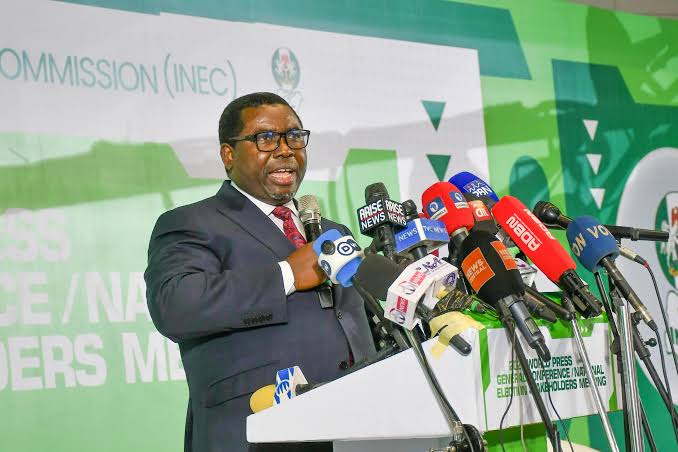

The Independent National Electoral Commission (INEC) has started using artificial intelligence to scan election result records for discrepancies and administrative errors before those results are validated.
INEC Chairman Prof. Joash Amupitan disclosed this in an address to the All Nigeria Editors Conference in Enugu on Thursday, 24 September. He said the tools now sit inside the commission’s results management process and automatically flag problems in result records ahead of final validation.
The disclosure comes about three months before Nigerians vote. The presidential and National Assembly elections hold on Saturday, 16 January 2027. Governorship and State Houses of Assembly elections follow on 6 February. Humans still have the last word. Amupitan was clear that AI will not declare or decide anything. “Every automated result check remains strictly subject to human auditing and legal verification,” he said.
The tools are run by a dedicated Artificial Intelligence Division inside INEC’s ICT Department. The commission has also drawn up an AI Roadmap and Governance Framework built on five principles: human oversight, transparency and accountability, data protection, cybersecurity and public trust.
INEC says it has held talks with senior executives at Microsoft and Google on cybersecurity and protecting its cloud infrastructure, and with the International Foundation for Electoral Systems on technical capacity and responsible use of AI.
What the commission has not yet explained is how the system works in practice. The address, as reported, did not name the tools in use, say who built them, define what counts as a discrepancy, or say whether flagged results will be disclosed to parties, observers and the public. Those details matter. Trust in INEC’s technology took a hit in 2023, when polling unit results from the presidential election were slow to appear on its Result Viewing Portal (IReV) and the commission blamed technical glitches.
The same technology is also the threat
Most of Amupitan’s address was a warning. He said generative AI can now produce fake result sheets, cloned voices of electoral officials, fabricated videos and forged INEC documents within minutes, and that such material could create the impression of rigging before real results are even collated. He listed what that could look like in 2027: a fake video of an official announcing results that were never declared, cloned audio of a Resident Electoral Commissioner ordering the manipulation of voting devices, a forged letter announcing that the election has been postponed.
His bigger fear is what happens after people have seen enough fakes. Once anything can be faked, he argued, voters stop believing genuine results too. He asked newsrooms to set up fact-checking desks, build deepfake detection and forensic image tools into their breaking news work, and stop amplifying figures collated privately by political actors. “Let’s resist premature result declarations,” he said, noting that only INEC has the legal power to declare results.
The scale of the job
The 2027 elections will run across 36 states and the FCT, in more than 176,000 polling units, with about 1.4 million ad hoc staff. INEC’s most recent test was far smaller. In the Osun governorship election on 15 August, 94.5 per cent of the state’s 3,763 polling units opened by 8:30 a.m., and the commission deployed 5,130 BVAS devices.
Not everyone at the conference was convinced that technology is the fix. Keynote speaker John Cardinal Onaiyekan said Nigerian elections are increasingly being decided in court rather than at polling units. He called for a new way of appointing the INEC chairman and commissioners that makes them less dependent on the executive.
The next public test of INEC’s systems is a nationwide mock accreditation exercise planned for November, when BVAS devices and other election equipment will be tried in the field.