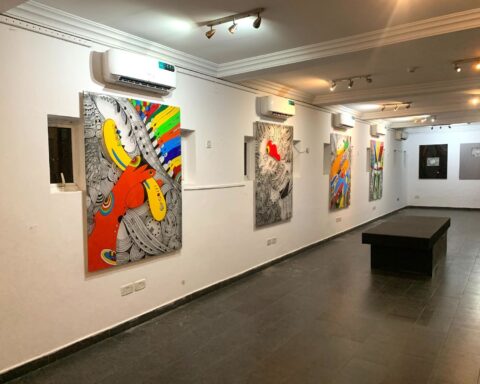
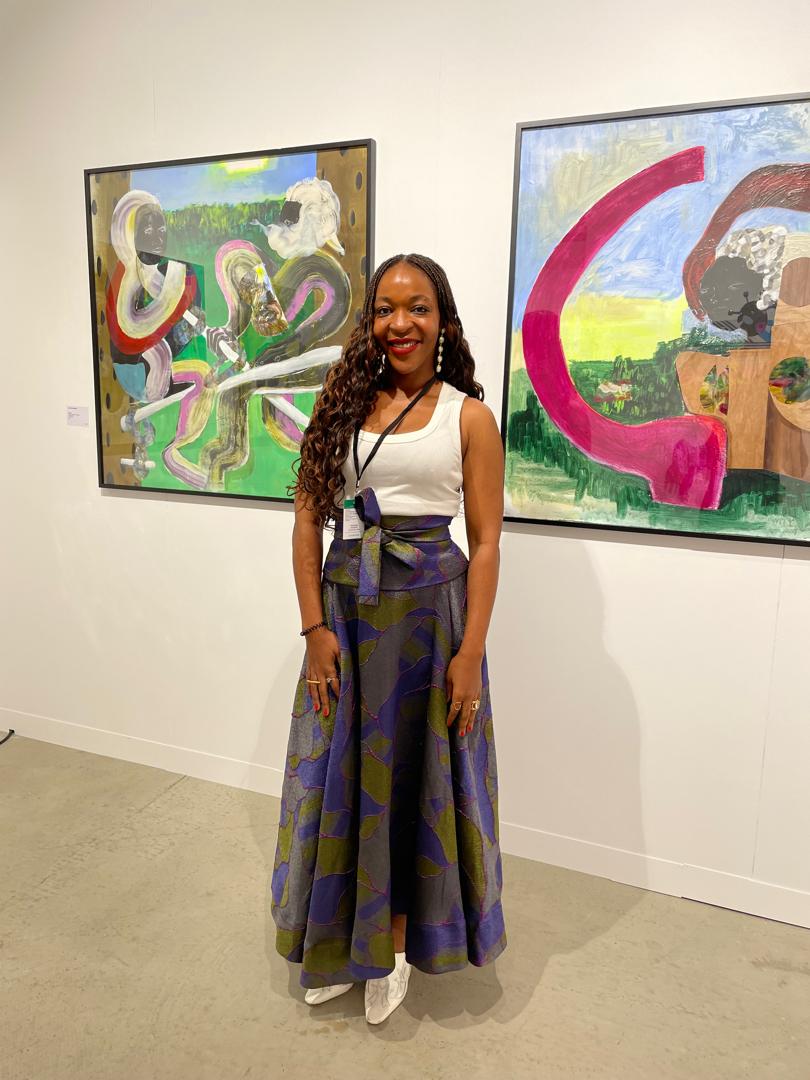
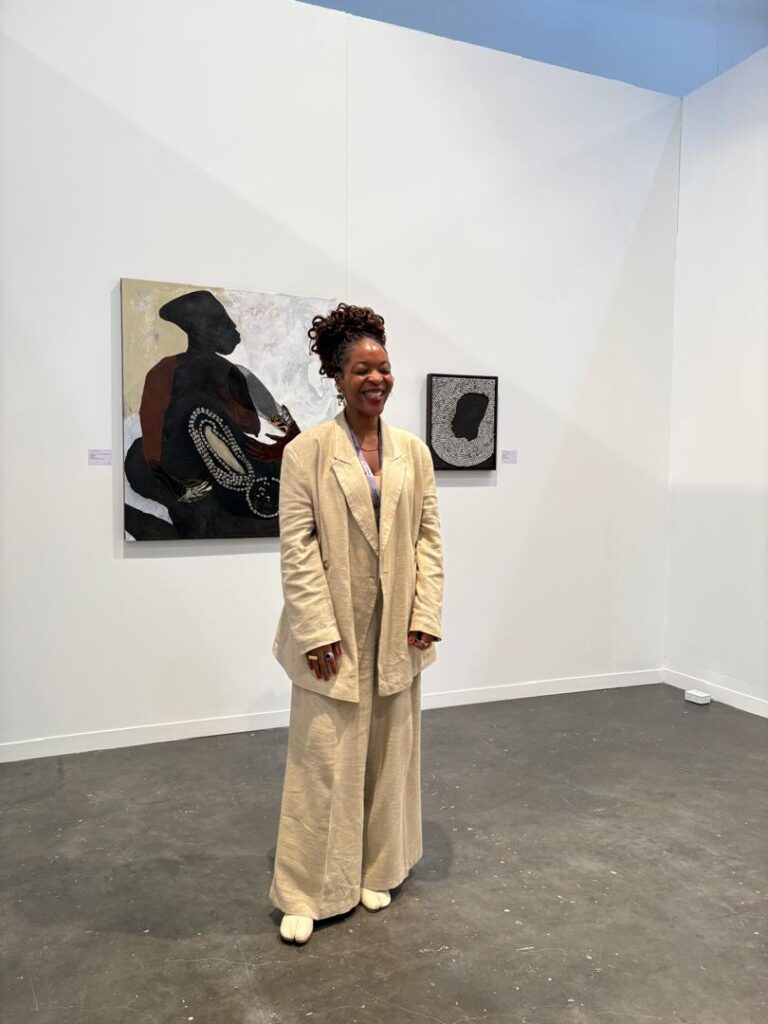
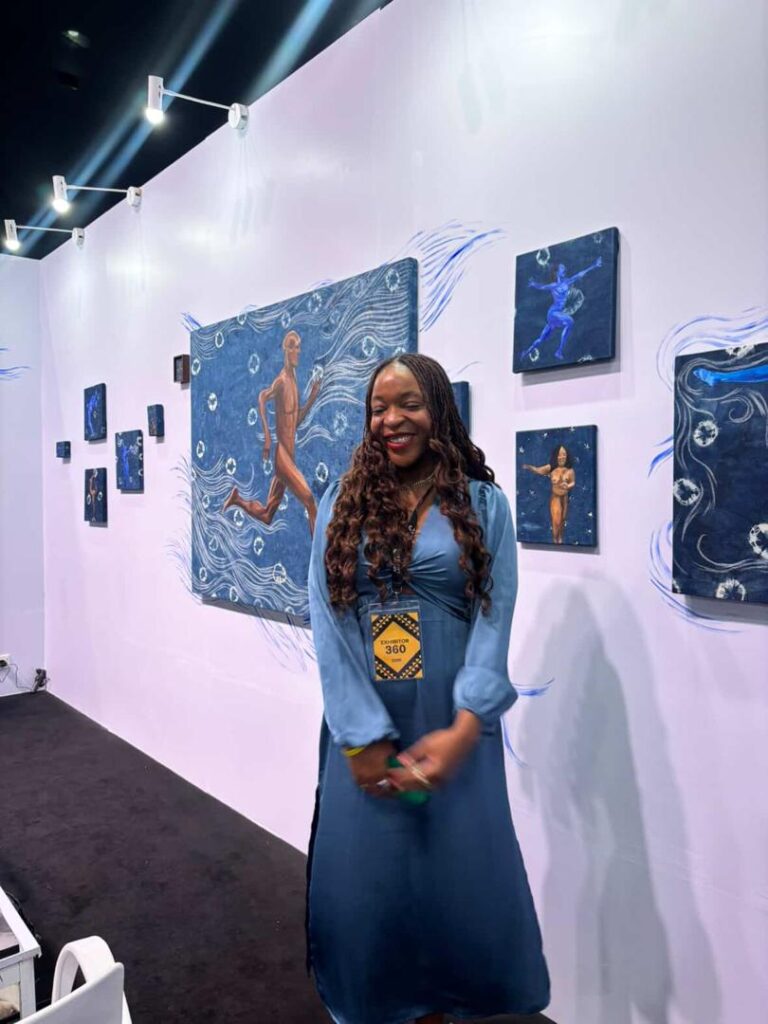
Wunika Mukan is a force to be reckoned with in Lagos’ art scene. As the founder of Wunika Mukan Gallery, she’s been instrumental in showcasing the city’s vibrant creative energy. Her journey into art curation began unexpectedly while working at The African Artist Foundation, where she worked alongside talented artists and curators.
Mukan’s passion for art is contagious, and her gallery has become a hub for creatives to connect and showcase their work. She’s a firm believer in community and collaboration, often turning to fellow gallerists and artists for support and guidance. Her ‘Women’s Film Club’ is another testament to her commitment to fostering creative communities.
In this feature interview, Mukan shares her insights on the challenges faced by artists and gallerists in Nigeria, the importance of community, and her vision for the future. She also opens up about her own journey, from accidental curator to passionate advocate for Nigerian art.
You’ve established a name for yourself as an art curator, creative entrepreneur, and community organiser. Your gallery, Wunika Mukan Gallery, has been home to many exhibitions. What inspired you to become an art curator?
I started working as a brand director for The African Artist Foundation. There, my job was to raise money and raise funds for the foundation’s projects and programs. In order to do that, I really had to understand what was going on.
It was a wonderful time because I got to share a space with a lot of amazing thinkers, curators, and artists. It was also a peculiar time and a very interesting period in the city in the timeline of the art space, and I would say it sort of laid the foundation for a lot of what is going on now.
So it was very exciting to be working on these projects, and I just started to lean in a little bit. I started to challenge myself to sharpen my taste. I also started developing really good relationships with artists and building trust with them. I was asked later on to curate a show.
Working at the foundation had its opportunities presented to me, where I was able to lend my voice and own my little quirky voice. Although I didn’t come from a very academic background, I definitely had a strong sense of what I liked.
I had a strong sense of the emotions that I felt and saw in other artists’ works, and I realized that there was a space for me. From that space, an artist approached me and asked me to curate a show, and this was an artist that I really admired for the great things they were doing. That show was very eye-opening for me, and it really gave me the strength and the courage to do another one.
The show went well, and I just thought maybe I should start a gallery because there are so many artists that I feel so passionate about, and I want to make so much noise about. So I started the gallery, and that’s how I began.
In your journey as an art curator and gallery owner operating from Lagos, Nigeria, what has been an area of difficulty that you wish to see more improvements in?
It’s not easy running any kind of business in this city, let alone an art gallery. Where do I start? You can talk about shipping, you can talk about insurance. Even just like what it takes to participate internationally in some of these fairs is an area that needs improvement.
Yeah, some of these things are incredibly expensive, and they’re charged in currencies that you don’t earn. So it always sometimes feels like an uphill battle because you do want to make all the noise that you can about your artists. You do want to take them everywhere, and you want to provide as much exposure as you can to them.
The good thing, however, is that we’ve been able to form a really good community with galleries, especially in the city. I know a lot of young galleries sort of talk to each other and work with each other. I know that if I go abroad or if another gallery goes abroad and they’re having questions about framing or shipping, it is something we can all help one another with.
It is a sort of insurance; we’re always super willing to share and lean on each other. I think that has been a really great thing in the past few years; being able to sort of rely on the community when you’re having issues, and people coming together to solve problems. That’s happening a lot, which I find very encouraging.
But yeah, there’s always going to be issues. Another big one is when artists need to travel, and they themselves don’t get visas or approvals to travel with their work. And, you know, there’s nothing like the artist being there and being able to talk about their work. They also lose out on the exchange that happens when the artist is there, allowing the audience to give feedback about their work and the growth that that in itself generates within each artist.
These things may also affect even the gallerists or whoever’s putting the exhibition presentation on. There are a lot of challenges, but the great thing is that I think that the community is working together, working better to help each other, and we realize that we’re in it together.
It has often been alluded to in certain circles that the African and Black artist/creator has a moral responsibility to use their art to speak on social issues as opposed to “art for art’s sake”. What are your thoughts on that?
I think the idea that African artists and Black artists have this moral obligation to address social issues through their work sounds profound. Art is a mirror reflecting society, and however you prefer to look at it is valid. I also think it can be a fun mirror.
This mirror is also used to exaggerate. It’s used to distort and occasionally show truths that are otherwise going unnoticed. Artists like magicians do yield this power to provoke thought and conversation and even spark a revolution from their canvas. And because there is so much going on in the world, I think that it is a very weighty responsibility to put on Black artists.
It stifles creativity. It stifles spontaneity. I just really think the essence is the call to action. The call to action, which is just to create work.
There should be freedom to create, have that joy and freedom for even abstraction.
I think that art can be used as both a weapon and also like a whimsical escape. I think both can very much exist for artists and they do exist for artists. I think artists should be left alone to do what they want to do. Whatever is supposed to be created will be created.
Let’s talk about your interest in film and TV. You are the founder and director of the Women’s Film Club. What was your motivation for starting this?
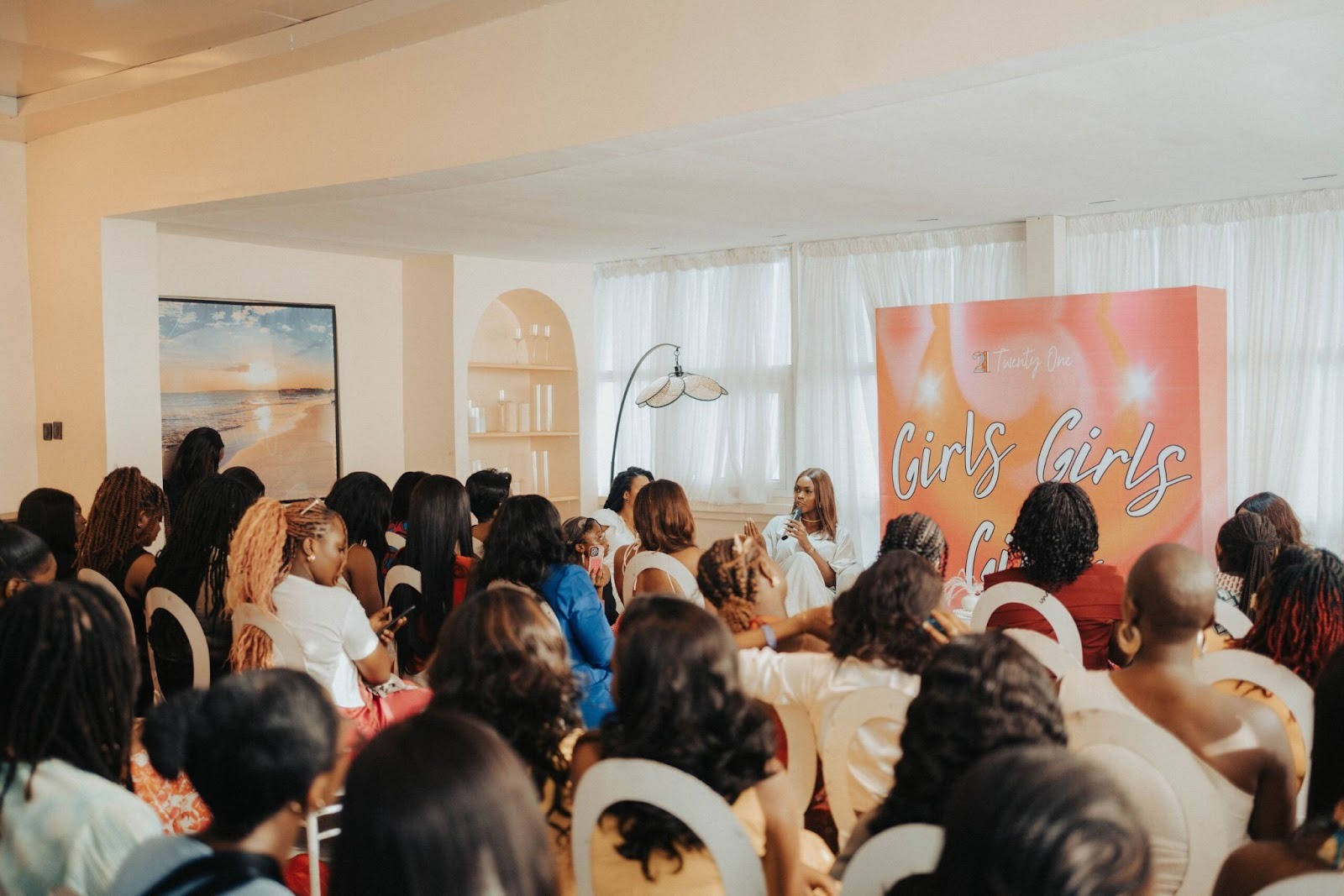
Honestly, my motivations for starting the Women’s Film Club were quite selfish. I wanted to make more friends. I wanted to make more friends with shared interests. I thought the perfect place to start with that would be starting a film club where we would watch independent films.
I’ve always found independent cinema so much more interesting than anything else. Whether it’s the cinematography or the script writing, I’ve always found these films more challenging and just slower in pace and richer. And these features get more emphasized when you are watching African independent films.
Whether old or new, there’s always just something that you get out of them that you may not necessarily receive from watching mainstream films. Not to put anything down, but there’s always just like an extra care put into some of these films. And I just thought, what would be a better way to fellowship through film and look at different characters?
Some of these women characters need to be discussed, and I wanted women to discuss how the characters in film relate to our lives, our hopes, and our dreams. It was beautiful. It still continues to be a beautiful experience every time we come together and share a film or watch a film that has just been made.
So yeah, that was my motivation for starting the film club. I really just wanted to find a community, share similar interests, and grow.
Regarding the place of women in art, art direction, and film in Nigeria and Africa, are there places where you are seeing an improvement? If yes, what are those places, and how do we encourage the women at the forefront of that change?
I think there has been a lot of improvement in women’s participation in the arts. You see it everywhere. You see a good number of women running and owning galleries, running art foundations, and curating and running art fairs. A lot of women artists are participating in exhibitions, whether locally or internationally, and are really at the forefront of their practice.
I do think that it is a great time to be a woman in the arts. Of course, there’s always room for improvement, but I do think that things are encouraging. I really just feel like we just need to move out of the way for women.
I just think if you just allow a woman to dream and give her her space to achieve her dreams, it’ll be done, and it’ll be great.
And I think it has such a great impact on society. It shapes thought. It shapes our traditions, and I think we need that desperately. I think that is what the world is crying out for right now. So, yeah, it’s a great time to be a woman in the arts.
As an art curator and gallery owner, if you could advise a newbie artist or filmmaker, or general creative, what would that be?
My advice for a newbie is really, really try to cultivate your relationships really well. I would advise you if you are an artist and you want to show your work, get up and go to that gallery. You know what I mean? You may not talk to anybody on that first day. But just keep going, keep going back, and try to make friends.
Try to put yourself out there and try to be part of a community. I think it helps you. It’ll also give you courage, cause it can be scary being new. But when you have support, you can do anything. Find a community or build one, and take that leap of faith by starting to visit the places that you’re interested in.
The next step is to talk to someone. You know what I mean? Like a lot of things in this town, in this world, is based on building relationships. If you start to develop a good relationship, a good rapport, people will remember you and have you in the back of their minds.
That’s what happens when you start to show up to places, and you start to speak to people, and you start to share. My advice would be to just take that leap and have the courage to go to that exhibition. Go to that office, talk to that person, and make friends with an artist that you really admire, and talk to your friends and do things together.
You don’t necessarily always have to wait for the gallery to call; put your own collective together. That’s what I’m talking about when I say community. It really helps you as you are trying to figure yourself out. So as a newbie, I would say find a community, find some friends, dare to go to that exhibition, go to that gallery that you like, talk to someone one day.
And you know, also respect yourself. That’s also a very big one. You have to respect yourself, and also do the work and give yourself time. A lot of these things take time. A lot of things do not happen overnight, so have patience, but be consistent. Put yourself out there and try to join a community.
That’s my advice.
Finally, where do you see yourself as an art curator in the next five years?
Where do I see myself as an art curator in the next five years? Wow. This question always gives me so much anxiety. Not because I’m not dreaming, but you know, honestly, when I think of the next five years, I really think of the artists that we’ve been working with.
I’m just so proud to see a lot of their growth, and I’m so excited for their future, and I just know that as they continue to grow and as they continue to sharpen their ideas, their thoughts, their language, we also will be growing.
We also will be going along with ’em. It just makes me so excited and grateful. So when I think about my artists in the next five years, I just know they’re gonna be popping.
So if they’re popping, we’re popping. Yeah, we’re popping in the next five years. Now we’re popping five years to come. 10 years from now, we will still be on top.