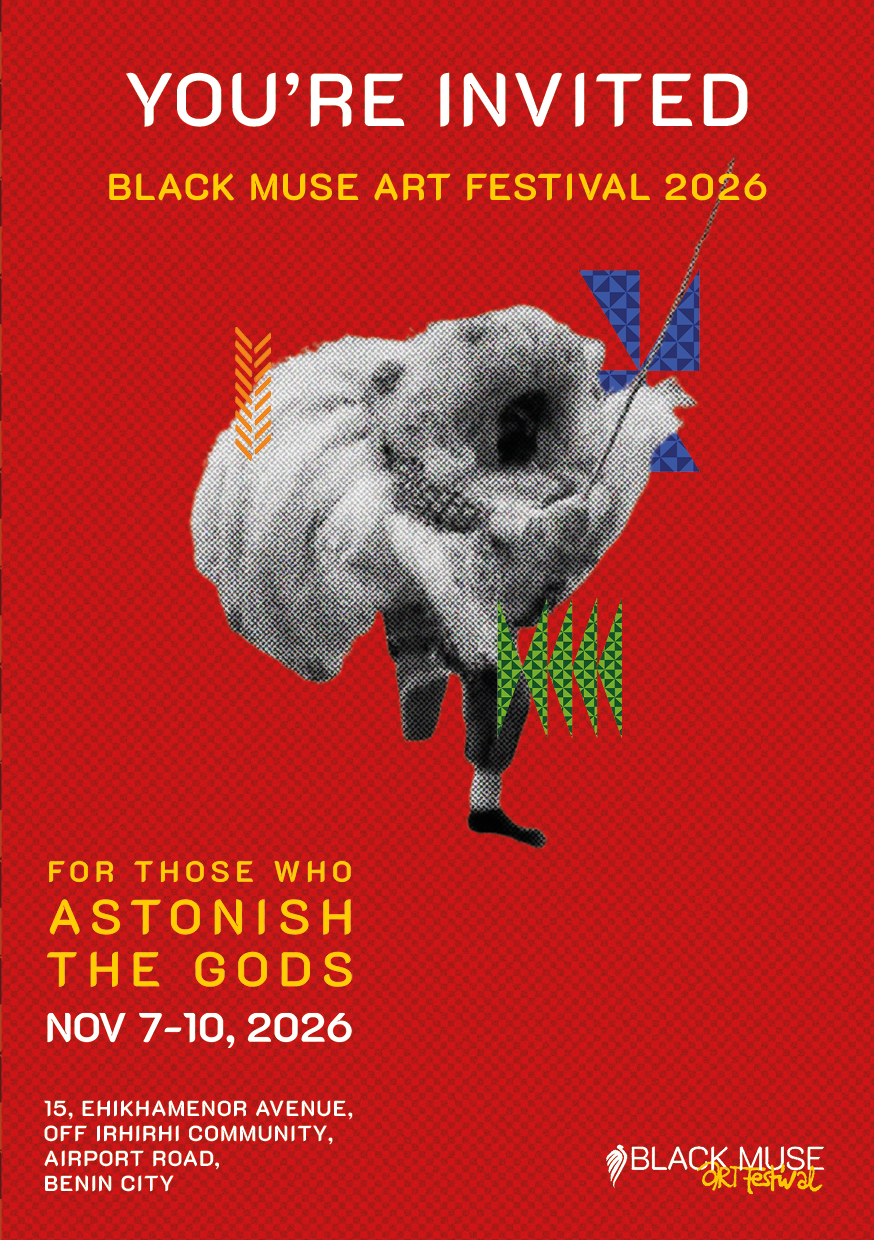
Angels and Muse announces the second edition of the Black Muse Art Festival (BMAF), taking place from November 7–10, 2026, in Benin City, Edo State, Nigeria. Themed For Those Who Astonish the Gods, the festival draws inspiration from Nigerian writer Ben Okri’s novel of the same title, opening up a space for reflection on imagination, the limits of perception, and the transformative possibilities of art and cultural knowledge.
Building on the foundation established by its inaugural edition, the 2026 festival continues Angels and Muse’s commitment to expanding the possibilities of contemporary African art and cultural discourse beyond established metropolitan centres, while providing a platform for critical discourse, knowledge exchange, and ideas pollination. Through exhibitions, site-specific installations, ecological workshops, and engagements with plants, sound, and indigenous knowledge systems, the festival positions Benin City as a vital site for artistic experimentation, cultural exchange, and new ways of understanding the relationships between people, place, and the environment.
A major highlight of this year’s programme is the sculpture park exhibition, What Seeks Us Is Better Than What We Seek, curated by Ghanaian artist-curator Esinam R. Damalie. Developed through three interconnected strands, art, sound and plants, the exhibition approaches the Black Muse Sculpture Park as more than a setting for the display of artworks. It becomes a living environment in which artistic practices, plant life, and sound encounters inform one another, inviting visitors to consider how meaning emerges through relationships between human and non-human life.
The exhibition features works by Olumide Onadipe, Temitayo Badru, Jonathan Chambalin, Haneefa Adams, Ephraim Theophilus, Ohiole Ohiwere, Bridget Edheroveno, and Onye & Choir (a loose collective). Through this constellation of practices, Damalie brings different forms of making and experiencing into conversation, encouraging audiences to encounter the park as an evolving landscape of artistic, ecological, and sensory exchange.
An important dimension of the curatorial approach is a presentation developed in collaboration with Bridget Edheroveno, a horticulturist and participating artist. Focusing on the properties and uses of plants, the presentation explores their healing, purifying, and other beneficial qualities, drawing attention to the knowledge embedded in plant life and the relationships communities have cultivated with their natural environments. By bringing horticultural knowledge into the exhibition, the project invites visitors to look beyond plants as elements of landscape or decoration and consider their roles in wellbeing, ecological balance, and the preservation of indigenous knowledge.
The strand devoted to sound further expands the exhibition’s sensory and conceptual possibilities, encouraging audiences to engage with the park through listening as well as looking. Together, art, plants, and sound establish a curatorial framework in which the environment is not simply observed but actively encountered, revealing connections between artistic expression, ecological awareness, and the often-overlooked forms of knowledge that shape everyday life.
The festival will also unveil this year’s pavilion, continuing Angels and Muse’s exploration of architecture, materiality, and the possibilities of shared cultural spaces. Situated within the Sculpture Park, the pavilion contributes to the development of an environment where art, nature, and public life intersect, reinforcing the festival’s commitment to creating spaces for cultural exchange and artistic engagement beyond the conventional gallery. Two special projects will further expand the programme’s engagement with installation and conceptual practice. Nigerian poet, writer, and multidisciplinary artist Wana Udobang presents Dirty Laundry, a textile installation that brings her interdisciplinary practice into the park.
Also featured is The House that Words Built, a conceptual installation by Ofem Ubi, a poet whose practice intersects with contemporary art. Together, the projects draw attention to the ways poetic language can move beyond the page and the spoken word to become spatial, material, visual, and embodied. Through installation, poetry is encountered not only as language but as an environment, something visitors can enter, navigate, listen to, and experience through their bodies. These works extend the festival’s invitation to consider how poetry can inhabit art spaces and take on new forms beyond conventional literary presentation.
“As we continue to celebrate the works of those who came before us, we also need to ask what we are making possible for those who will come after us. This is what the Black Muse Art Festival by Angels and Muse is about. We are not simply gathering artists and art practitioners for a few days; we are creating a space where knowledge is passed on, new ideas are birthed and nurtured, and another generation is given the freedom to astonish us.” — Victor Ehikhamenor, Convener, Black Muse Art Festival
Beyond the exhibitions and installations, this year’s programme includes an ecological workshop led by Tobiloba Akibo. The workshop will create an opportunity for participants to engage with environmental questions through practical and experiential learning, complementing the festival’s wider interest in ecological awareness and the relationship between cultural practice and the natural world.
A book-drive initiative for public schools in Benin City will also connect the festival’s activities with young readers and local educational communities, underscoring the importance of access to creative knowledge and cultural participation.
With For Those Who Astonish the Gods, the Black Muse Art Festival continues to explore what becomes possible when art encounters the unexpected, when plants become repositories of knowledge, when sound transforms the experience of a landscape, and when artistic practice opens new ways of understanding our relationship with the world around us. Across four days, the festival invites artists, visitors, and cultural practitioners to participate in a shared experience of discovery, placing Benin City at the centre of an evolving conversation about contemporary art, ecological consciousness, and the future of artistic practice on the African continent and its diaspora.