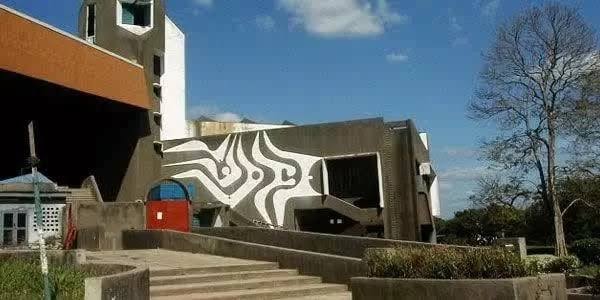
“Ifẹ̀, we must never let you die,
we must hold you close by
for it was inside the firmaments of your fortress
that our dreams were hatched.”
–Samsudeen Àlàbí
–Sandstorms in June

The Year was 2020, and Tèmítọ́pẹ́ and his friends took the literary world, not quite by storm, but rather powerfully nonetheless, from their base on Africa’s most beautiful campus, and forever reshaped and left their mark on the Ifẹ̀ literary community, and brought it together in a way not seen for a while, and sought to be the link between the scattered and isolated Ifẹ̀ literary bodies organizations and creatives, while simultaneously being a cocnlave of themselves. In a sense it could be argued that they were not so different from the ones before them, that they were merely continuing and revived the Ifẹ̀ art and literary tradition in a manner akin to the illustrious ones before them, the likes of Dami Àjàyí, Emmanuel Iduma, Emmanuel Faith, Tade Ipadeola, Chima Anyadike, Ṣẹ́gun Adékọ̀yà, Gbémisọ́lá Adéòtí, Ayọbámi Adébáyọ̀, Tóbi Adébọwálé, Dámilọ́lá Yakubu, Ọláolúwa Joseph, Kẹ́mi Fálọdún and much more recently ‘Jọba Ọ̀jẹ̀labí and ‘Diméjì Ògúnrántí amongst many, many, many others, and were inspired by their giant strides in the realm of arts and Literature.
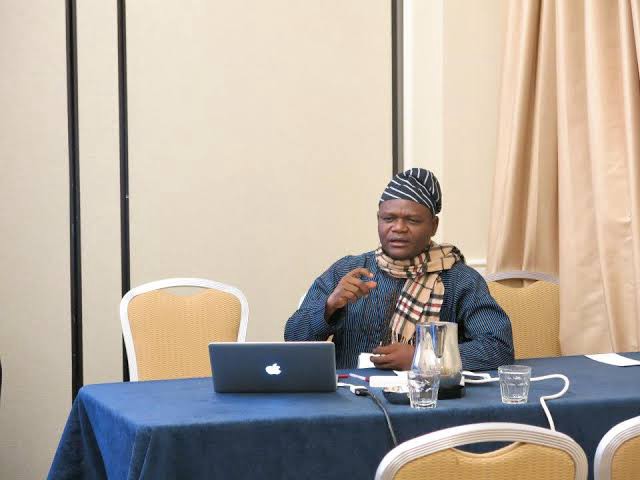
Gbémisọ́lá Adéòtí is a Professor of Literature-in-English, graduate of Ifẹ̀ Drama and former Dean, Faculty of Arts OAU and also the former Director of Institute of Cultural Studies OAU. He specialises in Poetry, Dramatic Literature, Literary History and Theory. He is author of the acclaimed poetry collection “Naked Soles” amongst other publications. He also once worked as Journalist with ‘The News Magazine. 
Tade Ipadeola is a Lawyer, Poet and Author whose third Poetry collection; The Sahara Testaments won the Nigerian Prize for Literature in 2013
But they might gone slightly further than these their esteemed predecessors in their writing and rewriting the Ifẹ̀ stories, experiences and continuing the Ifẹ̀ art and literary tradition, in a sense, it could be argued that they were not necessarily better in their styles, dexterity and fluency with which they spoke the language of literature and the arts, and anchored the rebirth of the tradition than the ones before them, but with Internet age in it’s full bloom, the benefits which their close knit community of writers and artists afforded them in terms of peer reviews, mutual encouragement and a melting pot cum a place for free flow of ideas, and mentorship from those esteemed predecessors, they created beautiful and thought provoking works in virtually every imaginable medium of Art; poetry (regularly published on the Ifẹ̀ Poetry Portal page and on their social media accounts), the short story form, essays usually blogposts, photography, visual story telling, graphic designing, playwrighting, even in the Àdìrẹ art which had it’s foundations in traditional Yorùbá arts and crafts, as evidenced in the beautiful, colourful attires of it they regularly sported.
Beyond that, it would be important to note that what marked and inspired their works were their eagerness and feverishness in them of their story to be told, in fiction and non-fiction, they derived inspiration from that boundless source of muse which the uniqueness of University life, especially in a place as renowned as Ifẹ̀ afforded them, they found a solace and succour in their writing and creative works and an escape from the rigorous routine of academic life, they believed in the uniqueness of each person’s upbringing that one way or their other, no matter how uneventful their childhood might have supposedly been to their own eyes or that their life was supposedly was, that there was a but a bit of interest and romance, even intrigue in it which was needed to be told to the eager ears of the world, and which others could see the mirror images of themselves in, to enrich the stories and avoid that plague of a single story. So they went on to be fishers of ears.
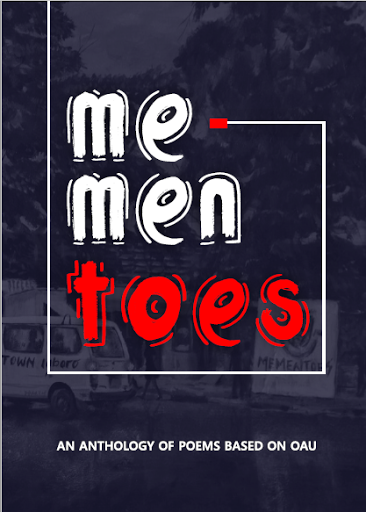
Mementoes(2017), anthologies of poetry and photography based in the OAU experience 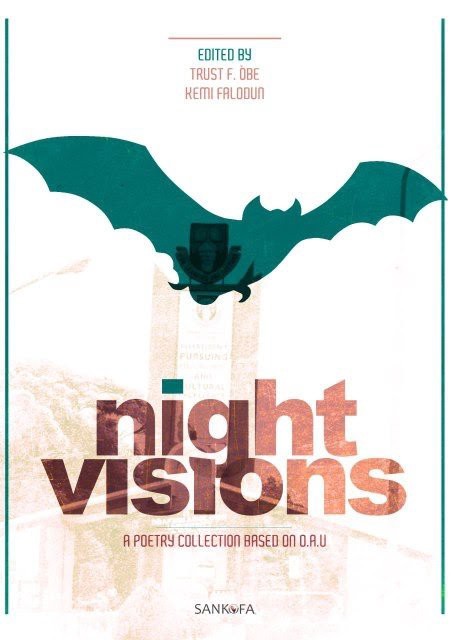
Night Visions(2015), anthologies of poetry and photography based in the OAU experience
They were from many faculties and departments, Law, Pharmacy, English, Medicine, Drama, History, Foreign Languages, Agric, Accounting e. t.c. They belonged to several literary organizations like ANA(Association of Nigerian Authors) OAU, Campus Association of Poets –CAP, Creative Writers Niche amongst others, and some to their native Faculty/Departmental associations like Medivoice, Pharmavox, NCB, but virtually all of them belonged to Bookhub Ifẹ̀where Tèmítọ́pẹ́ was moderator that year, where they attended book reviews at the end of each month, thoroughly enjoyed the thrust of literary debates and comparison and also the depth, range and imagination those books afforded them, not to mention also the sharpening of worldview those books provoked and awakened in them and where sometimes instead of choosing books by authors for the month they collected their own works into what was somehow a literary anthology and reviewed it together in what would later mostly lay the foundation for OAU Anthology 2021.
It was also at Bookhub Ifẹ that plans for Ifẹ̀Book and Arts festival 2021 surfaced & where the idea began to take shape, a Pan-OAU Literary event that enjoyed the support and efforts of organizations all over campus, which was later to become an important event in the annals of the university. But beyond the confines of these various of these organizations, they were a conclave to themselves and stories of when they were on campus and their exploits would continue to be passed down across generation of students especially those in the art & literary circles. Their works besides being published locally & being self-published also began to be published in reputable journals and magazines like Agbowó, Kalahari Review, Kwani?, Wawa Book Review, Brittle Paper, Jalade Africa, Yorùbá Names blog, Saraba Magazine, Aké Review.

Where they gradually ascended to local and international fame and their works caught the attention of important authors and publishers like Lọlá Ṣónẹ́yìn of Ouida Books. They also attended programmes like Aké Book and Arts Festival in Lagos, which Lọlá directs and Agbowó Art & Chills in Ìbàdàn. They wrote, met regularly and critiqued their own works, made use of in-house jokes and biting sarcasm whose context only they could relate to. Their works was markedly influenced by Culture Activism. They attended Pit Theatre plays regularly, made friends with the more popular of the actors of the Department; Ifẹ̀ Drama, and reviewed plays they attended together, either under the auspices of Bookhub Ifẹ̀ or within their own Conclave.They discussed the recent Nobel Prize for Literature awarded to the legendary Kenyan author, Ngugi wa Thiong’o and it’s implications for African Literature, also found time to attend the final exhibition of the Ifẹ̀ Art School; Department of Fine and Applied Arts tagged ‘So Far’ where they analyzed paintings and other works of Art on Display. And they marvelled at such profundity of beauty and creativity.
They also could be found occassionally lounging at Motion ground after a stressful day of lectures, analyzing their own poetry, and that of upcoming poets and established ones, their lifestyle and exploits proved to be an important legacy to the ones after them and transmitted that energetic spirit of creativity and also sought to pass down their ideals for it not to die upon them leaving the University, that there should not exist a vacuum in creativity and portrayal of experiences.

Their activities and their creations heralded the beginning of a long period of intense creativity on Africa’s most beautiful campus and their efforts pioneered a kind of renaissance.
In later years, those who studied those times and it’s beginnings argued and observed that Tèmítọ́pẹ́ who was the primus inter pares of the conclave and of the movement, that the thoughts about the whole thing began to take shape in part due to his conversations with some of his older and respected friends ‘Jọba Ọ̀jẹ̀abi , ‘Diméjì Ògúnrántí, Dámisí, Iqmat Babárìndé, Precious O’Dahunsi & some others and some of his friends too who first heared the words of his lofty vision of the future like Òkìkíọlá, Bùsáyọ̀ Adédèjì, Ajíbíkẹ̀ẹ́, Ọmọ́dọlápọ, Oyínkán Ìdòwú among others. Plus the events of 2019 including the programmes he attended and him becoming co-moderator with Jọba at Bookhub Ifẹ̀ and being awestruck with the latter’s poetry which all in effect brought him into the Ifẹ̀ literary Orbit and proved in inspiring the vision.
But all these were borne out of the richness and lucidity Tèmítọ́pẹ́’s Imagination on a Sunday evening, few days to that Year; 2020, who imagined, sought and saw his friends to be bigger than they thought themselves to be and to rise beyond the rivers of mediocrity and self-doubt of their abilities and achieve exploits beyond their wildest imaginations.
Did they achieve all these or did it merely linger as fingerlings of fantasies in Tèmítọ́pẹ́’s Imagination?