
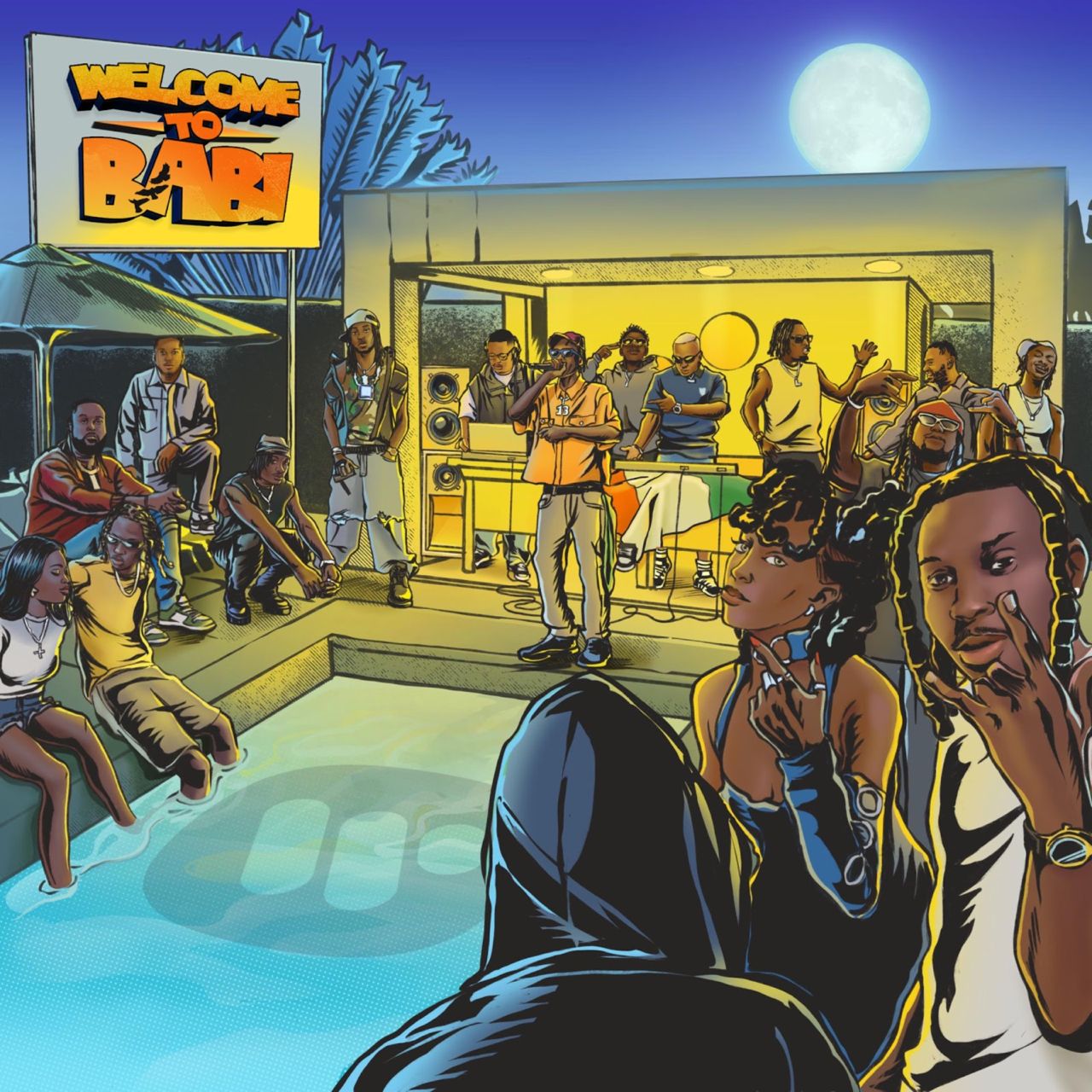
The best collaborations don’t happen by accident, but they can’t be forced either. They require intention, infrastructure, and a willingness to step into the unknown. This past January, Warner Music Africa Francophone provided all three at Villa Tahiba in Abidjan, where over 20 artists, producers, and songwriters from three countries spent a week creating what would become ‘Welcome to Babi’—a six-track EP that arrives today as one of the most compelling arguments for pan-African musical collaboration we’ve heard in years.
Let’s be clear about what this wasn’t. This wasn’t a hastily assembled compilation where artists record their parts separately and someone stitches it together later. This wasn’t a label manufacturing a “movement” for marketing purposes. This was a legitimate creative residency where artists lived, worked, and built genuine relationships that translated into music you can actually feel.

The roster Warner Music assembled reads like a wishlist for anyone tracking African music’s emerging vanguard: Herc Cut the Lights, Yumbs, Ch’cco, Ste Milano, Paulo Chakal, Kold AF, to name a few. These are artists who’ve been making noise in their respective territories but haven’t necessarily crossed paths. Villa Tahiba changed that.
“Everyone left something they knew behind and picked up something new,” explains Joshua Ahazie, Marketing Manager at Warner Music Africa. “Nigerian artists who’d never really engaged with Amapiano’s complexity got masterclasses from the South African guys. Ivorian producers introduced rhythms that everyone else had to figure out. It was beautiful chaos”, he added.
That chaos is all over ‘Welcome to Babi’ in the best way possible. The EP doesn’t sanitize its influences or try to create some homogenized “African sound.” Each track maintains its distinct identity while contributing to a larger conversation. It’s cohesive without being monolithic—a difficult balance that most collaborative projects fail to achieve.
The commercial response has been encouraging. Lead single ‘I Gotchu’ by Spy Shitta has accumulated up to 500,000 streams since its release. But where ‘I Gotchu’ really found its audience was TikTok, where it’s generated over 2000+ video creations, 7 million views, and 400,00+ engagements. The track’s success on TikTok wasn’t manufactured through expensive influencer campaigns. It was organic—users genuinely connected with the song’s energy and created their own content around it.
‘Monaco’ by Paulo Chakal and LIMO has taken a different trajectory. Where ‘I Gotchu’ exploded quickly, ‘Monaco’ has been building steadily, appealing to listeners who gravitate toward Amapiano’s more sophisticated productions. The collaboration between Chakal and LIMO feels natural—two artists who clearly understand each other’s creative languages.
But the real story of ‘Welcome to Babi’ isn’t in the singles, it’s in the project as a whole, particularly the focus track ‘C’Est Gate’. This is where the Villa Tahiba concept fully manifests. ‘C’est Gâté’ couldn’t have been made via email. It required everyone to be in the same room, feeding off each other’s energy, taking creative risks in real time.
The track pulls from Ivorian Coupé-Décalé’s infectious bounce, Nigerian Afrobeats’ melodic sensibilities, and South African Amapiano’s rhythmic complexity. On paper, that sounds like a recipe for an overcrowded mess. In execution, it’s the most exciting song on the EP precisely because it refuses to choose a lane. It exists in the intersection, and that’s where innovation happens.

Warner Music Africa’s approach here deserves examination because it represents a meaningful shift in how major labels engage with African music. For years, the criticism has been that international labels extract African talent without investing in local infrastructure. They sign artists, take them abroad for production, and market them to global audiences without building sustainable creative ecosystems on the continent.
Villa Tahiba offers a counter-narrative. By creating a physical space in Abidjan, not London, not Los Angeles, Warner Music made a statement about where African music’s future is being written. The decision to gather artists from multiple countries for an extended residency rather than facilitating quick remote collaborations shows a commitment to process over product.

“There’s a difference between getting a feature and actually creating with someone,” explains an A&R executive at the label.“Features are transactional. What happened at Villa Tahiba was relational. Those relationships will extend far beyond this EP.”
That long-term perspective is crucial. ‘Welcome to Babi’ might be a six-track project, but the connections formed during those January sessions could influence African music for the next five years. Artists who met at Villa Tahiba are still in contact, still sharing ideas, still building. That’s the real return on Warner Music’s investment.