
Movies, as a form of literature, shape our lives over the years. If children have a poor representation, how then will their lives be shaped?
Most children, when asked who their role model is, never fail to fire up the cliché factory by choosing their favorite parent at the time—mom or dad? The ones who don’t give this reply end up naming a cartoon character: Spiderman, Avatar, Barbie. No single movie role model in sight.
Nigeria has a sizable number of child actors. A considerably poor number compared to adult actors, yet many of them have moved on to become big stars in the industry. Yet, one thing is evident nowadays—bad acting. A viewer is either taken aback by the child’s monotonous speech, like he/she is reading from a script they don’t know too well, or speaking with an accent very insulting to the Nigerian accent, all to sound well-spoken.

The structural system put in place to train children into excellent actors is very weak. Children require more patience and technique to execute a role properly, and that patience, due to the time frame required to send the movie out and start making a profit, is what most movie producers and directors lack. So, they either slap terrible acting on screens or just eliminate the role and go for a different plot.
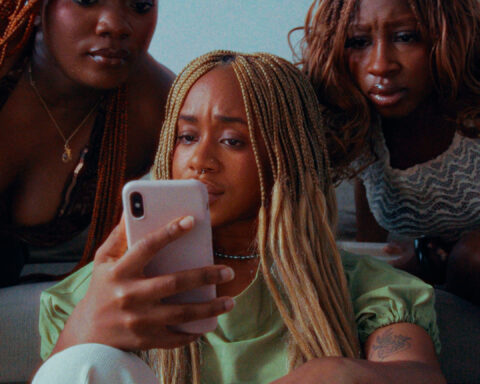
Over the past years, few things have been as famously wrong as the media theatre surrounding adults cosplaying as teen actors. To pull off this act, makeup is used to hide facial hair in men, and hairstyles like cornrows are employed to make women look smaller and younger. Sometimes, thinner women are preferred because with the right outfit and hairdo, a 28-year-old can cosplay as a 16-year-old.

There are so many downsides to this. Aside from the loose tracks that viewers can see, teenagers are teenagers; they speak and act in a way that most movie producers never take into consideration.
No matter how hard an adult actor tries, he or she may never pull it off properly, thereby exposing a gap. This is synonymous with asking a white man to play the role of an African, speaking with their accent in a revolutionary movie.
There’s also a shortage of talent. Most movies consist of recycled legendary actors and actresses. New faces are rarely ever championed. And as a result, remarkable talents are hidden from the audience.
Most Nigerian parents oppose their children being on screens or doing demanding extracurricular activities aside from school. They believe children should be seen, not heard, and as such, can be a contributory factor to why there’s a shortage of child actors.
Proper representation of every demographic in movies is highly crucial. It helps shadow the lives of those watching it. A teenage boy can decide to be great because he watched a movie and saw that a young black boy like him, with the help of his mother and God, became the best neurosurgeon in the world. A girl child can decide to be the best in her class because she watched a movie and saw a young black girl win all her spelling competitions.
Children from a young age should be asked what they are interested in, and those interests should be strengthened either as a hobby or preparation for who the child will become in the future. The fear of distraction and failure in school can be eradicated by adopting more flexible schooling structures.
The strengths we have as humans are that we are multipurpose beings, and as such, shouldn’t be confined during the formative years of our lives to just schooling. Children can be skilled athletes, singers, dancers, and in this case, better actors.
In the end, Nigeria’s film industry has a choice: continue recycling adults into teen roles and risk flattening childhood on screen, or invest in the young talent already among us. Child actors like Susan Pwajok, Regina Daniels, Genevieve Nnaji, Angel Unigwe, and Sharon Nnaemeka remind us that some children are naturally talented actors. All they need is proper training.
Representation is about showing young viewers that their lives, their dreams, and their voices matter. After all, a movie is more than entertainment; it is a mirror. And if children don’t see themselves clearly in that mirror, who will inspire them to reach their own potential?