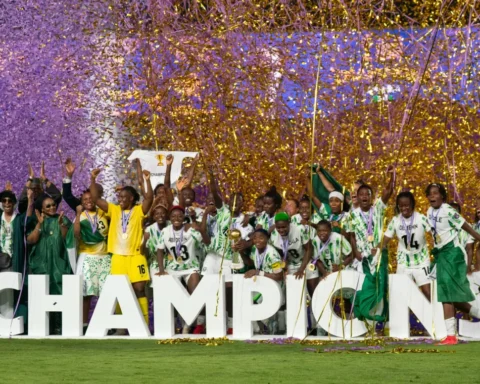
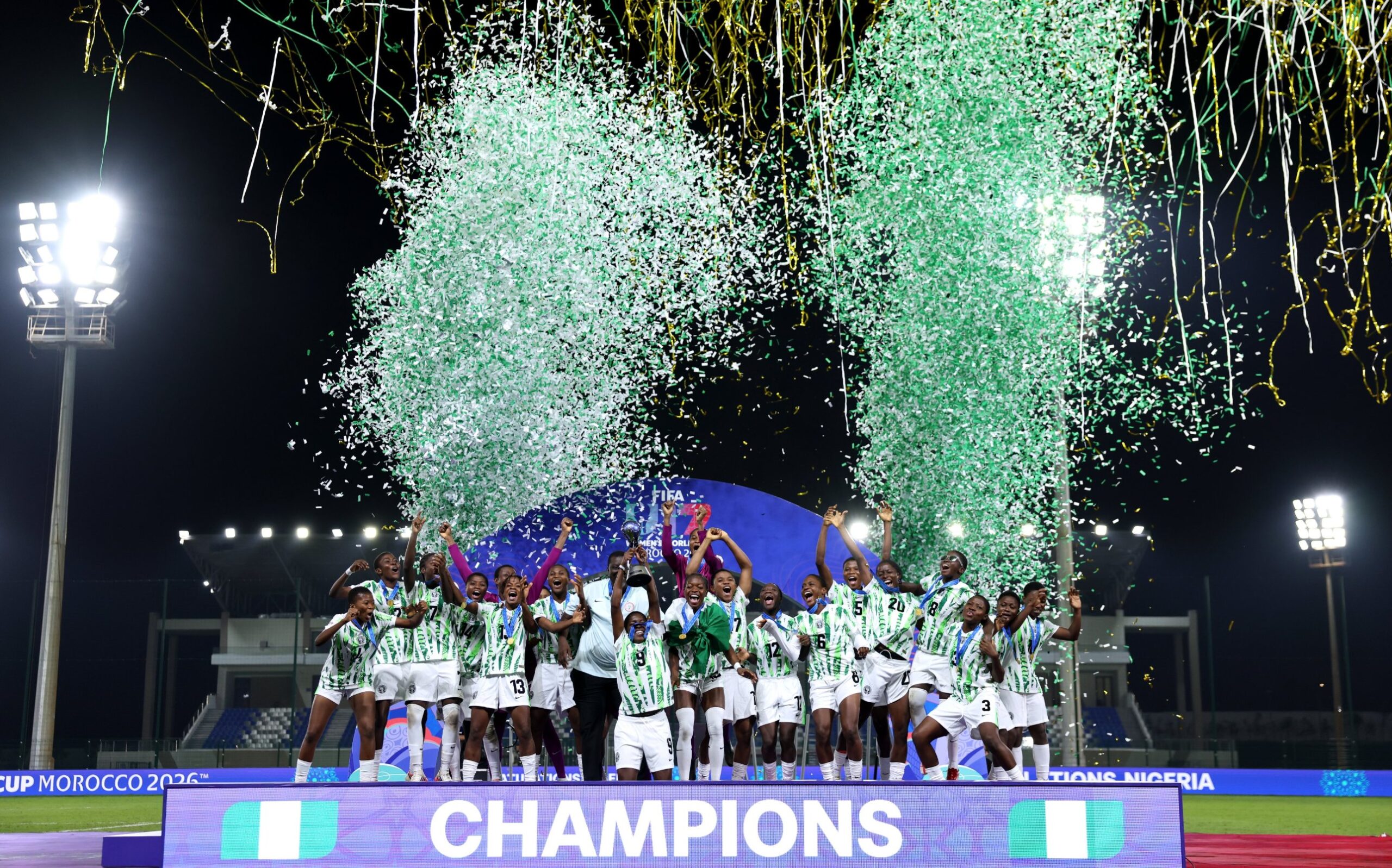
On Saturday night in Rabat, a team of teenage girls from Nigeria did something no Nigerian side, and no African side, had ever done: they won the U-17 Women’s World Cup. The Flamingos beat Japan 2-1 in the final, with Awawu Bashiru scoring just before the break and Oluebube Umejiaku adding a second two minutes into the second half, off a pass from Esther Stephen. Japan pulled one back through Fuki Ito in the 80th minute, then the Flamingos held on through four minutes of added time while Infantino and Motsepe watched from the stands. It was Nigeria’s first title at this level and the first time the trophy has ever come to Africa. Not bad for a team that lost its first game.
That is the part people skip. The Flamingos opened the tournament with a 2-1 defeat to Poland, the kind of result that tends to turn a group into a long week. Instead they beat Puerto Rico 2-0, then faced North Korea, the defending champions, and won 3-1. They went through anyway, and the knockout rounds mostly followed the same pattern: concede, answer, win.
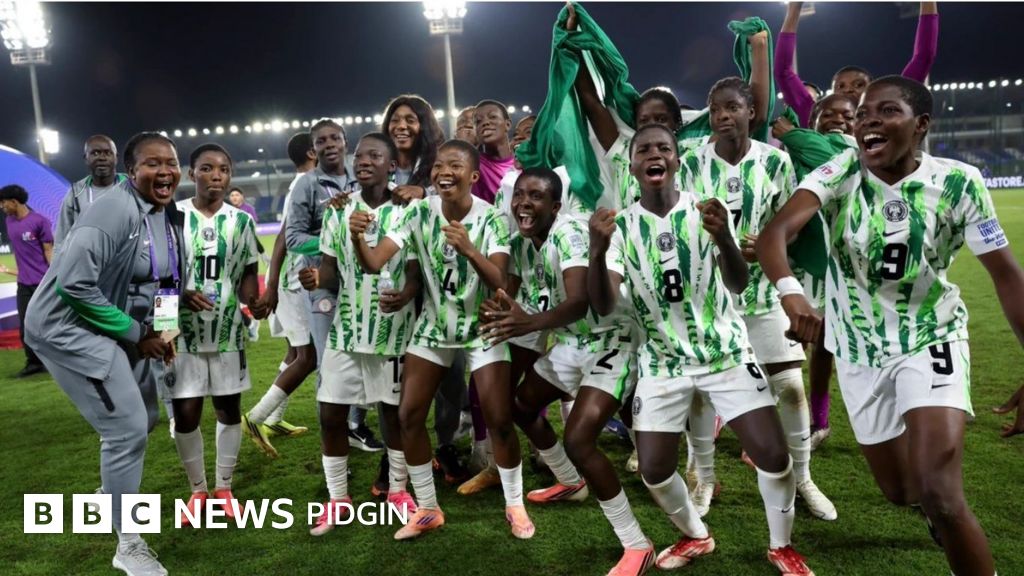
The road
- Group, game 1: Poland 2-1 Nigeria
- Group, game 2: Nigeria 2-0 Puerto Rico
- Group, game 3: Nigeria 3-1 North Korea (the defending champions)
- Round of 16: Nigeria 2-1 Mexico
- Quarter-final: Nigeria 1-0 Venezuela. Captain Azeezat Oduntan scored from the penalty spot in the 89th minute.
- Semi-final: Nigeria 3-1 Brazil. Queen Joseph in the 55th, then Bashiru in the 71st and 80th.
- Final: Nigeria 2-1 Japan
Look at that list for a second. Three of the four knockout wins were decided by one goal, and one of them was settled a minute from the end of normal time by a captain who walked up and took a penalty with a quarter-final on her shoulders. Brazil came into the semi-final with Greise Kelly, who had three goals and five assists in the tournament, and the Flamingos still took them apart. Japan, in the final, were playing their fourth final at this tournament, champions in 2014 and runners-up in 2010 and 2016. They are the model of how a federation builds age-grade football, and a Nigerian side with an opening defeat on its record beat them on the day it mattered.
The qualifying run was no cakewalk either. To get to Morocco the girls had to get past Benin over two legs, winning 3-2 at the Remo Stars Stadium in Ikenne and then 5-3 in Lomé, 8-5 on aggregate. Queen Joseph and Esther Stephen were among the scorers in Lomé. A team that survives that kind of scoreline in qualifying is a team that already knows how to live with chaos, and it showed in Rabat.
There is also a longer story underneath this one. In 2022, in India, Nigeria’s U-17 girls won bronze, the country’s first medal at this tournament. They got it by beating Germany on penalties after a 3-3 draw in which Germany scored three times in 17 minutes. They had lost the semi-final to Colombia, and they came home with a medal and a promise that the next group would try to finish the job. Four years later, that is what happened.
First Nigerian winners. First African winners.
Say it slowly, because it is not a small sentence. Africa has sent teams to this tournament since it started, and every time the trophy has gone somewhere else. Now it is in Nigerian hands, held up by girls who are mostly too young to vote.
Then there is the question of what this means for Nigerian football as a whole, and it is worth being honest about it. The Super Eagles did not make the 2026 men’s World Cup, losing to DR Congo on penalties in the intercontinental playoff last November. The Golden Eaglets, the boys’ side at the same age as these girls, went out of the WAFU-B qualifiers in October and will miss both the 2027 U-17 AFCON and the World Cup. The men have not had a lot to hold on to this year.
The women’s story is more complicated, and it should be told that way. The Super Falcons lost to Cameroon in the quarter-final of the 2026 WAFCON in Casablanca, then lost 2-1 to South Africa in the August playoff, which means they will miss the 2027 Women’s World Cup in Brazil, the first time they have been absent since the tournament began in 1991. The NFF has since parted ways with the technical crew. The Falconets, the U-20 girls, did better in Poland, getting out of a group that included Spain, China and England (a 3-0 win over England sealed it) before a late goal from Colombia ended their run in the quarter-finals.
So no, the women’s teams have not carried everything, and nobody should pretend they have. What they have done, in the same year the senior men missed the World Cup and the Eaglets fell short, is send two age-grade sides deep into world tournaments, and one of them all the way to the top. The Flamingos did not win because Nigerian football is working perfectly. They won in spite of the gaps around them, which is the part that makes it feel monumental. These are the girls who will be knocking on the Super Falcons’ door in a few years, and they are arriving as world champions.