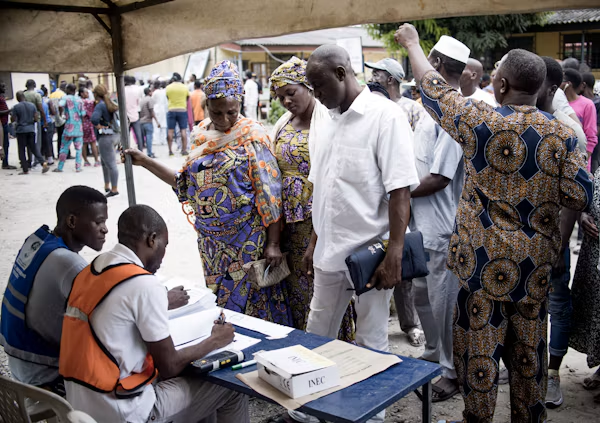
Nigeria votes on 16 January 2027 for president and the National Assembly. Governorship and state assembly elections follow on Saturday, 6 February. Campaigns for the top race started on 19 August, so from today there are 95 days to the first vote.
Rallies and billboards give you slogans. These seven questions ask for numbers. Ask every candidate, from every party, and write down what they say.
What will the minimum wage be, and who pays for it?
The good: The minimum wage is ₦70,000 a month, up 133% from ₦30,000 when it was introduced in 2024. Inflation has slowed for three straight months, to 15.39% in August.
The bad: ₦70,000 is about $53. Nigeria ranks 17th of 22 countries compared, where the average is $99. Labour wants ₦500,000, which is 7.1 times today’s figure.
Ask where they stand and who covers the gap.
What happens to the price of fuel?
The good: NNPC Fuel App users get a ₦66 discount, extended to 14 October. In Abuja, that brings petrol to ₦1,304, so ₦70,000 buys 53.7 litres. Dangote’s ex-gantry price is ₦1,325.
The bad: NNPC’s pump prices on 8 October ran from ₦1,355 in Lagos to ₦1,435 in Yobe, the highest. A month’s minimum wage buys 51.7 litres in Lagos, 51.1 in Abuja and 48.8 in Yobe. The discount ends tomorrow.
Ask whether this price is the plan or the problem. Public-sector unions want ₦500 a litre, which would be a 63% cut from Abuja’s ₦1,370.
How many megawatts, and by what date?
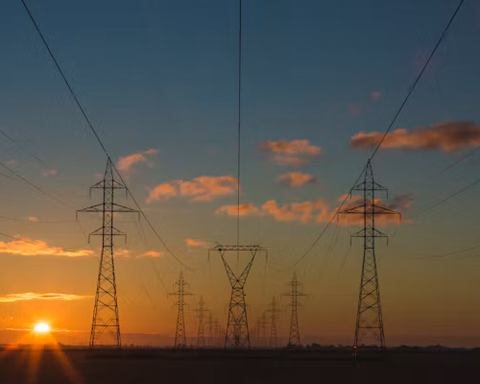
The good: Lagos says it has secured 400 MW from private producers. Three named projects add 78 MW (Elektron 40, Fenchurch Akute 26, Sahara Ogba 12). 42,000 of about 50,000 streetlights, or 84%, now run on solar, and 175 schools have solar, with 100 more in progress.
The bad: Lagos gets under 1,000 MW from the grid and needs more than 6,000 MW. The 78 MW named projects are about 1.3% of that need.
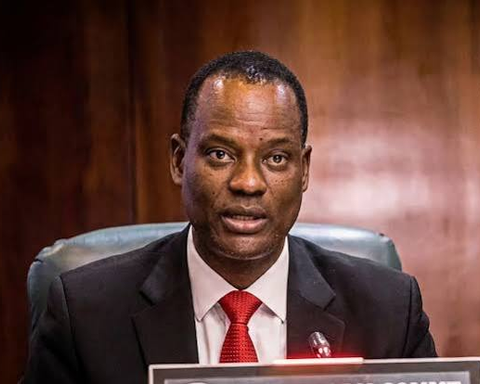
Two targets are on record: 3,500 MW (August town hall) and above 3,000 MW by March 2027, according to Commissioner Hamzat on 11th October. Even 3,000 MW is half of what Lagos needs, and March comes after the 6 February governorship vote.
Ask for the number, the date, and whether they will be measured on it.
Why are so many of us trying to leave, and what do you offer the ones who stay?
The good: UK study visas granted to Nigerians reached 30,204 in 2025, up 59%. The demand for opportunity abroad is real.
The bad: 22.7% of Nigerian applications were withdrawn in the first half of 2026, up from 4.5%, according to the Financial Times. These are withdrawn applications, not refusals alone. For all nationalities, it is 10.5%. From 1 June, UK universities must keep their refusal rate under 5%, down from 10%. One analyst said overseas student numbers could fall by more than 20%.
Ask what a 24-year-old can build here, with a concrete plan.
What do you say about Lekki, and what will you do about policing?
The bad: The Lagos judicial panel found that 11 people were confirmed killed at the Lekki Toll Gate on 20 October 2020, with 4 more presumed dead. There were 48 casualties, 24 with gunshot injuries and 15 assaulted. The panel said the Army fired on unarmed protesters “without provocation or justification”, and police fired afterwards.
The good: The panel made 32 recommendations, including prosecutions and sanctions, a public apology, and a standing tribunal for abuses by security agencies. It awarded ₦410 million to 70 victims of police brutality.
Ask which recommendations have been carried out, who has been prosecuted, and what changes in how police treat young people.
Where does the money come from?
Both big union demands at once mean a ₦500,000 wage and ₦500 petrol. Ask how any candidate pays for what they promise: which taxes, how much borrowing, what gets cut. Inflation at 15.39% is still prices rising, only more slowly.
Who from our generation is in the room?
The good: Young people are showing up. 67.4% of the 2.97 million new registrants in INEC’s ongoing exercise are aged 18 to 34.
The bad: 93,466,008 people were registered in 2023, but only 25,000,755 votes were cast. That is about a 26.7% turnout, so roughly 68 million registered people did not vote.
Ask who sits in their cabinet, who advises them, and who writes their policy.