When it comes to the Nigerian music industry, women are often left behind. Lately, while more women now receive greater visibility and recognition for their astounding contributions in the space, there’s still room for more representation across the board.
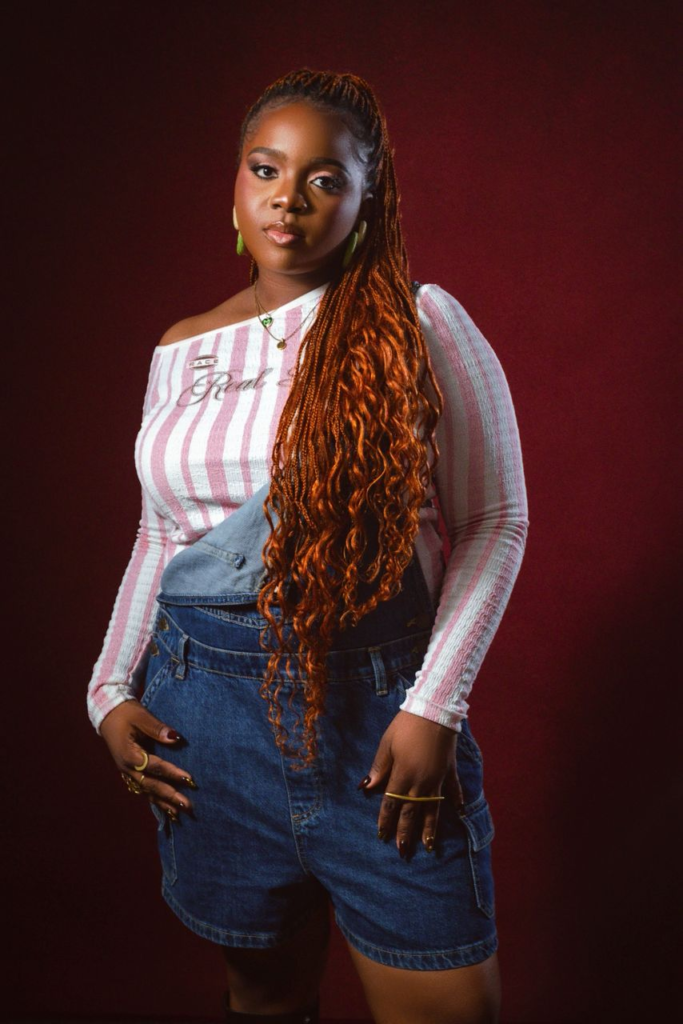
As a self-taught music producer, Gbotolorun “Gbots” Oluwapelumi quickly realised that there weren’t many women in her field. Her desire to hone her craft and connect with other women in the music industry led her to create WeareProducHERs in late 2022 — a community for women in music production and songwriting to share resources and create opportunities.
Since then, WeareProducHERs has grown from an online community to hosting physical events and creating avenues for women to learn, hone their skills, connect with other creatives, and find their place within the industry.
For Women’s Month, Gbots speaks with More Branches about WeareProducHERs, the community’s impact on its members and its overall contributions to bridging the gender gap, and their upcoming event, “The Creative Shutdown”, happening on the 3rd of April.
What inspired the creation of WeareproducHERs, and what made you feel this community was necessary?
My personal experience inspired the creation of WeareproducHERs. I came into the industry as a self-taught producer, simply trying to find my footing and grow in the craft. In many of the rooms I found myself in, I was often the only woman producer there. Over time, it became more real how few women were actually doing what I was doing, and that realisation was both surprising and a little heartbreaking.
It made me understand how important representation truly is. In every field, young girls and women need to see what is possible. They need to see people who look like them doing the work, so they know it is something they can pursue too. That understanding is what made me realise a community like WeareproducHERs was necessary.
Women remain significantly underrepresented in music production compared to other parts of the industry. Where do you think the biggest gaps exist today, and what kind of changes would meaningfully shift that balance?
The gap is more foundational than people think. From a young age, women are often not made to believe we can do technical things. Instead, we are told women are good at organising, cleaning, cooking, or other traditionally “feminine” roles. You grow up hearing these things, and over time, they shape what people believe they can pursue.
Part of the gap also comes down to opportunity. It is not about expertise. Many of the women producers I have met are incredibly talented and fully capable of competing at the highest level. But you can still walk into producer camps or industry spaces and see rooms filled entirely with men. That says a lot about the opportunities being created. Organisers can make a conscious effort to invite women producers into those spaces as well.
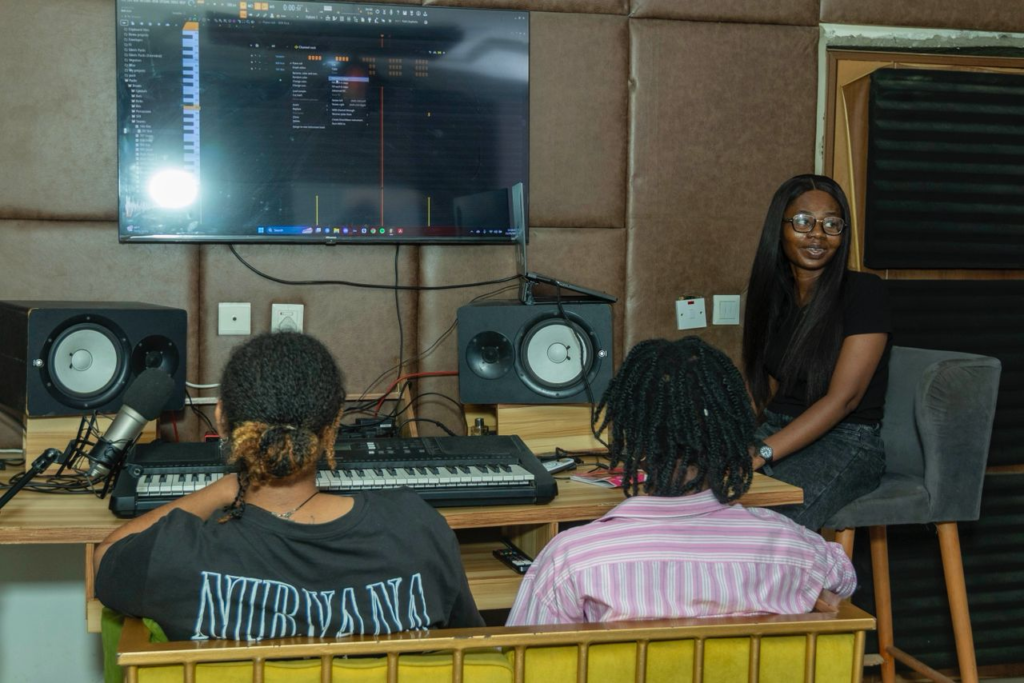
At the same time, we also need to create more entry points. Last year, we organised a workshop to teach women about music production, and we plan to continue doing it every year. Even if that means three to five women start their journey into music production each year, that is meaningful progress. Over time, those small steps help shift the balance.
WeareproducHERs seeks to provide a safe and inspiring space for women in music. What does that look like in practice for community members?
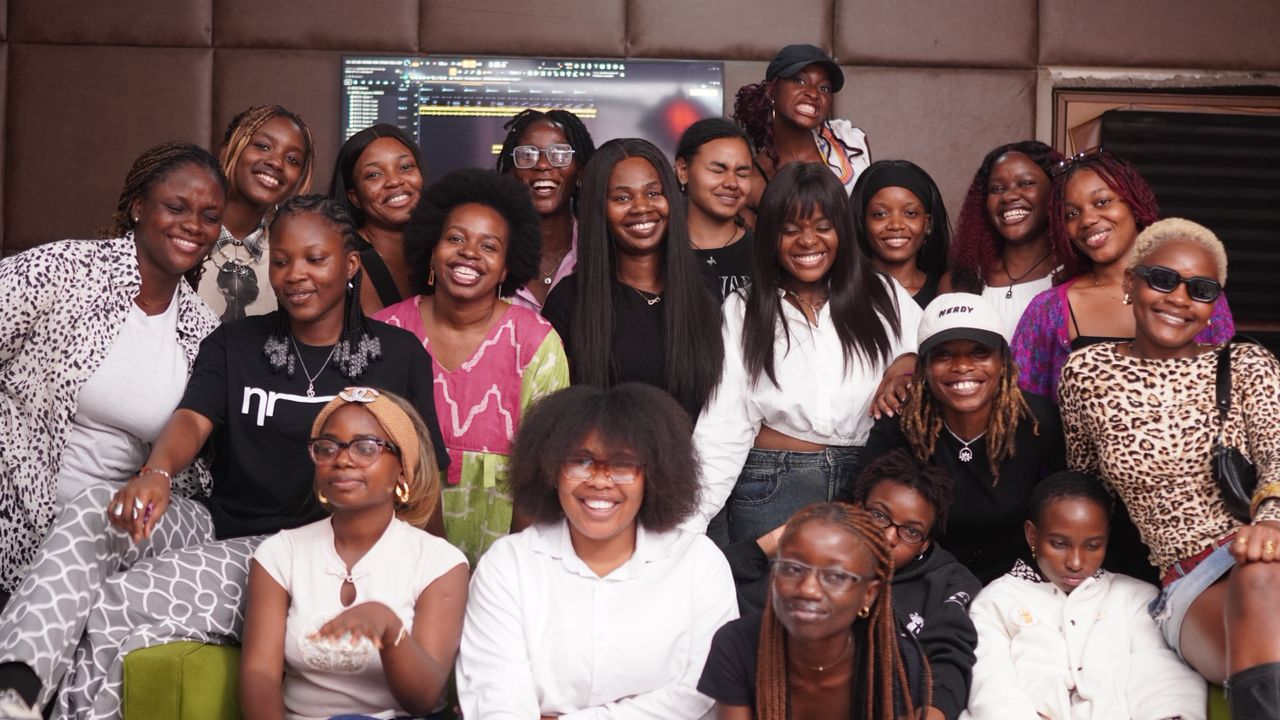
We currently have a structure where members of our community meet monthly. These sessions allow members to be around other women producers, engineers, and songwriters, learn from each other, practice their craft, and have a safe space to grow. It is also a space where women feel free to express themselves, have fun, and build connections that often go deeper than just music.
Within the community, we share resources such as plugins, sample packs, opportunities, and other useful tools that can support members in their creative process.
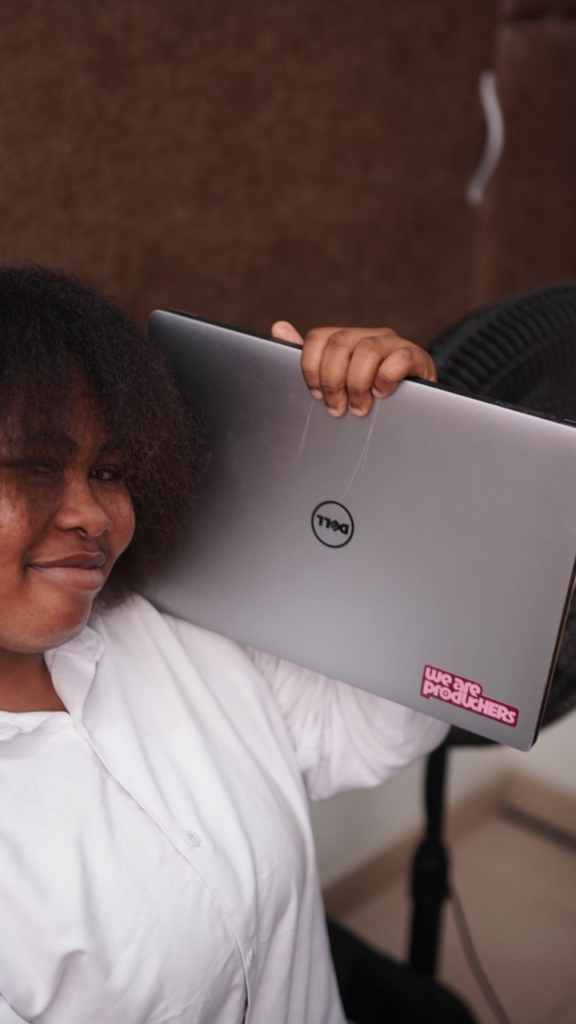
Some of the women who attended our workshop last year are now part of the community as well. Through these sessions, they get to practice, collaborate, and experience what creative rooms look like before stepping out into the wider industry.
We also work to create opportunities for women in the community. When we come across producer camps or when artists and their teams reach out, we connect the women in our community to those opportunities.
Tell us about your upcoming event, ‘Creative Shutdown’. Who it is for, and what attendees can expect?
Creative Shutdown is an interactive creative event by WeareproducHERs that brings together women producers, with DJs, rappers, artistes, and music lovers, in one space to experience creativity in real time. The idea is to have an environment where people are not just watching performances, but also seeing the process of creating music live.
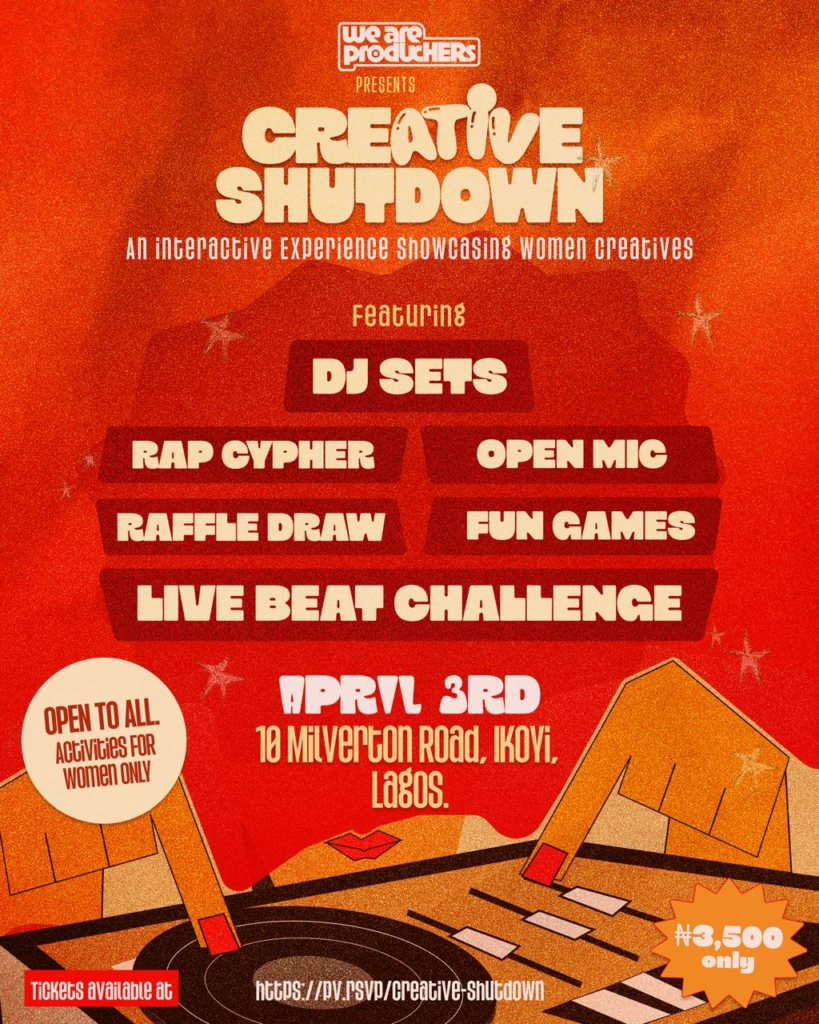
The event is open to everyone to attend, but the activities themselves are led by women creatives, making it a women-centred experience. Attendees can expect live beat-making challenges, rap cyphers, DJ sets, and open-mic performances. It is designed to be energetic, interactive, and community-driven.
More than anything, Creative Shutdown is about bringing people together around creativity and showing the world what women are capable of. It is a space where you can have fun, connect with other creatives, discover new talent, and experience the creative process of music production led by women producers.
As women building a space for other women in the industry, what impact do you hope to see in the coming years?
We hope to see more women take up roles as music producers and occupy more spaces behind the boards across the industry. Right now, the numbers are still very small. When statistics show that women producers make up only about 3 to 5%, it shows there is still a long way to go.
Ultimately, the goal is to reach a point where we no longer count how many women producers there are because their presence is simply normal. We want to see more women producing records that occupy the charts, more women in studios and camps, and more opportunities for them to thrive in the industry.