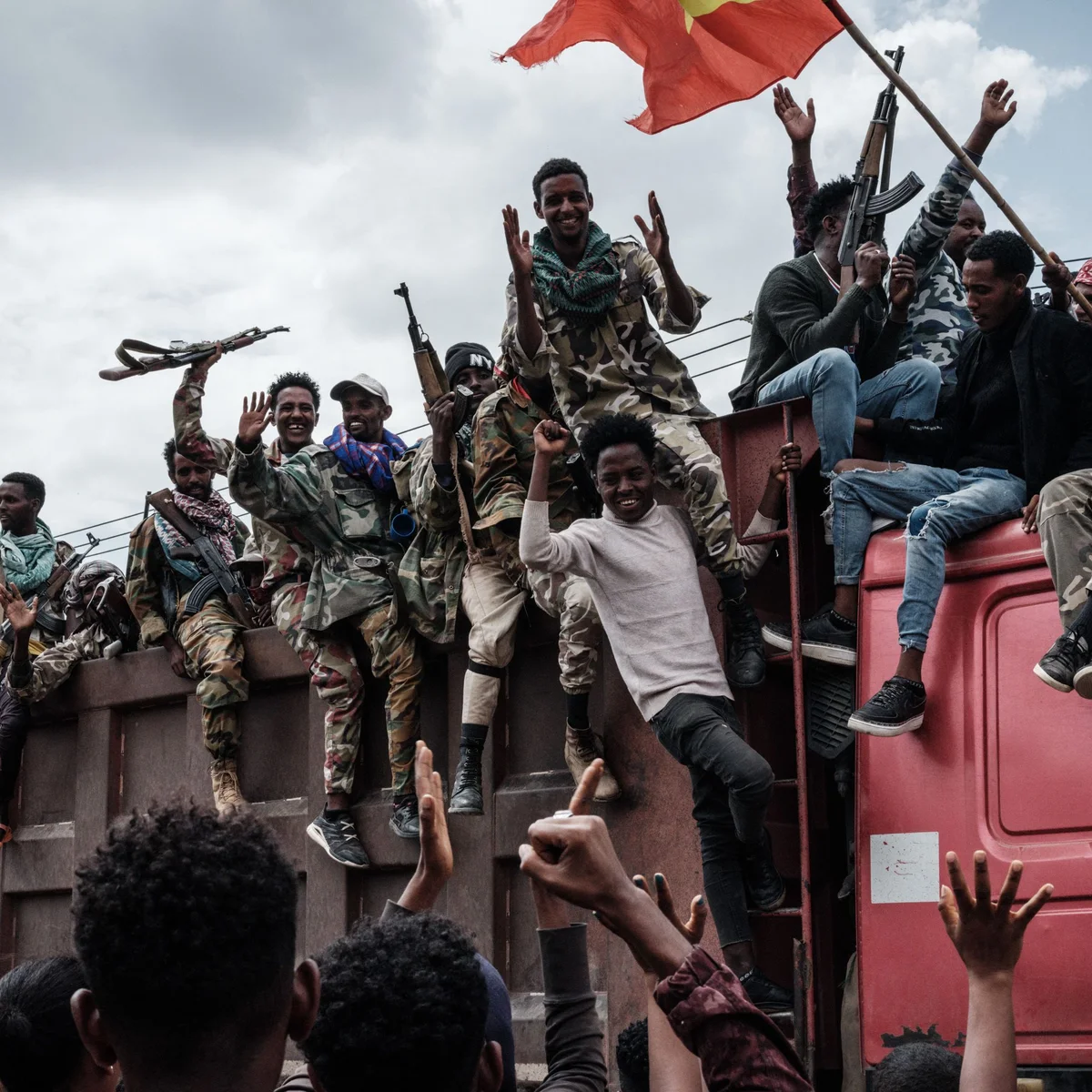
Government-allied fighters took control of Mekelle, the capital of Ethiopia’s Tigray region, on Saturday, hours after the Tigray People’s Liberation Front said it had temporarily moved out of the city to operate from somewhere else. The retreat came less than two weeks after fighting resumed on Sept. 23, when TPLF forces stormed three airports in Tigray.
The fighting has shattered the Pretoria Agreement, the peace deal signed in November 2022. That agreement ended a war the African Union says killed more than 600,000 people. The African Union brokered it, with former Nigerian President Olusegun Obasanjo serving as the bloc’s High Representative for the Horn of Africa.
Peace was fragile from the start. The TPLF has long accused the federal government of failing to carry out key provisions, including the return of displaced people, the resolution of disputed territories and the withdrawal of Eritrean forces.
600,000+
people killed in the 2020 to 2022 Tigray war, according to the African Union
A new coalition
In late September, seven armed and opposition groups announced the Alliance for Survival, vowing to replace Prime Minister Abiy Ahmed’s government with a transitional one. Its members include the TPLF, Amhara’s Fano militias and the Oromo Liberation Army, and together they span half of Ethiopia’s 12 regional states.
The alliance is an unlikely one. Fano fought alongside federal forces against the TPLF in the last war before turning on the government, and the conflict in Amhara has killed thousands since 2023. Doubts remain over how well the groups will coordinate.
7 groups. Half of Ethiopia’s 12 regions. One goal: replace the government.
The fight for Mekelle
Tigrayan forces first seized Mekelle’s airport from federal police, and Ethiopian Airlines suspended flights to Mekelle, Shire and Axum. Regional authorities also said a strike on the town of Alamata killed at least 14 people, though that could not be independently verified.
Then the front moved. On Saturday, fighters from the Tigray Peace Force entered the city center, followed by Ethiopia’s military, according to a resident and a humanitarian worker. The TPLF said its fighters had temporarily left and that the regional government would operate from elsewhere.
Tigrayans on both sides
The government’s side is also divided along Tigrayan lines. The Tigray Peace Force, formed by former Tigray Defense Forces members and mid-level TPLF commanders dissatisfied with the post-Pretoria settlement, is fighting alongside federal troops. An analyst for the monitoring group ACLED said Mr. Abiy is very likely to leave regional security in the Peace Force’s hands once federal troops control Mekelle.
The toll
Reports from the ground are hard to verify. At least 52 civilians have been killed in northern Ethiopia, and Doctors Without Borders has reported a surge in wounded. Amnesty International said it had received credible reports of shelling, air strikes and forced conscription that may violate international humanitarian law. The Ethiopian military says about 270 Tigrayan fighters were killed and more than 200 wounded around North Wollo, a figure that could not be independently confirmed. On Oct. 1, an explosion was reported at the Ministry of Defense in Addis Ababa.
A regional fight
Ethiopia’s army chief has accused Eritrea, Sudan and Egypt of backing the forces fighting the government, and Ethiopia has reportedly severed diplomatic ties with Eritrea. Residents say they fear a return to prolonged violence, displacement and economic hardship.