The music industry, amongst many other things, is deeply flawed when affording creators their well-deserved flowers. When a song is made, usually the vocal artists have the spotlight majorly shone on them, leaving producers on the back burner. Audio engineers, however, who serve as the lubricating oil charged with ensuring the moving parts are properly melded together to deliver music of satisfactory quality, are not even given a spot on the stove. And in an industry almost entirely focused on men, it’s just that much harder for their female counterparts to gain any recognition.
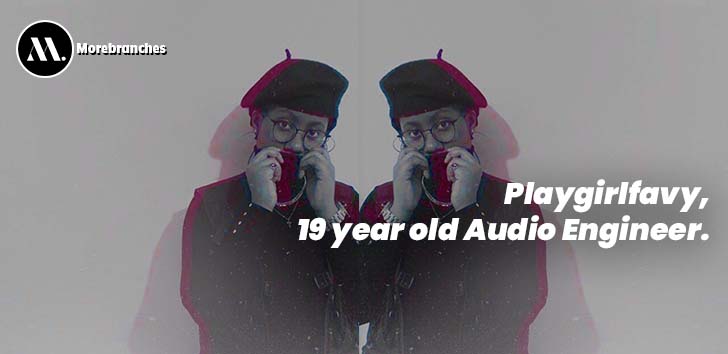
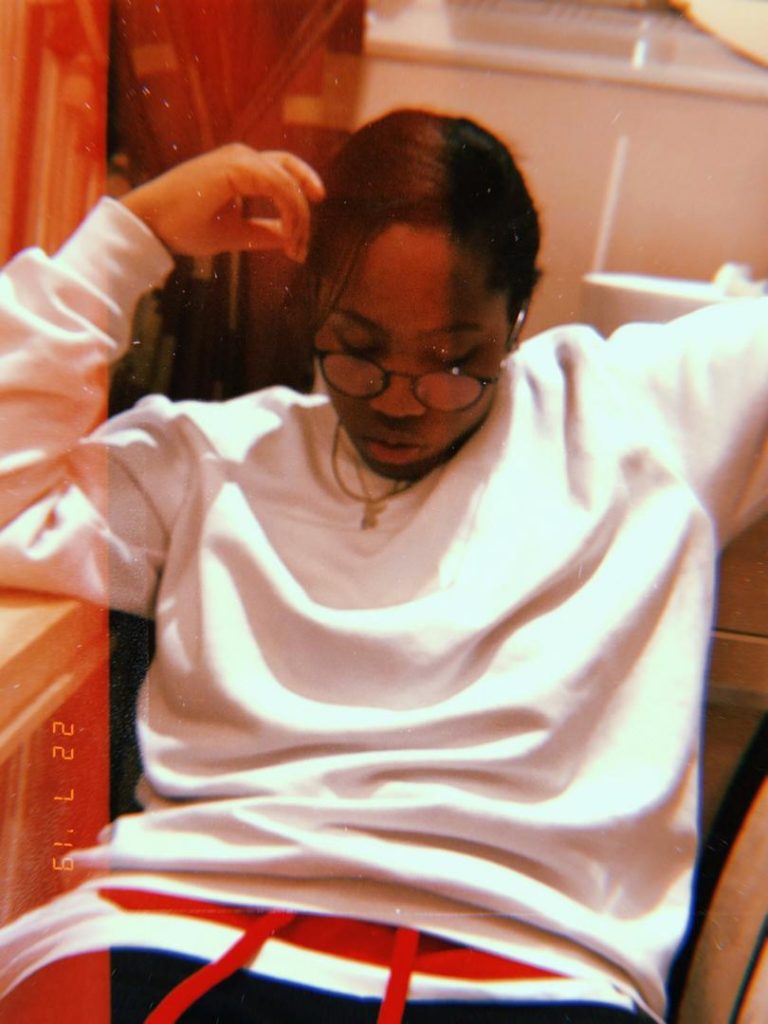
Based on the prevalence of current female chart-topping superstars, like Simi, Tiwa Savage, Tems and Lady Donli, you’d think that the music industry — traditionally the domain of men — is increasingly being shaped by powerful women. But behind the scenes it’s a different story. Female producers, mixers and engineers, are few and far between, and the ones who do exist are consistently overlooked and discounted. For 19-year old Nigerian audio engineer, Favour-Irene Henshaw – known more popularly by her moniker ‘Playgirlfavy’ – the end goal is to create a levelled playing field for women on the other side of the mixing desk to create and receive their merited accolades.
We caught up with the young songwriter/producer/audio engineer to discuss her craft, her thoughts on the future for women in production and more.
More Branches: How/when did you get into music production?
Playgirlfavy: I got into it in I’d say 2017 but didn’t really do anything practically. I was still in boarding school at the time so I was just watching a lot of YouTube videos about it and learning how to work my way around FL Studio in theory. Then in 2018 as soon as I came to uni, I got my equipment and I’ve been pushing since then.
Is that also when you learned sound engineering?
Playgirlfavy: Oh no, I picked up engineering in January 2019.
What encouraged that decision?
Playgirlfavy: I feel like engineering was always something that fascinated me, even before I knew for sure that I wanted to do music. I’d hear certain songs and just wonder how and why the vocals would sound a certain way or why they were moving between my ears. So that January my friend called me and told me about a sale that Waves was having for a particular bundle and I just knew it was then or never, copped it and just experimented a lot until I knew what to do.
Do you think sound engineering is something you have to go to school for? Or one can learn on the job?
Playgirlfavy: I feel both ways about it to be honest. Because if you really put your mind to it, you can learn on your own and just grow from there but going to school for it would also be a different learning curve. Being able to have people who know the ins and outs of small things you’re trying to grasp guide you goes a really long way. At the end of the day though, everyone’s different so whatever floats your boat I guess.
Do you think there’s usually a difference between the quality of work of a self-taught engineer and a trained one?
Playgirlfavy: Not really, there probably would be very little differences between both but I’d say it all comes down to taste. It’s the same concepts both would be working around but the application or technique is what may be different. Some self-taught engineers are even better than those who went to school for it so there’s that.
Walk me through the basic technicalities involved in taking a newly recorded piece to a full-fledged song, in terms of audio engineering.
Playgirlfavy: Okay. So how I approach it is the first thing I do when I get stems or files is I sit down and organise everything, I label and colour code so that it’s easier for me to find what when I need it. Then once that’s done, I level everything and just listen to it over and over again. I take notes on my phone about what I want to do with what part and how to approach the vocal depending on what I’m hearing. Then I deal with everything technically speaking, I’ll EQ, compress, De-ess and just make the vocals sound good on their own before I go in and do anything creatively speaking such as reverb, delay or pitch shifting. My creative effects majorly depend on the type of track it is. After all this I’ll listen and tweak as I go then just leave it if I feel it’s good enough. If I’m also mastering then I won’t touch the file until maybe 3 days later or so just so I can go back to it with fresh ears and also so I don’t get bored of it.
What’s the difference between mixing and mastering?
Playgirlfavy: Mixing is more in-depth I’d say. You’re addressing everything from the ground up and essentially give the song its basis, a good mix makes or breaks the song. Mastering is more like adding finishing touches and enhancing the dynamics (which have been created in the mix) of the track.
What software do you usually use?
Playgirlfavy: I do everything on FL Studio. I am faithful.
As a producer/engineer, what are some of your proudest achievements so far?
Playgirlfavy: Production wise, ‘Hush’ with Katya although I’ve got other songs in the vault that I’m super-duper proud of and cannot wait to be dropped but ‘Hush’ was just something that made me know, yeah you can actually do this. Engineering wise, ‘CRZY’ with Lectrik and Elemen3. That song means the absolute most to me right now.
As a female producer/engineer, what’s the biggest obstacle you’ve faced based on your gender?
Playgirlfavy: People always doubting that I can do this or not believing me when I say oh I mixed or produced this. I’ve had people belittle my efforts just based on the fact that I’m a woman.
It’s no news producers are often placed on the back burner in the industry, but even more so engineers. What’s your take on that?
Playgirlfavy: It’s sad to be honest. At the end of the day it is a team effort and everyone should be credited equally for the contributions they brought to the table. I do feel it’s better than before, maybe not where it needs to be but the improvement is there. Value your producers, value your songwriters and value your engineers. Your track wouldn’t be anything without them.
Where do you see the Nigerian industry in the future in regards to women in production?
Playgirlfavy: I see a levelled playing field. There’s strength in numbers and there’s a lot of us for sure. Our generation is more open minded and is learning a lot from the lapses of the industry currently, so hopefully there’d be more opportunities for women to shine.