Does your brain feel mushy these days? You open your phone just to “check something”, and next thing, it’s two hours later and you’ve learned nothing except five new TikTok sounds and a random celeb’s skincare routine.
You feel drained, not entertained. That fog? That fatigue? That’s brain rot creeping in.
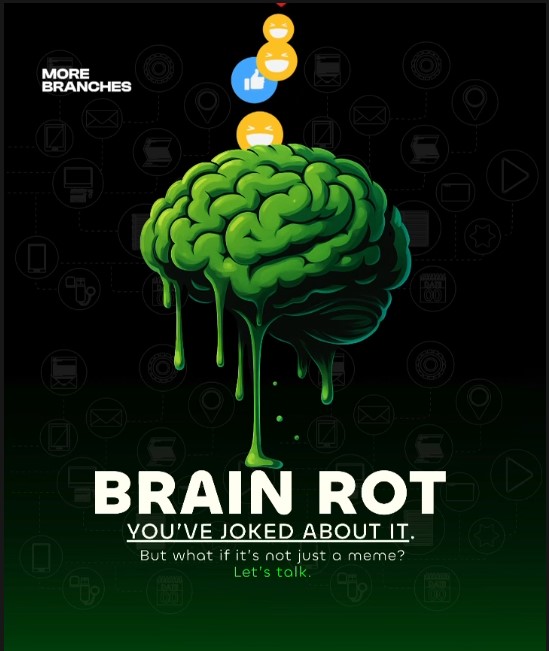
What is brain rot? It’s not a medical term, yet it feels real.
“Brain rot” describes the foggy, overstimulated, chronically online state where your brain can’t focus, think deeply, or even enjoy real life.
Endless scrolling hijacks your dopamine system, creating a feedback loop that keeps you chasing quick hits of pleasure and leaves you mentally exhausted. Sounds familiar? That’s how addiction works.
Science says prolonged screen use can physically change your brain. In a 2025 essay titled “The Psychological Conditioning of Brainrot”, researcher Taylor Nadler explains how social media apps use variable ratio conditioning, the same psychology behind gambling, to keep users hooked. You never know which scroll will deliver the next hit of entertainment or validation, so you keep scrolling. At some point, your brain gets overstimulated and underfed.
Some tell-tale signs of brain rot include:
- Shrinking attention span
- Struggle to retain information
- Constant distraction
- Real life starts to feel… boring
You forget how to think deeply. You click, scroll, laugh, move on. But you stop reflecting. You stop imagining. You stop focusing. Your mind becomes a feed, not a filter.
And the emotional cost?
- Low mood
- Mental fatigue
- Anxiety + FOMO
- Comparison spiral
Brain rot is a signal that you need to unplug, slow down, and think again.
The good news is, you can “un-rot”. How? By curating your content, setting screen boundaries, reconnecting with people offline, and resting your mind and not just your body, your brain can get the silence, focus and real joy that it craves.