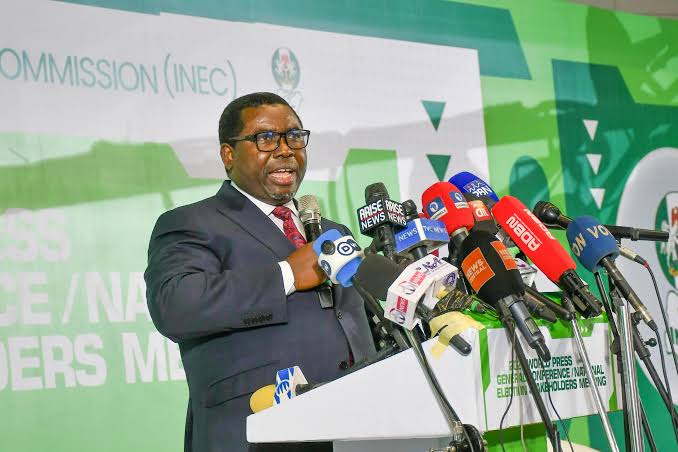
Nigeria now has about 103.4 million registered voters, the Independent National Electoral Commission (INEC) said on Tuesday, calling it the largest voter base of any democracy in Africa.
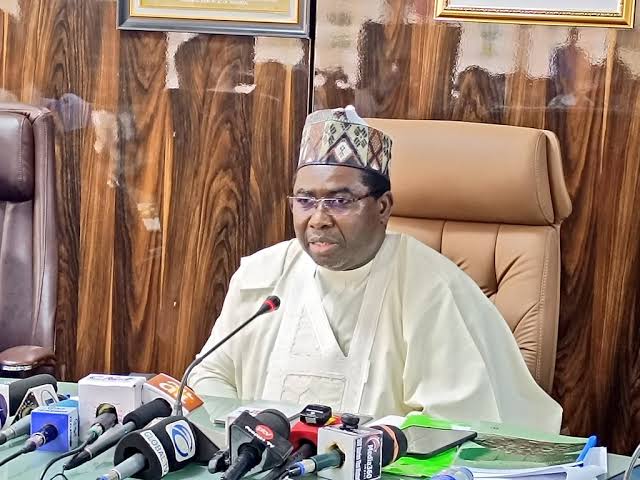
INEC Chairman Prof. Joash Amupitan gave the figures at a press conference and stakeholders’ meeting in Abuja. He said the register reached that size after the third phase of the Continuous Voter Registration exercise and a final biometric clean-up, which added 10,772,421 new registrations.
Where the voters are
Lagos has the most voters, at 7,488,633, followed by Kano with 6,570,276 and Kaduna with 4,662,640. Together, those three states hold about 18% of the register. Katsina, Rivers, Oyo, Delta, Benue, Ogun and Bauchi complete the top ten. At the other end, Ekiti has the fewest, with 1,055,708, and Bayelsa has 1,200,691.
Who is on the register?
- Gender: men are 51.75% of voters (53.5 million) and women 48.25% (49.9 million).
- Age: voters aged 35 to 49 are the largest group, at 41.83%. Those aged 18 to 34 are 28.79%, those aged 50 to 69 are 22.22%, and those aged 70 and above are 7.16%.
- Disability: 232,658 registered voters have a disability, across 10 categories.
What happens next
The register goes on public display from 9 to 16 October, as the Electoral Act 2026 requires no later than 90 days before the election. INEC says claims and objections will be dealt with afterwards. The first phase of Permanent Voter Card distribution starts on 9 October at local government centres.
The AI plan
Amupitan also said INEC has set up an Artificial Intelligence Division inside its ICT department and has already built automated AI auditing tools into its result verification process. He described a five-pillar governance framework with mandatory human oversight, and said a formal policy is still being finalised. INEC is also working with international technology partners on AI tools that watch database traffic to guard against cyber intrusions and unauthorised changes. A nationwide mock accreditation exercise is planned.
The announcement drew questions online, mostly about what exactly the AI will do. Some people asked whether it would address problems with the BVAS accreditation machines or results collated manually in areas with weak networks. Others asked who controls the system and whether independent observers will be able to audit it.