
COSATU says cheap Chinese apps could cost South Africa 34,000 jobs by 2030. Nigeria already bans okrika, and the bend-down boutique is still open.
South Africa’s biggest trade union federation wants two apps gone. At its 15th National Congress in Johannesburg last week, the Congress of South African Trade Unions (COSATU) backed a motion from the clothing workers’ union, SACTWU, asking the government to ban Shein and Temu. Members were also urged to delete the apps and buy local.
The number doing the work is 34,000. That is how many jobs across clothing, textiles, leather, cosmetics and retail SACTWU says could go by 2030, Daily Maverick reported. “If nothing is done, comrades, to change this, our city and our families will lose 34,000 jobs by 2030,” SACTWU president Susan Khumalo told delegates.
For Nigerians, the real question is closer to home. What happens to the okrika bale, the tailor down the street and the young label selling on Instagram when governments decide cheap clothes are the enemy?
Where the 34,000 Comes From
The figure comes from a 2025 study commissioned by the Localisation Support Fund. It found Shein and Temu made about R7.3 billion in South African sales in 2024. That is just 3.6% of the country’s clothing, textile, footwear and leather market, but 37.1% of online sales in the category.
In the study’s worst case, Business News South Africa notes, 16,400 manufacturing jobs and 18,300 retail jobs are displaced. It also estimated that about 8,100 jobs, 2,818 in factories and 5,282 in shops, had already failed to appear in 2024, according to DW.
The study did not call for a ban. The government has not said it will act, no ban has been tabled, and Shein and Temu had not commented in the coverage Business News South Africa reviewed.
South Africa Already Tried the Tax Route
Until 2024, parcels under R500 paid a flat 20% in place of customs duty, with no VAT. Bigger parcels faced a 45% duty. From 1 September 2024, SARS added VAT on top of the 20%, BusinessTech reported, with a fuller customs regime promised from November that year.
It seems to have bitten. Daily Maverick links the tax change to a slowdown: Shein’s growth, once 30% to 50% a year, slowed to 11% in 2025, while Temu recorded average monthly declines of 42%.
That is why some think the 34,000 figure is dated. Independent economic strategist Refilwe Moloto told Daily Maverick it may be outdated because it was calculated before the tax changes, and that a ban would “encourage, below the table, irregular and non-regulated trading.” Michael Lawrence of the National Clothing Retail Federation called an outright ban a one-dimensional response, Techpoint reported.
Nigeria Has Already Run This Experiment
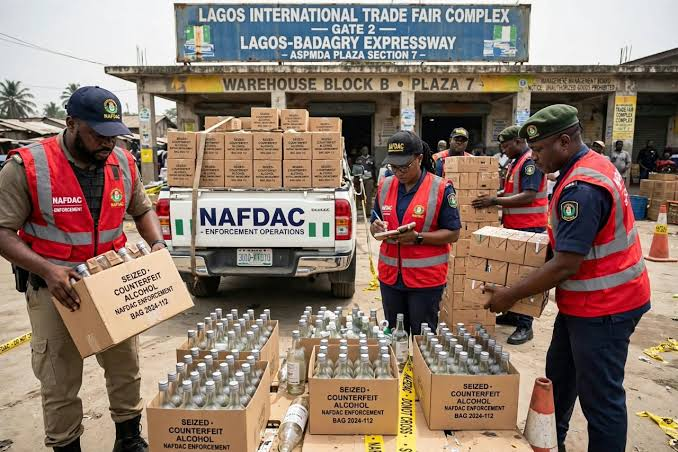
Nigeria does not need to imagine a ban as second-hand clothing is already on the Nigeria Customs Service’s “absolutely prohibited” import list, next to air pistols and counterfeit coins.
However, the ban has not closed the bend-down boutique. Vanguard found in November 2025 that a bale of high-grade okrika now costs ₦500,000 to ₦600,000, up from no more than ₦50,000 some years back, as smuggling got harder. Nigerians’ own used clothes now fill many stalls, and one seller told Vanguard she resells them as “London used”.
Now the Senate wants a total ban on textile imports. Textile, apparel and footwear makers ran at 53.05% of installed capacity in 2025, BusinessDay reported from CBN and NBS data, leaving nearly half their capacity idle. Media analyst Babajide Kolade-Otitoju told BusinessDay the country once had about 167 mills employing more than 500,000 people. Adesoji Adesugba, former managing director of the Nigerian Export Processing Zones Authority, warned that an immediate ban “would hand the market to smugglers and repeat thirty years of costly failure.”
What It Means For Local Labels
Temu is already here. In December 2024, it had become Nigeria’s most downloaded app on both Android and iOS within weeks of its ad blitz. DW reported in September 2026 that Temu runs a dedicated platform for Nigeria, while Shein builds its reach mainly through influencers.
So a Nigerian designer is squeezed by the app on one side and the bale on the other. Fabric is a third problem. The Centre for the Promotion of Private Enterprise (CPPE) values fashion, garment-making and tailoring at about ₦10 trillion, supporting an estimated 10 million livelihoods. It says imported fabrics already attract 35% to 45% in duty and levies. Culture Minister Hannatu Musawa said in October 2024 that nearly 90% of the Ankara consumed on the continent is imported.
Banning an app or a bale is easier than fixing power, credit and cotton, which is what most of the experts quoted here say is actually broken. South Africa at least tried tax before talking bans. Nigeria has tried bans, forex restrictions and border closures, and still has idle mills.
South Africa’s government has not said whether it will act on COSATU’s resolution. In the coverage we reviewed, Nigeria’s Senate has not explained how a textile import ban works when local mills cannot meet demand. Neither has said what happens to the millions who sell, sew and buy in between. Until someone does, the cheapest shirt in Lagos will keep arriving by phone or by smuggled bale.