
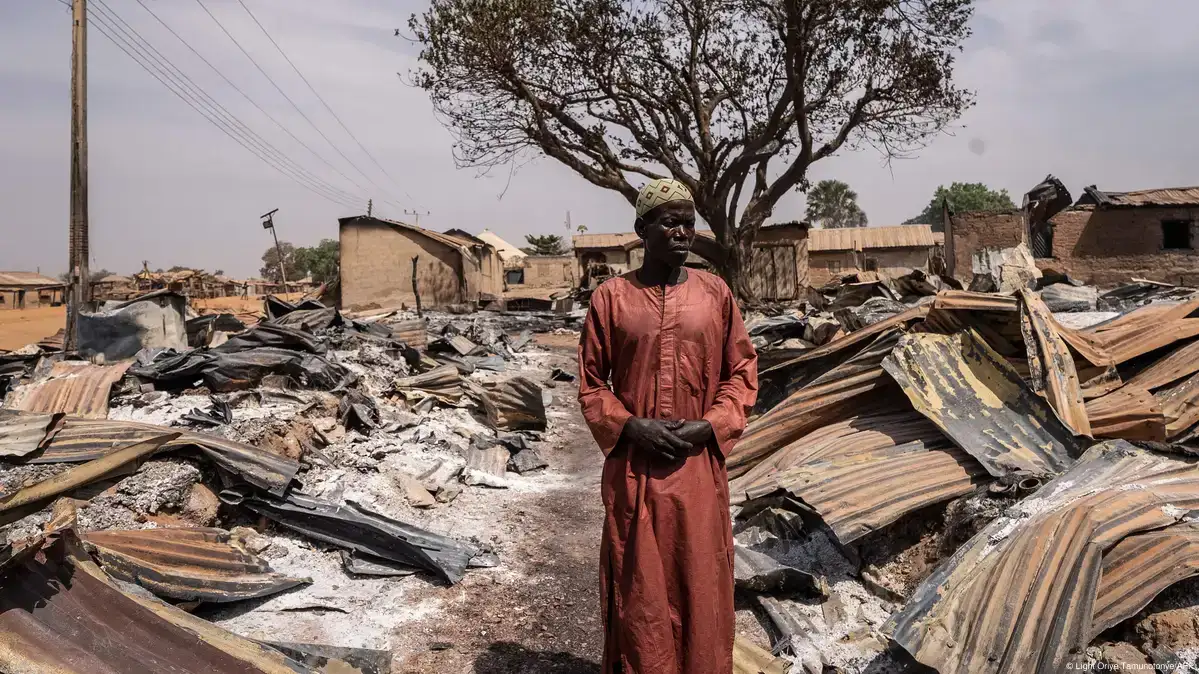
There is a particular kind of post that moves through Nigerian Instagram every few weeks. Someone with reach puts up a set of slides, each one carrying a number, and the numbers are about how many people have been killed. The post this week came from Daniel Otabor, it ran to twenty slides, and unlike most of its kind, the figures on it hold up.
That is worth saying plainly, because the usual problem with this genre is the opposite.
What the tracked numbers actually say
The spine of Otabor’s carousel is the Mass Atrocities Casualties Tracker, a database maintained by Global Rights and used by a coalition of more than fifty civil society organisations including BudgIT, CISLAC, CITAD, the Centre for Social Justice and the CLEEN Foundation. The coalition published its count in May to mark the ninth National Day of Mourning. The ICIR analysed the same dataset.
At least 19,980 people have been killed in mass atrocity incidents between May 2023 and April 2026. In the same window, 12,362 people were abducted. Among the dead are 1,486 soldiers, police officers and other security personnel killed on duty, and at least 865 of the abducted were students taken from schools.
Broken down by year, the direction is the thing to look at. There were 4,416 killings in 2023, then 5,353 in 2024, then 6,518 in 2025. By April of this year the count had already reached 3,693. Each year has been worse than the one before it.
On kidnapping, SBM Intelligence put ransom payments at 7.78 billion naira across a single year, against 7,825 people taken in that same year, and found that what kidnappers collect has roughly tripled.
Where it is happening
The geography is not evenly spread, and Otabor’s framing of the Middle Belt and the North is where the data sits. ACLED recorded 7,061 conflict deaths in the first five months of this year. Of those, 3,303 were in the North East, 2,153 in the North West and 1,335 in the North Central. The three southern zones together accounted for 270.
Put another way, the three northern zones carried roughly ninety six per cent of the deaths. These are also, as Otabor points out in his caption, the places most of the country’s food is grown, which is why the same violence turns up later in the price of a bag of rice.
Within the Middle Belt the pattern is farmer and herder violence rather than insurgency. In July, Benue alone recorded 172 deaths across 57 separate incidents, concentrated in Otukpo, Ohimini and Katsina-Ala. ACLED’s comparison of the windows around the 2023 election found estimated fatalities in Benue rising from 111 to 315, and in Sokoto from 45 to 98, even as the recorded number of attacks on civilians fell slightly.
Fewer incidents, more dead
That last pattern is the one that deserves more attention than it gets, because it is still running. The Centre for Democracy and Development’s election security tracker found that recorded security incidents fell by 22 per cent in October, from 222 to 173, while reported deaths rose by nearly 62 per cent, from 396 to 640.
The average number of people killed per incident went from 1.78 in September to 3.70 in October. In the North East, 35 incidents produced 409 of the country’s 640 deaths that month. Attacks are being recorded less often and killing far more people when they happen, which means any official account that leads with a falling incident count is describing something real and also missing the point.
The figure that keeps poisoning the argument
Otabor’s post is credible because of what it leaves out. The number that circulates most widely on this subject comes from the National Bureau of Statistics, whose Crime Experience and Security Perception Survey reported 614,937 Nigerians killed and 2,235,954 kidnapped between May 2023 and April 2024.
That figure would mean roughly 1,680 deaths every day for a year. Critics including the think tank PeacePro called it practically impossible and inconsistent with both police records and WHO mortality data. The Coalition of Northern Groups rejected it outright as fabricated and demanded the bureau publish its sampling frame. The report was released, widely covered, and then quietly disappeared from circulation.
It has not stopped travelling. A business paper was still citing a version of it, grown to 628,000, in the middle of this year. Every time it is repeated, it hands anyone defending the government an easy way to dismiss the entire subject, and it buries the tracked figures underneath it. Twenty thousand people is a catastrophe. It is also thirty times smaller than the number people are arguing about, and it is the one that can be defended line by line.
The argument Otabor is making
His conclusion is explicitly political. He writes that Nigerians are being forced into early deaths under what he calls an incompetent and failed government, that mainstream media are deliberately not covering the suffering, and that the country must vote the administration out. That is his case, made in his own voice, and his audience in the comments has largely taken it up.
The government’s position runs the other way. Bayo Onanuga, special adviser to President Tinubu on information and strategy, has accused Nigerian media of creating a false impression that the country is overwhelmed by insecurity. He made that argument in the same period that the ICIR was publishing the 19,980 figure.
Both of those are claims about coverage rather than about casualties. The casualties are being counted by civil society organisations, published, and cited by everyone except the people being asked to answer for them.