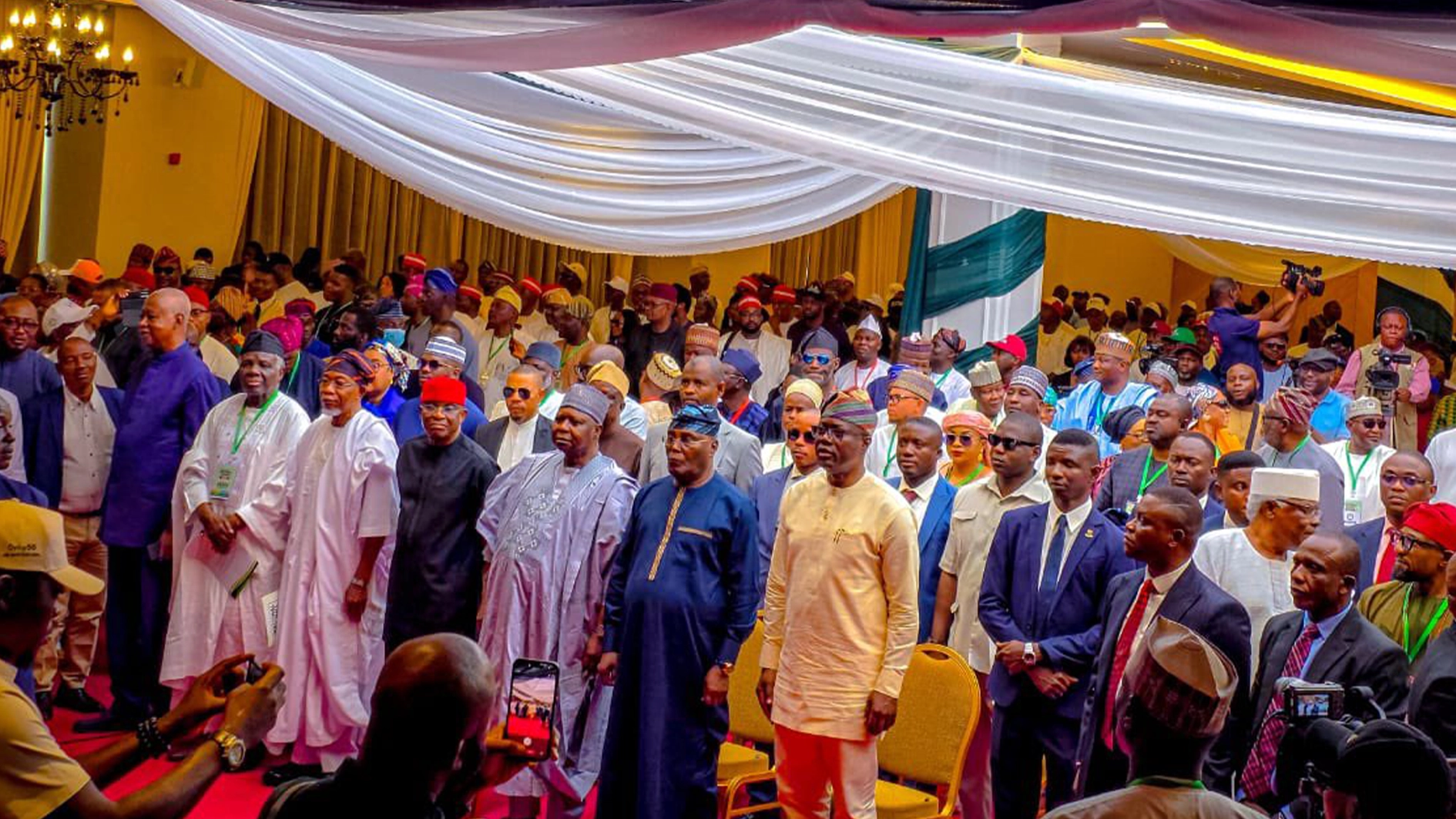
Atiku Abubakar’s campaign team booked Arewa House in Kaduna for a consultation with northern stakeholders on Thursday. On Tuesday the Kaduna State Government sealed the building. No reason was given publicly, and neither the state government nor the police has answered the accusation that followed.
Phrank Shaibu, who runs strategic communication for the African Democratic Congress presidential campaign, called it part of “a troubling pattern” and held President Bola Tinubu and the APC politically responsible. Atiku put it more plainly: the APC government, he said, decided to seal the building.
The word pattern is doing real work there, because this is the fourth time in six months that a venue booked by the opposition, or by a northern political body, has been closed, blocked or broken up before the meeting could happen.
On 5 May, police in Kaduna sealed the national headquarters of the Arewa Consultative Forum, a day before its National Executive Council was due to meet. Delegates had already arrived in the city. The ACF’s publicity secretary, Professor Tanko Muhammad Baba, called the sealing “illegal and unjustified” and said the forum knew of no court order restricting it. The police issued no statement.
In Kaduna again, an inauguration of an opposition transition committee hosted by former governor Nasir el-Rufai was attacked by men carrying cutlasses, clubs and stones. People were injured and vehicles destroyed. El-Rufai alleged that senior officers, including an assistant commissioner, watched it happen. The Kaduna police command, through its spokesman Mansir Hassan, said it had opened an investigation, noted that organisers had not notified security agencies, and then announced a blanket suspension of unauthorised gatherings in the state. The ADC’s national publicity secretary, Bolaji Abdullahi, said the force had rushed to brand the party political gangsters before establishing any facts. “Democracy is not a crime,” he said, “but selective policing is.”
Then Sokoto. On 2 November, roughly 48 hours before the ADC’s presidential campaign flag-off, the Sokoto State Government sealed the party’s campaign office, which was also the venue for the event. The next day a group called Arewa Transformational Leader petitioned the British High Commission, the United States Embassy, the European Union and the Muslim World League for diplomatic intervention. Its petition, signed by Muhammed Umar, also alleged that women in an ADC procession were attacked on 28 October, and that the convoy of the party’s governorship candidate, Manir Muhammad Dan’iya, was attacked on 30 October by the Sokoto Marshal and the Sokoto Community Guards. Those claims have not been independently verified, and the group said so itself.
What connects the four is not a ban. Nobody has outlawed the ADC, and no court has stopped Atiku from consulting anyone. What happened each time is simpler and harder to challenge: the room was taken away.
That is the mechanism worth watching. A state government controls the buildings it owns and the ones it licenses. A police command can require notice of a gathering and then rule that the notice was insufficient. Neither step needs a judge, and both are finished by the time anyone can file a case, because the meeting has already failed to happen. The ACF’s delegates were in Kaduna when the gates closed. The ADC’s guests were on their way to Sokoto.
Nigeria votes in 2027. Campaign season has started, and so far the contest over who gets to speak is being settled at the door.