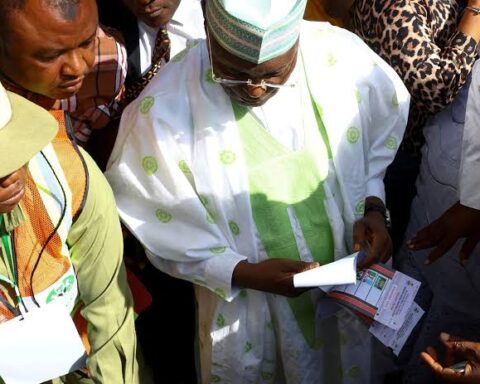
On Monday in Abuja, the chairman of the Independent National Electoral Commission, Joash Amupitan, told reporters that his agency had thrown out 1,608,660 voter registrations it now considers invalid. The figure is large enough to matter on its own, but the more interesting question is what it says about how the voter register was built in the first place.
The number comes out of three phases of the Continuous Voter Registration exercise across 2025 and 2026, which together produced 11,088,238 submissions. Roughly one in every seven of them did not survive scrutiny. That is not a rounding error at the edge of a clean process. It is a sign that a meaningful share of what came in through the front door was never a real, unique voter.
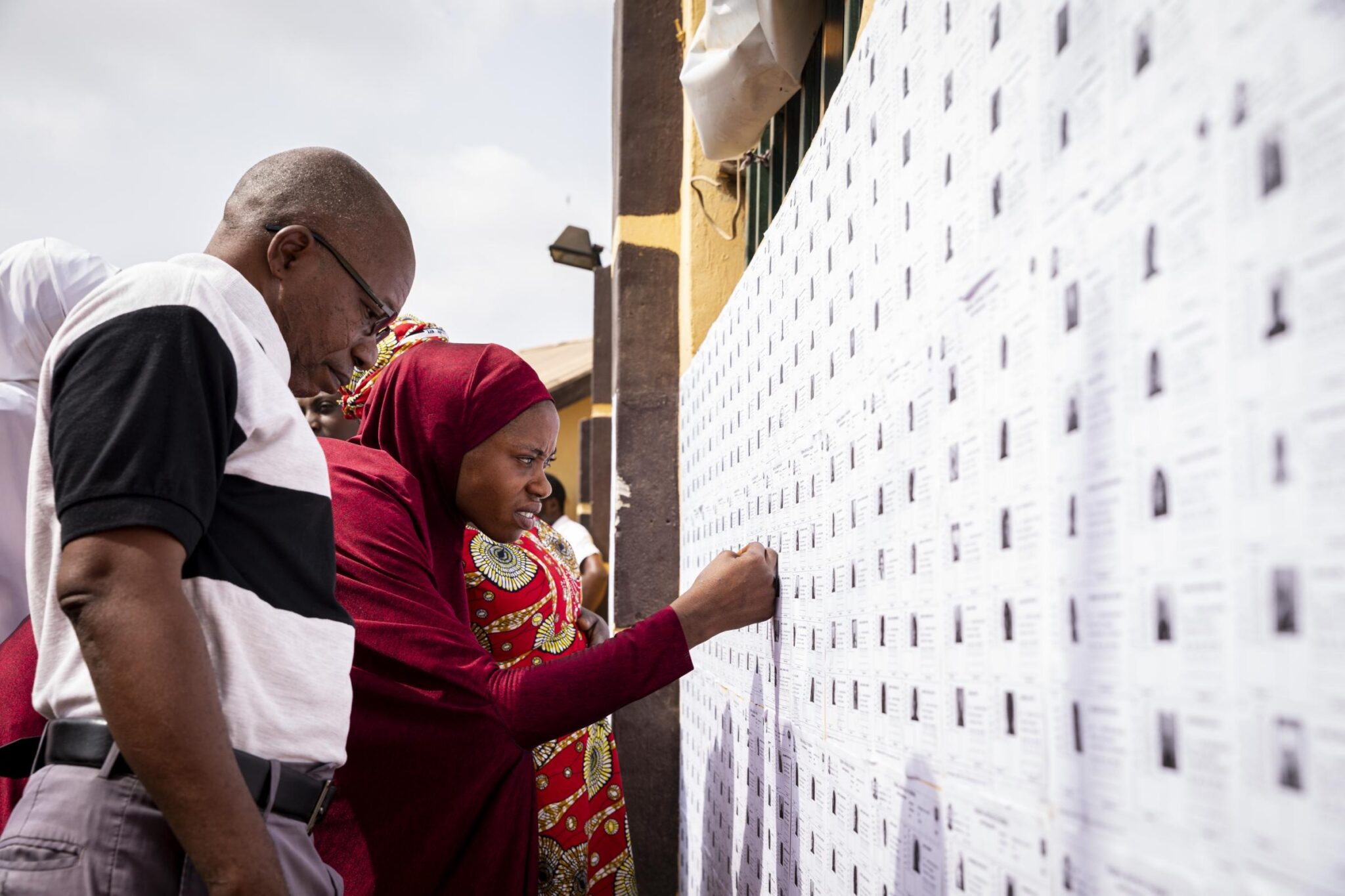
The sorting happened in stages. INEC’s Automated Biometric Identification System flagged 1,545,052 records, and 1,277,052 of those were confirmed invalid before the preliminary register was even published. Then came the public window. From 9 to 15 October, Nigerians could file claims and objections against what they saw on the preliminary list, and the commission adjudicated about 268,000 cases. Of those, 217,722 were removed and 50,278 were cleared and left on the register. Further screening after that turned up another 113,886 problem entries. Add the three removals together and you arrive at the 1.6 million.
The commission was blunt about where some of the trouble came from. According to Amupitan, the fault was not only with applicants. “Fifty-four persons cutting across ten States have been identified as complicit,” he said of registration officials who may now face disciplinary action or prosecution. Some of them, the commission says, abused the provisions meant to help persons with disabilities register. Those provisions exist so that a person who cannot easily reach a registration centre is not shut out. Turning them into a shortcut for padding the register is a particular kind of betrayal, and it is one that only people with access to the system could have carried out.
The technical findings are just as telling. Many of the flagged duplicates and photographs trace back to records created between 2011 and 2023, which means the contamination is not a one-cycle problem. It has been accumulating for more than a decade. People who relocated and registered again were invalidated, and their original record stays at the old polling unit, so the cleanest fix for a voter who moves is, for now, still to go back. And INEC says it identified images generated by artificial intelligence among the submissions.
That last detail explains the rule changes that came with the announcement. Webcam-based image uploads have been discontinued. Photographs must now be captured through an approved application, and the commission has approved an AI Governance Framework to guide how it handles the technology. These are the kinds of safeguards that look obvious in hindsight. They also show how quickly the threat has changed, from a person registering twice to a machine producing a face that never existed.
Amupitan framed the exercise as a matter of principle. “Our sole allegiance is to the rule of law, the sovereign will of the Nigerian electorate,” he said, in remarks about how INEC wants the process to be read. That is the language of an institution that expects to be challenged, and it is. Opposition figures, including the ADC and Atiku Abubakar, have demanded a forensic audit of the register. Their argument is that a commission cannot be both the author of the register and its only auditor. INEC’s answer is the published numbers, the public claims window and the disciplinary list.
The calendar gives the whole thing urgency. The commission has said the Final Register is due to be certified on 15 December 2026, and the presidential and National Assembly elections follow on 16 January 2027, with governorship and state assembly polls on 6 February. During the claims window alone, INEC reported more than 4,800 claims and about 600 objections. Earlier this year it also moved its nationwide revalidation exercise to after the 2027 polls, which means the register voters will use in January is the one being cleaned right now, not a freshly revalidated one.
Amupitan admitted the clean-up will not fix everything. That honesty is worth noting, because the register INEC has cited runs to about 103 million names, and no process of this kind catches every ghost. What it can do is shrink the room for dispute. A deletion of this size is evidence the system is catching things, but it is also evidence of how much it let through, and the two readings sit side by side.
For voters, the practical question is simple. If your name was removed and you believe it should not have been, the window to challenge it has closed, though the Final Register is still weeks from certification. Check the list at your polling unit. For everyone else, the harder question is the one INEC cannot answer with a number: how many of the other 100 million-odd registrations would pass the same test, and who will be allowed to check.