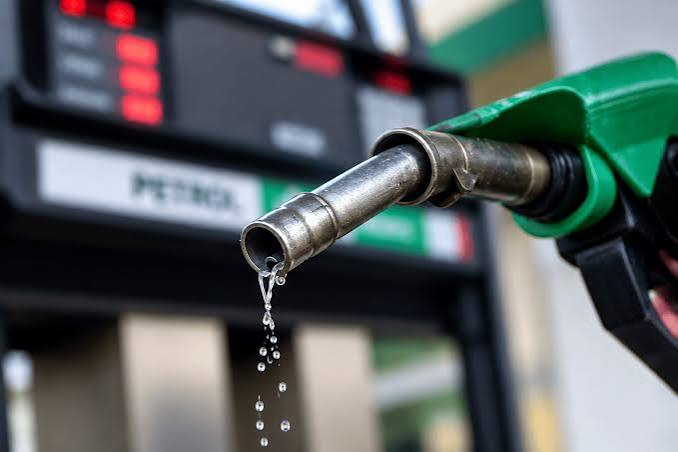
President Bola Tinubu has no regrets. Speaking on Monday evening at “Together till 2027”, a forum organised by the City Boy Movement to push his re-election, he said: “I came, and I removed the subsidy the first day.” Then he reached for scripture. “You cannot ask Moses to go back to Egypt,” he said, PUNCH reported. “Nigeria will never go back to Egypt.”
His main rival disagrees. Atiku Abubakar, the ADC candidate, said in August: “If elected, I will bring back the oil subsidy.” The presidential election is on 16 January 2027, 88 days away. INEC has listed 18 candidates, and Semafor reports an SBM Intelligence survey found more than two-thirds of voters want some kind of subsidy.
So before you vote, here is the bill so far, and what each side is offering.
The Pump, Then and Now
Before 29 May 2023, petrol sold for about ₦180 a litre. PUNCH reported it jumped to about ₦620 right after the announcement and hit roughly ₦1,200 a year later.
Last week NNPC raised its pump price again, from ₦1,370 to ₦1,405. That came days after the government announced, on 8 October, that NNPC would sell at cost for 30 days. NNPC says that offer is its ₦66 discount, which only applies if you pay through NNPC’s app at participating stations, and it ends on 31 October. Everyone else pays ₦1,405. A Sunday PUNCH survey found ₦1,420 in Kano and ₦1,425 in Gombe. NNPC has given no public reason for the increase.
That is nearly eight times the 2023 price.
To be fair, the Lagos Chamber of Commerce’s Leye Kupoluyi says the latest spike is “largely imported”, driven by crude prices since the Middle East conflict. Before it, petrol sold for about ₦830 in parts of the country. True. It is also what a market without a cushion looks like. A shock abroad lands straight on a danfo fare in Oshodi.
Your Payslip
The minimum wage is ₦70,000 a month, signed into law on 29 July 2024. Back then NNPC sold petrol at ₦580, so the wage bought about 120 litres. At ₦1405, it buys 49.8 litres.
Most young workers don’t drive, though. They pay fares. The National Bureau of Statistics put the average city bus fare at ₦1,431.25 a trip in May 2026, up 38.63% in a year. One bus to work and one back, for 22 working days, comes to ₦62,975. That is 90% of the minimum wage, before rent or food. (That’s our sum, and many people take more than one bus each way.) PUNCH reported in June that workers earning ₦150,000 or less a month who commute daily now spend around ₦50,000 to ₦70,000 on transport.
Prices are Slowing. Poverty is Not
Headline inflation fell to 14.63% in September, from 20.98% a year earlier, the NBS says. Food inflation stood at 19.59%. Slower inflation means prices are rising more slowly. It does not mean they are coming down.
The World Bank’s October 2026 Poverty & Equity Brief puts the share of Nigerians below the national poverty line at 40.1% in 2019, 56.2% in 2023 and an estimated 63% in 2026. The World Food Programme expects about 35 million Nigerians to face acute food insecurity this year, up from 33.1 million in 2025.
Where the Savings Went
In August, the Finance Ministry under Taiwo Oyedele, the Minister of Finance and Coordinating Minister of the Economy, published the receipt. Subsidy removal freed ₦15.8 trillion between June 2023 and December 2025. The federal government got ₦5.4 trillion. States and local governments got ₦10.4 trillion.
Extra federal spending over the period came to ₦30.64 trillion, PUNCH reported from the ministry’s scorecard. Wages took ₦9.39 trillion, external debt service ₦9.37 trillion and infrastructure ₦6.47 trillion. Social welfare transfers got ₦423.8 billion, about 1.4%. The government also borrowed an extra ₦11.9 trillion.
Add domestic debt service, and debt servicing took ₦10.6 trillion, more than two-thirds of everything the removal raised, a Nairametrics analysis found. The IMF said the savings did not appear to have reached the federal budget in 2025. The same Nairametrics analysis notes there has been no comparable public breakdown of the states’ ₦10.4 trillion.
Option One: Keep Things as They Are
Beyond the NNPC discount, the government is negotiating a ₦1,350 ceiling on the landing cost of petrol, which is not a pump price, and it is backing gas-powered buses. The APC campaign council says commuters in seven states and the FCT pay 31% to 83% less on routes served by CNG and electric buses. The question is whether there is one on your route.
On wages, the government told labour on 12 October that the ₦70,000 minimum is not due for review until 1 June 2027, about four and a half months after the vote. The NLC’s two-week ultimatum, which began on 9 October, runs out this week.
Option Two: Bring It Back
Atiku says his would be a capped, audited production subsidy tied to domestic refining, not a return to the old subsidy regime. The APC campaign council says he has yet to say what it would cost, and none of the sources we checked give a pump price for it.
His opponents have put numbers on it. The APC campaign council puts the cost at as much as ₦17 trillion to ₦21 trillion a year. Finance Minister Oyedele warns a return would push petrol to at least ₦2,000 a litre and the naira towards ₦3,000 to the dollar. At ₦2,000, ₦70,000 buys 35 litres. Both figures come from Tinubu’s government and campaign, and we have not independently verified them.
The old subsidy’s bill is on record, though. Semafor reports it cost $10 billion in 2022, more than the combined budget for health and education.
Atiku is not alone. Vanguard reported this month that Peter Obi of the NDC, who has pledged to judge his leadership by whether Nigerians are “eating better, living better, and escaping poverty”, has said an NDC government would reinstate the subsidy after tackling corruption. Seyi Makinde (APM), Adewole Adebayo (SDP) and Donald Duke (PRP) also want a different petrol pricing deal, and Adebayo promises petrol at ₦200 a litre. That leaves Tinubu as the only major-party candidate keeping the removal as it is.
Our View
This part is opinion. Ending the old subsidy was defensible. Even BusinessDay, in today’s piece headlined “Nigeria’s fuel subsidy gamble has failed the poor”, calls the old scheme “a fiscal black hole”. Nobody serious wants it back as it was.
But a reform is judged by who carries it. The poor paid up front, at the pump, at the market and in fares. Governments kept the savings, and the federal government spent most of its extra money on wages and debt. Barely one naira in seventy of that extra federal spending went to social welfare transfers.
Neither side has given young workers the full arithmetic. Atiku owes a cost and a pump price. The government owes a plan for 1 November, a wage review before the vote, and the states owe an account of ₦10.4 trillion. Oyedele’s own three questions for any subsidy plan are the right ones: what will it cost, how will it be funded, and what pump price will it deliver? Every candidate should answer them before 16 January.