The government’s own estimate has already approached last year’s toll, and no one has yet been convicted of anything called femicide. A bill that would create the offence is due in parliament in November.
Nearly 70 women have been killed for gender-related reasons in Cameroon so far this year, according to the Ministry of Women’s Affairs. The Associated Press reports government estimates of at least 50 killings in 2023 and 67 in 2024. Its report gives no 2025 figure. AFP, citing ministry figures, puts 2025 at 77. The 2026 estimate of nearly 70 is not a full-year count. It covers the period to mid-October.
The ministry treats its figures as incomplete. Human Rights Watch quotes it describing them as the “tip of the iceberg.”
“Having lost my mother is a nightmare,” her 18-year-old son, Courage Anushuni, told AFP.
But how light can a sentence be? In 2025, a man who pleaded guilty to killing his wife received a suspended five-year sentence and a fine of 52,000 CFA francs, about $90, the Associated Press reported. Cameroon’s penal code recognises crimes such as rape but has no femicide provisions, so judges rely on general laws.
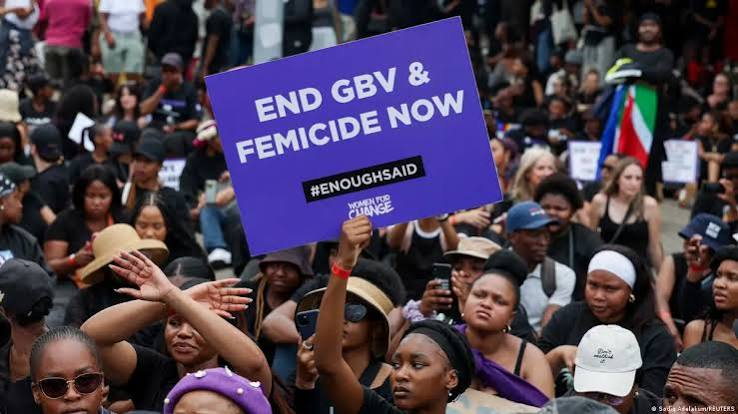
Thousands of women have protested in major cities, including Douala and Yaoundé, demanding more from the government. The government is now drafting a bill to make femicide its own offence. It is expected to reach parliament in November, the Associated Press and AFP report.
What activists say drives it. Activists and rights groups point to economic dependence and unequal control of family property. Human Rights Watch notes that husbands control their wives’ income after marriage and that inheritance rules are unequal. Weak laws are another factor. Activist Carole Grace Mbarga says delays, intimidation, corruption and procedural errors in court can reduce charges or lead to acquittals: “When investigations drag on, evidence deteriorates, witnesses lose confidence, and families become discouraged.”
Mbarga and others say a new law alone will not be enough. Courts and victim support need reform too.
For context, about 50,000 women and girls were killed by intimate partners or relatives worldwide in 2024, according to a UN estimate cited by the Associated Press.