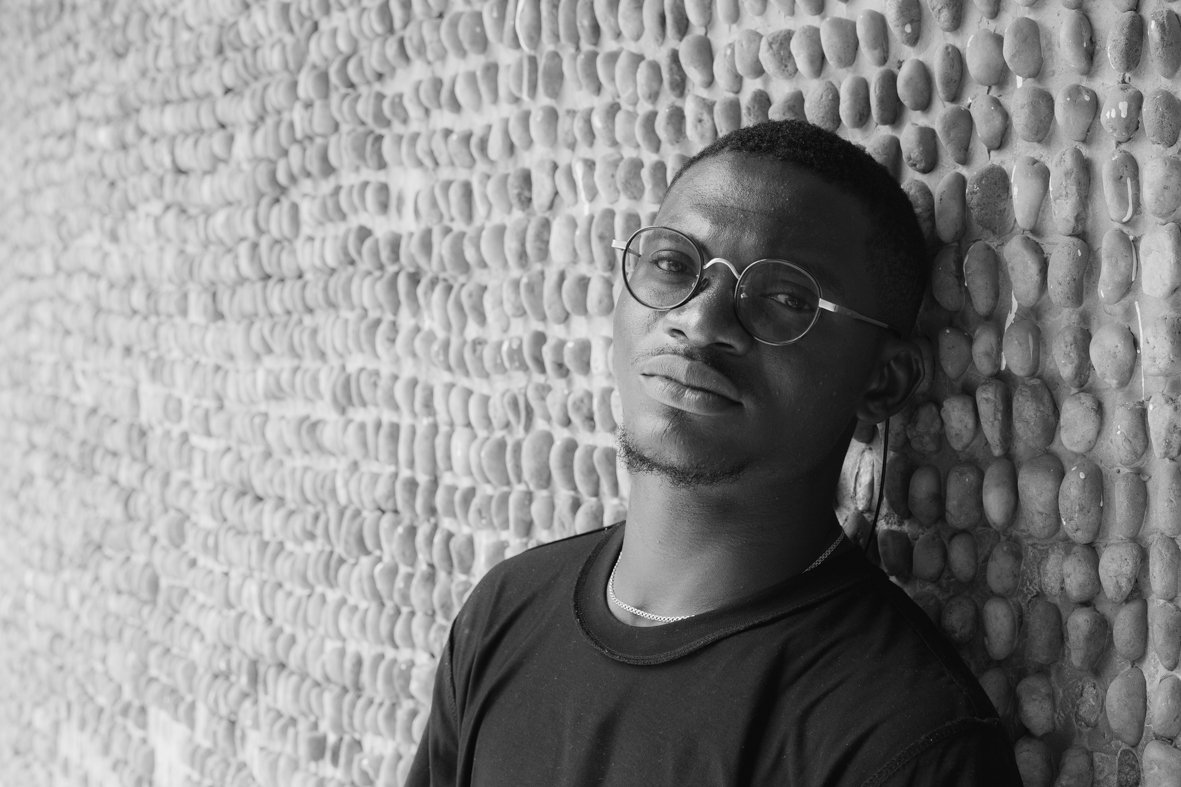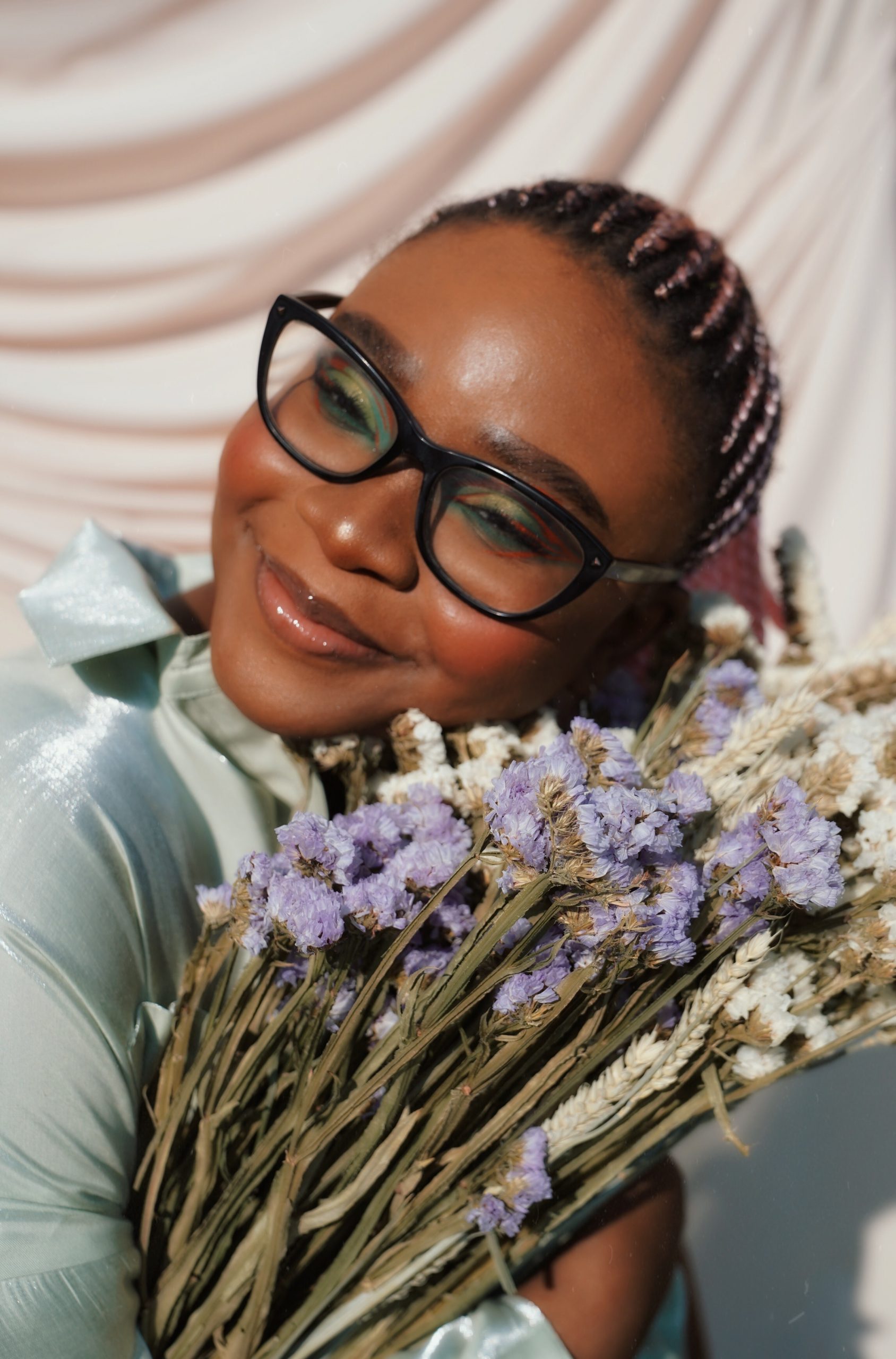
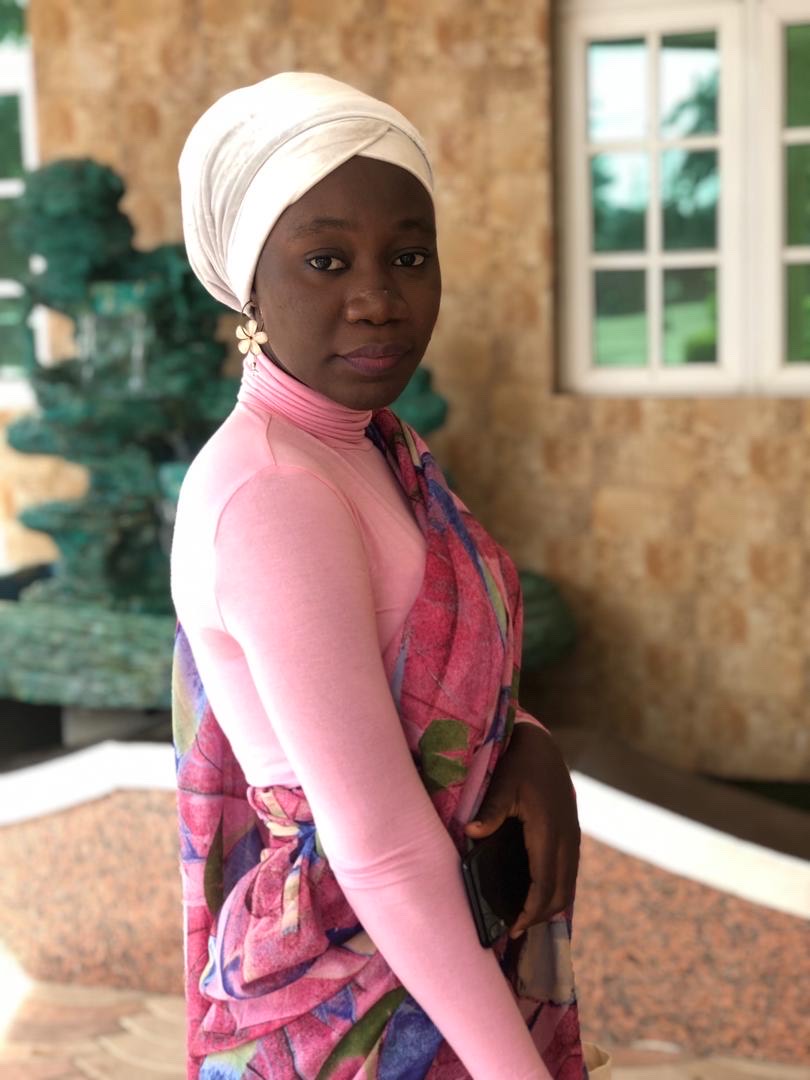
Hauwa combines her passion in poetry with deft storytelling, yet her poetry remains true to its course. Even in her prose, you can see poetry yielding in the order of her language.
I first encountered her physically at the Green room of the Ake Books and Arts Festival in 2019 where the quiet around her speaks volume. Here in this interview, we talk about pain and its inheritance, the process behind some of her writings and her influences.
In an interview, you are quoted to have said ‘in truth, at the touch of pain, we also become poets‘. How has pain influenced the direction of your poetry?
I feel like pain has a way of magnifying our vision in a way that only language can make sense of. It’s like, there is this intense ache in your inside, and you are looking for the right words to articulate it so that you may begin to find your way out. But the language does not yet exist to you. For me, it has been the case that poetry provided me with the language.
And it wasn’t just pain, it was all the intense emotions that I did not know how to process. It’s joy, it’s excitement, it’s sadness, it’s longing. These were all emotions for which language did not exist to me until I ventured into poetry. I do use the word “language” here beyond the usual sense, of course. It isn’t just naming something, it’s articulating and understanding that thing to oneself, until you arrive at a doorway that is both passage and escape. John Green says “we’re such language-based creatures that to some extent, we cannot know what we cannot name.” I agree.
Elsewhere, you have said that you find yourself always returning to Franny Choi’s ‘An Introduction to Quantum Theory’. What is your relationship with this poem, and what does it mean to you?
When I think of that poem, what comes to my mind — what I see, is a fusion of genius at language and a profound understanding of the concept of having gone through a great heartbreak, and a pondering on that ever painful, raging question, why me? In this poem, Franny Choi offers us an alternate universe, where “it is someone else’s sister who climbs to the roof that night,” and invites us to do what we will with that consolation, which really is just a question on whether that is bearable.
The poem offers a tender introspection into why it shouldn’t be you, why it should be someone else. Such that at the end of the poem, you realize that there is no acceptable answer to that question. And this has made me go through my aches more gracefully.
Your poem, Fatimatu, published in 20.35 Africa: An Anthology of Contemporary Poetry is deeply moving. It documents the throes of carrying inherited pain. What is the writing process like, and what do you seek to achieve with it?
I wrote that poem in, i think, 2018 or maybe 2017, but it wasn’t ready until a year or so later. It went through three versions and then settled back to the second version, which had really been a slight variation of the first. I wanted to talk about both external and internal displacement and the way that it goes on to affect personal aspects of life such as relationships.
Who are the writers that you admire and what influence do they hold over the kind of work you do?
There is Safia Elhillo, Ladan Osman, Kaveh Akbar, Franny Choi, Danez Smith and so many more. It is not lost on me that most of the poets on this list are muslims, which I also think is a pointer to why they influence my writing. Their work sees me, affirms me, deems what I write worthy and important.
For someone who initially did not like poetry, what changed your stance?
I honestly cannot really trace the transition. I just woke up one day and I had a manuscript of poems. Wild.