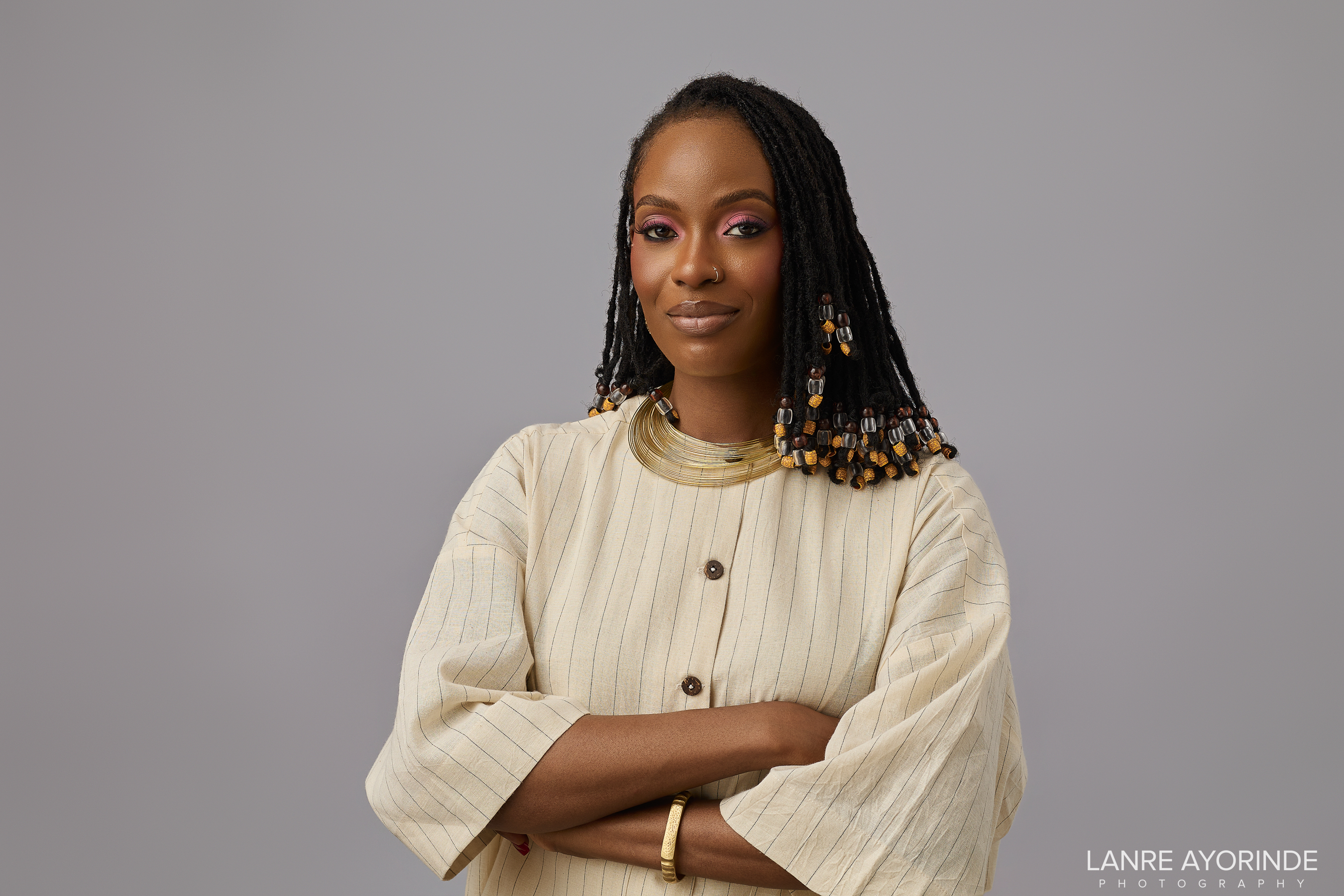
The Nigerian art and design space is not alien to individuals who effortlessly combine careers in both Industries.
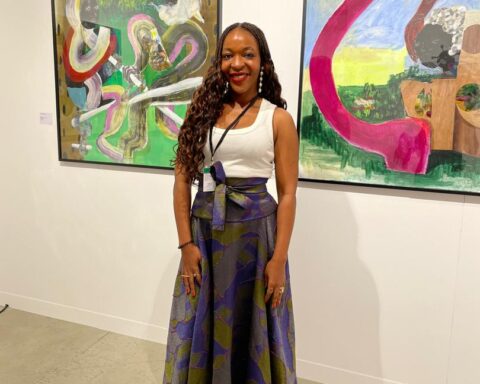
Working at the intersection of design, art curation, and cultural research, Mercy Imiegha’s practice is driven by a desire to create objects, furniture, and installations that function not only as design solutions but also as vessels for artistic expression and cultural dialogue. Imiegha is the co-founder and curator of Nomadic Art Gallery and the founder and creative lead of Mimọ, a furniture and object design studio. Through Nomadic Art Gallery, she has curated and produced multiple exhibitions focused on emerging and mid-career African artists, with an emphasis on storytelling. Her curatorial work has provided platforms for artists such as Victoria Ndubuisi, Anny Robert, and Ekene Ngige, with exhibitions presented locally and internationally, including at Art X Lagos.

Her journey into the creative industries began through watching her father personally design their homes when she was growing up. It was further nurtured by her realizing she had a love for geometry, technical drawing and things that involved creating concepts with her hands. During her NYSC in 2016, she started exploring her creative projects a lot more and soon discovered a lecture by an interior designer that discussed how design shapes the narrative of human behavior.
This led her to enrol in design training for six months and a subsequent internship at Isio Delavega Design Studios, where she progressed to junior interior designer. During this period, she contributed to both residential and commercial projects, including the Lagos office of Universal Music Group. In 2019, she founded Interior Fusion Design, where she worked as Design Director, before launching Mimọ in 2020 as a platform for her own furniture and object designs.
In 2020, Imiegha joined Danish design brand BoConcept as a design consultant, later progressing into leadership roles and eventually becoming Country Manager. Alongside her professional practice, she furthered her design education through a furniture design course at the Florence Institute of Design International.
We caught up with her to discuss the inspirations behind Nomadic Art Gallery, her evolving practice, and the possibilities that emerge when design and curation intersect.
Nomadic Art Gallery opened in early 2023 to position contemporary African art as an important part of modern design. How did the gallery come to be?
Nomadic Art Gallery grew organically from an existing design brand, BoConcept, in Lagos. Clients were very curious about how contemporary African art could coexist with Danish design, prompting the launch of the Art Meets Design concept in 201G.
Over time, this has become a recurring exhibition featuring African artists, with the showroom furniture being Danish design. Since 2022, I’ve curated several of these exhibitions, and they have quickly become a favourite highlight for existing and new clients of BoConcept.

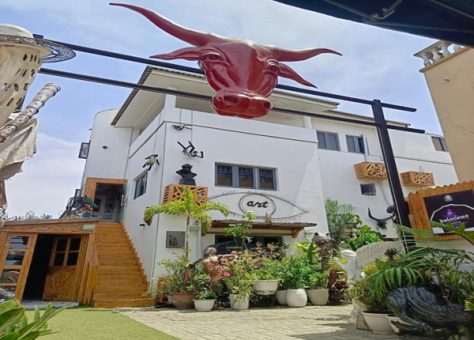
As the interest grew, it became clear that the dialogue between art and design needed a dedicated platform. So, in 2023, my director and I decided to create something more intentional: a gallery that could not only showcase artists but also move with them and reach audiences across different regions.
With BoConcept already active in several sub-Saharan African countries, this mobility felt like a natural extension of our mission. This was how Nomadic Art Gallery was born in early 2023, as a space committed to positioning contemporary African art within broader cultural conversations, while conceptually remaining in motion.
The gallery carries the spirit of travel, and this is very much reflected in its name, Nomadic. The spirit of travel, exchange, and cross-cultural dialogue continues to shape our exhibitions and collaborations today.
As a gallerist and curator, how have your personal experiences shaped the way you engage with art and design?
My personal experiences really are the heart of how I engage with art and design. I started my creative journey as a maker—I was curious about how things are built and what they mean.
That instinct to experiment guided me into interior design, which was followed by furniture design, where I learned how objects can hold stories and cultural memory. Over time, my work in design naturally opened the door to art. I became interested in the space between the disciplines — how an object can be both functional and symbolic, how art can hold the intimacy of design, and how both can still represent culture. That fluidity became a defining part of my practice.
Curating came just as organically, through the Art Meets Design exhibitions and eventually Nomadic Art Gallery. I discovered how much I enjoyed creating context around artworks and helping artists tell their stories. Also, my travel experiences and exposure to transcultural exchange strongly influence how I interpret art and design today. All of these experiences, making, designing and curating have taught me to approach art and design as a lived experience.

In what ways does Nomadic Art Gallery fill a gap that traditional galleries or design spaces often overlook?
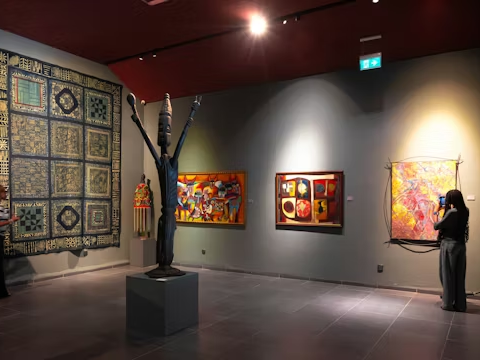
Nomadic operates as a traditional gallery, but what sets us apart is how intentionally we bridge art and design. My design background shapes our exhibitions, especially our annual Art Meets Design collaboration with BoConcept, which brings young designers into dialogue with contemporary visual artists. This kind of cross-disciplinary storytelling isn’t often found in traditional art galleries, where design is usually treated as purely functional or separate from visual art.

At Nomadic, we see design as a storytelling medium, just as expressive as visual art. By presenting both together, we create a space where stories and material culture intersect. We also address a visibility gap. Many emerging artists work in that “in-between” space, either too conceptual for commercial design or not consistently fully recognised in traditional art contexts. Nomadic gives those designers and design-artists a home. We represent young creatives who are experimenting with form and design and provide them with a platform to share their perspectives alongside established artists.
In doing so, we’re not just exhibiting artworks, we’re also expanding the conversation about what contemporary African creativity can look like.
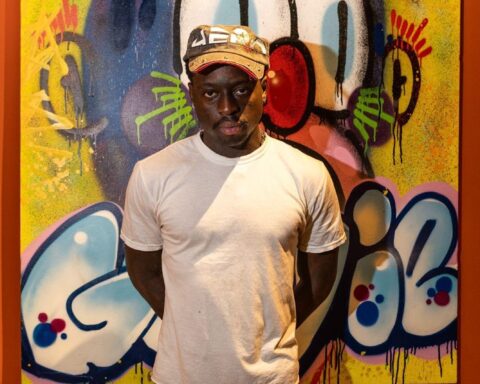
You’ve collaborated with creatives like Anny Robert. What guides your decision to work with an artist?
Our decision to work with artists is often shaped by a combination of qualities that go far beyond the work itself. Of course, skill and artistic vision are essential—I am drawn to creatives who demonstrate a strong command of their medium and offer unique perspectives.
However, the qualities that matter most to me are the ones that reveal how an artist will grow. A strong work ethic is important to me; I look for artists who are disciplined, reliable, and genuinely committed to their practice.
Equally important is the will to grow, that openness to experimenting, taking risks, and evolving. When an artist shows curiosity and a desire to push their boundaries, you can see a clear trajectory for their career. Character also guides me. Working with someone means investing in their journey, so I value artists who approach their process with professionalism and a collaborative spirit. Those qualities make it easier to support them meaningfully and work alongside them as they grow.
This is why working with creatives like Anny Robert has been so fulfilling: they combine talent with the mindset needed to make long-term growth possible and exciting.
Last year, you exhibited Victoria Ndubuisi’s Ìje Ụd́ọ at Art X Lagos. How did the collaboration come together, and what stood out about the reception?
Our exhibition with Victoria for Art X Lagos came together really well. Nomadic exclusively represents her, and I’ve been part of her practice for a while. Her ability to translate personal stories into deeply emotional, resonant work is extraordinary.
Victoria tells her story with such honesty that she becomes a mirror for others; people often see parts of themselves reflected in her story, and this depth made her an artist whom I was eager to present at Art X Lagos.

The reception to Ìje Ụ́dọ was overwhelmingly positive. People were moved, and many connected with the emotional depth and tenderness in her storytelling. It was powerful to watch her pieces create moments of reflection for viewers, especially in a public fair setting like that.
For us, as an emerging gallery, Art X Lagos was an incredible platform. It provided visibility, meaningful dialogue, and an opportunity to introduce our vision to a wider audience. It reaffirmed why we champion artists like Victoria: her voice is compelling, her craft is strong, and her work has the rare ability to touch people deeply.
Nomadic Art Gallery recently held This Little Light of Mine in Kenya. What were your expectations, and how does this fit into your broader pan-African vision?
We were very intentional with this exhibition. The artist, Ekene Ngige, works primarily with coffee as his medium, so presenting his practice in a region where coffee is not just consumed but culturally significant felt meaningful.
We hoped the East African audience would connect with his material language on a deeper level, and they did. His work was incredibly well-received, sparking conversations about both his technique and the cultural history of coffee. One of my highlights of this exhibition was watching Ekene engage with local coffee producers and roasters, an exchange that extended the exhibition beyond the boundaries of a traditional gallery.

The show opened new opportunities for both the artist and the gallery. It reaffirmed how important it is to present work in places where its themes resonate authentically with the audience. On a larger scale, this exhibition reflects our mission: to internationalise African art not only globally but across African borders, creating pathways for artists to engage with diverse audiences on the continent.
You also run Mimo, a brand blending design and interior decoration. What inspired its creation, and how does it redefine modern aesthetics?
Mimọ was born during the COVID-19 lockdown in 2020. At the time, I was working in interior design, but I’d long envisioned building a brand to sell my product designs. With most major projects shut down or put on pause due to the pandemic, it was the perfect moment to bring that vision to life. To allow clients to order my designs online once the restrictions were eased. The brand began with clean, minimalistic aesthetics, but over time, its visual language has evolved.
Today, the pieces are functional yet narrative-driven — each explores a theme, tells a story, and can stand alone as a collectable. With this pivot, I had the opportunity to showcase my Dono stool at Design Week Lagos this year, introducing my work to an entirely new audience. The piece was also featured at the TEDxLagos anniversary event in October.

In this way, Mimọ redefines modern aesthetics by merging functionality with meaning. It blends design with storytelling so objects become visually compelling and culturally resonant. Mimọ allows me to continue experimenting at the intersection of art and design and to create works that are accessible yet conceptually rich.
In building Nomadic and Mimo, what challenges did you face, and how have they shaped your approach over time?
There have certainly been challenges in building the Mimọ brand and Nomadic Art Gallery and balancing creative vision with the realities of running a business, especially in Nigeria, has been one of the biggest challenges.
For Mimọ, maintaining high production quality while managing costs and client expectations requires careful planning and constant problem-solving. Similarly, for Nomadic, supporting artists and creating resonant exhibitions while navigating logistical and financial constraints demands resilience.
But these experiences have dramatically shaped my approach to work. I’ve learned to think strategically without compromising creativity, to value collaboration, and to treat challenges as opportunities for innovation.
Running these two has also reinforced the importance of meaningful relationships — with artists, clients, collaborators, and audiences. These relationships are essential for the success of both a gallery and a design brand.
What future possibilities do you see for Nomadic Art Gallery across other African cities?
There is immense potential for Nomadic to engage with audiences across other African cities. Africa holds a rich diversity of artistic practices, many of which remain underrepresented beyond their local communities. By expanding into new cities, we can connect artists with audiences we may never encounter otherwise. We believe every city offers a unique ecosystem: emerging creative communities, established institutions, and distinct cultural histories. These differences create opportunities for new formats, collaborations, and experiments.
For us, expansion is not just geographical growth. It’s about deepening our mission to internationalise African art while honouring each local context. By moving beyond a fixed location, we hope to create an interconnected network of spaces where artists and audiences can engage with contemporary African creativity in ways responsive to each city’s natural context.