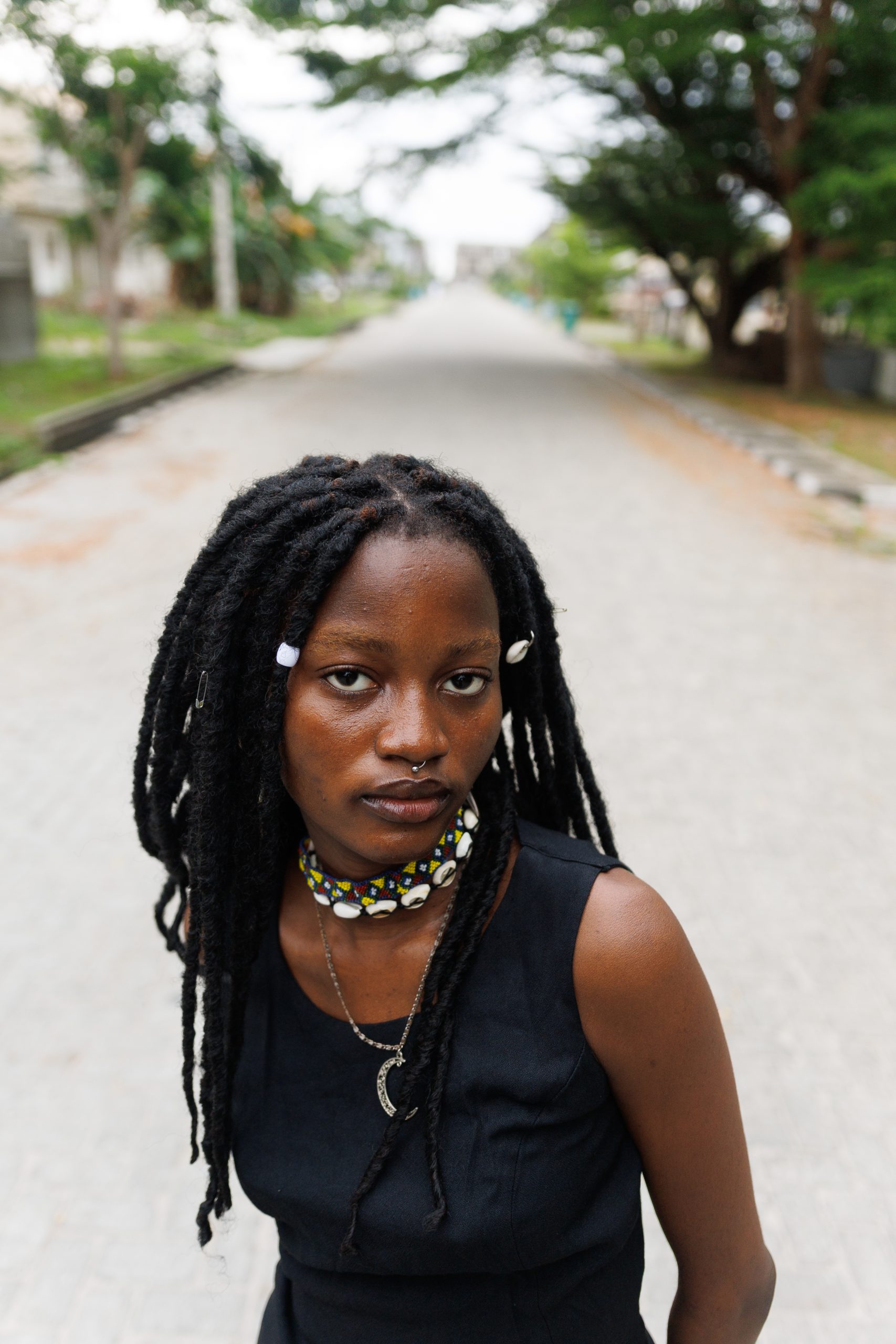
Rachelstories is an entirely indie creative entity that embodies the experiences and perceptions through which filmmaker Rachel interprets life and events.
In an exclusive interview, Rachel delves into what sets Rachelstories apart from other indie creators and discusses the challenges that come with being a multi-dimensional creative in the vibrant Lagos creative scene. She also shares her thoughts on the Nigerian creative space as a whole and the changes she hopes to see. With candid honesty, Rachel reveals her struggles, including her decision to drop out of film school, and emphasizes the importance of community in nurturing creative spaces.
She further unveils the inspiration behind her upcoming film screening and the emotions she hopes the audience will experience. Despite the hurdles faced as an indie creator, Rachel’s unwavering passion for storytelling and determination to make an impact shine through in this insightful interview.
Read the full interview with Rachel below.
You’re very particular about the fact that you’re not a YouTuber, so what is Rachelstories, and what sets it apart from other indie creators?
Rachel: Rachelstories is essentially an extension of myself, representing my interpretation of life, experiences, and events. It is life through my unique lens. While anyone can make films or tell stories, nobody can interpret life from my perspective and share the story with the essence that defines me. That’s why I prefer to be identified as a storyteller, as I am not confined to using only film as a medium. If another medium suits the narrative of a Rachel story, I would readily embrace it.
As ‘Rachelstories,’ your films are closely centered around your experiences and persona. How would you describe yourself?
Rachel: That’s a tough question. I am a multitude of things—fun, funny, kind, mean. I strive to be the version of myself that feels most authentic in any given situation. As humans, we are multidimensional and cannot be wholly defined by adjectives. I am everything and nothing at the same time, I suppose.
What is your earliest childhood memory that you think has helped inform your identity?
Rachel: My earliest memory involves repeating classes in kindergarten because I refused to conform to the way they taught numbers. While they read 1-10, I read it with them, but when they reached 11, which they called “eleven,” I insisted on reading it as 1 and 1, saying “Oney one” and “1 and 2” as “Oney two,” and so on. I continued doing that for an entire year before finally giving in to say what they wanted. This memory reminds me that I have always been my own person. Whenever I find myself in situations where I feel I’m not being true to myself, I remember that little kindergartner, Rachel, who insisted on saying what she believed was right.
In your first-ever video, you talk about the realities of being a multi-dimensional artist. How would you describe your experience as a multi-dimensional creative in the Lagos creative scene?
Rachel: It has been a fascinating journey, I must say. I have had the opportunity to work with various people, assuming different roles such as a model, writer, content creator, manager, assistant, and more. Being able to explore different avenues and engage in diverse activities has been liberating. There have been instances where others tried to box me in, but I am accustomed to it and refuse to let their perceptions define who I am. Overall, it has been a fun experience.
What do you think about the Nigerian creative space in general?
Rachel: We still have a long way to go. Currently, it feels like we are merely playing around and have yet to tap into our full potential. Westernization and capitalism tend to restrict us, as everyone tries to conform to Eurocentric standards of excellence. However, I believe that in recent years, we have begun to see things for what they are, and that gives me hope.
You’ve spoken about dropping out of film school. Do you think filmmakers like yourself are receiving all the support they need from the creative industry?
Rachel: No, we are not receiving adequate support. People in the industry often speak about embracing diversity and differences, but it often ends up being just talk. They gatekeep events and opportunities, making it difficult for those outside their circles to even be aware of them. Even when work opportunities are presented, they tend to underpay creatives, leaving them unable to afford the prices associated with industry events. While everyone needs to make money, it shouldn’t be at the expense of the very creatives who form the backbone of the entire system.

What’s the backstory behind your decision to drop out of film school?
Rachel: I was simply tired. Film school sold me dreams, and I expected it to feel like a real film school. However, it turned out to be a disappointing experience where I felt like I was wasting my time and not learning anything substantial. I couldn’t keep up with their rigid schedule, and it became incredibly challenging and tedious.
If you could make changes to the Nigerian filmmaking scene, what would they be?
Rachel: One significant issue I would address is colorism. It is rampant, even within film schools where opportunities to participate in productions are provided. They often favor light-skinned individuals over dark-skinned ones. Addressing this bias and promoting inclusivity would be a significant change I would strive for.
What would you say is the importance of community and community building in creative spaces?
Rachel: Community is of utmost importance. We need each other more than we realize. Capitalism promotes individuality and emphasizes doing things on our own while relying heavily on money. However, I can speak of numerous positive experiences I have had simply because someone remembered I existed and chose to lend a helping hand.
You’re currently on course to host a screening for your next film. What inspired that?
Rachel: I initially started making this film as an excuse to rest, but it evolved into a beautiful experience that I felt compelled to document. While in the main production phase, a friend of mine kept asking when I would post it on YouTube. I couldn’t provide an answer because it didn’t feel right. Then, during a call with one of my closest friends, who had just had a film screening in Ilorin, the idea popped into my head to do the same. That’s how the concept of a screening was born, and it felt like the right thing to do.
As an entirely indie creative, you’ve been incredibly open about your struggles. Besides a lack of capital, what other major challenges do you face when working on a project?
Rachel: Honestly, not much, to be honest. Every problem that arises can either be solved with money or serves as a stepping stone to where I need to be. So, I would say there aren’t many challenges, and I am grateful for that.
Which of your projects has been the toughest to create so far?
Rachel: The film with Blessing Ewona, the founder of Dencity, was truly nerve-racking. Various obstacles kept arising, and I discuss them in the film. However, as I mentioned earlier, these challenges guided us toward where we needed to be.
You’ve also been open about the help you’ve received from people around you. What would you say is the craziest yet positive thing to happen to you on your creative journey?
Rachel: Everything has been insane, honestly. Whether it’s receiving a microphone, a laptop, or even the funds to throw a party, every aspect of my creative journey has been incredible. Planning this premiere was also an insane experience. I randomly texted Screwdrivers.ng, asking for their support with drinks, and they immediately said yes. Hfactor also provided space for broke creatives like me to host events. The creative industry has its downsides, but it’s people like these who keep me going.
At your film premiere, what emotions do you hope the attendees feel?
Rachel: I hope they feel just 1% of the pure joy I felt when I finished editing. If they experience even a fraction of that happiness, I will be genuinely content. It would mean that I was able to convey a feeling that I experienced while sitting in my room, editing nonstop for days like a maniac.
What would you say is your short-term and long-term goal as Rachelstories?
Rachel: In the short term, my goal is to continue telling stories in my own unique way and make a difference in the Nigerian creative space. I aspire to inspire and empower young creatives, encouraging them to pursue their dreams and not let societal constraints hold them back. Ultimately, I want to be remembered as someone who made an impact and contributed positively to the world of storytelling.
What are some ways people can support Rachelstories and your forthcoming screening?
Rachel: Currently, what I really need is equipment. A camera, a camera microphone, and other tools that make filming and creating easier. Most of my films have been shot using my iPhone, and while I try to make the most of it, having proper equipment would be immensely helpful. Monetary donations would also be appreciated.