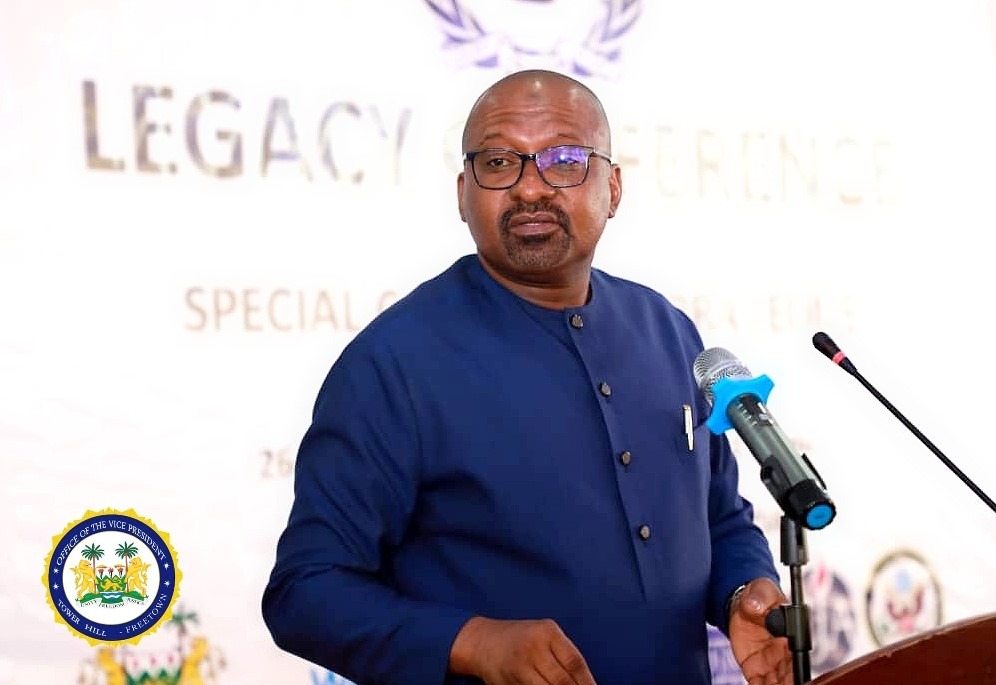
Sierra Leone’s Vice-President, Dr Mohammed Jalloh, used his convocation lecture at the University of Ibadan on 17 November to pledge 100 fully funded doctoral scholarships for Nigerians: ten a year for ten years, at any of Sierra Leone’s six public universities.
The administrative hub will sit jointly at the University of Ibadan and Fourah Bay College, coordinated by Sierra Leone’s Ministry of Technical and Higher Education. Those two institutions are not a neutral choice. They are Jalloh’s own alma maters.
That is the part of this worth slowing down on.
The direction has reversed
The Vice-President of Sierra Leone offering to educate Nigerian doctoral candidates is a man returning a favour. He studied at Ibadan, in the era when Nigerian universities were where the rest of West Africa sent its best students. Ghanaians, Sierra Leoneans and Liberians came to Ibadan, Nsukka and Zaria because that was where the teaching was.
He came back to that campus this week as a head of government, offering to take Nigerians the other way.
What the number actually means
Ten scholarships a year is small, and it is worth being honest about the scale rather than pretending otherwise.
| PhDs per year | |
|---|---|
| Nigeria, current output | About 8,000 |
| Sierra Leone offer | 10 |
The National Universities Commission’s own STEM Transformation Strategy, published in July, puts Nigeria’s current doctoral output at roughly 8,000 a year and sets targets of 12,000, then 20,000, then 35,000. Against that, ten places is a rounding error.
So the scholarships will not fix anything. What makes them worth reporting is what sits underneath them in the same NUC document, which lists among Nigeria’s systemic constraints: obsolete laboratories, weak industry-academia linkages, outdated curricula and insufficient postgraduate and doctoral capacity. The regulator is describing a doctoral system that cannot meet its own targets.
A country with a fraction of Nigeria’s population and budget offering to train Nigerian PhDs is not generosity reaching down. It is a comment on where Nigerian postgraduate education has ended up.
The practical questions
Nothing announced so far covers the things an applicant would need to know:
- Which disciplines, and whether they map to where Nigeria’s staffing gaps actually are
- Whether the award covers stipend, travel and accommodation or tuition alone
- How candidates are selected, and by whom
- Whether a Sierra Leonean doctorate will be accepted for promotion in the Nigerian university system
- When the first cohort starts
That last one matters most. A PhD is only useful to a Nigerian academic if the NUC and their own university recognise it for progression. Without that, this is a scholarship to leave rather than a scholarship to come back.
What to watch
Pledges made at convocation ceremonies have a poor completion rate. The test is not the announcement, it is whether a first cohort of ten names exists by this time next year, and whether the administrative hub at Ibadan is a staffed office or a line in a speech.
If it works, the interesting thing will not be the hundred doctorates. It will be the precedent of two African countries moving students between them without a European or American institution in the middle.