Some may say we shouldn’t talk about it, or even say, “Eni, you are a man, therefore you are speaking from a place of privilege.” I got discouraged writing about the experiences of men who have been falsely accused, paused and returned at different intervals before I finally decided to write. Not for societal approval, but for the few people that have been, or can be affected by this instance.
Feminism is trendy these days (and for good reasons, equality should not be up for debate), many people gratifyingly add ‘Feminist’ to their social profiles, although it would be nice if more of them showed up away from the keyboard. Feminism as a concept is almost foolproof, but people aren’t, and people have a tendency to be misplaced in echo chambers.
While it is a fact that generally, men have more privilege than women, it doesn’t mean we should use privilege to negate masculine pain. Things are black and white only if you wish to see them that way. For instance, believing women are always victims to be protected not only perpetuates the idea that they are the weaker sex and in need of men to save them, but can also give them an unfair advantage in court cases where they are the accused offender, while men are quicker to be deemed capable of causing harm to others. Sometimes this may be true, but it is dangerous to take it as canon.
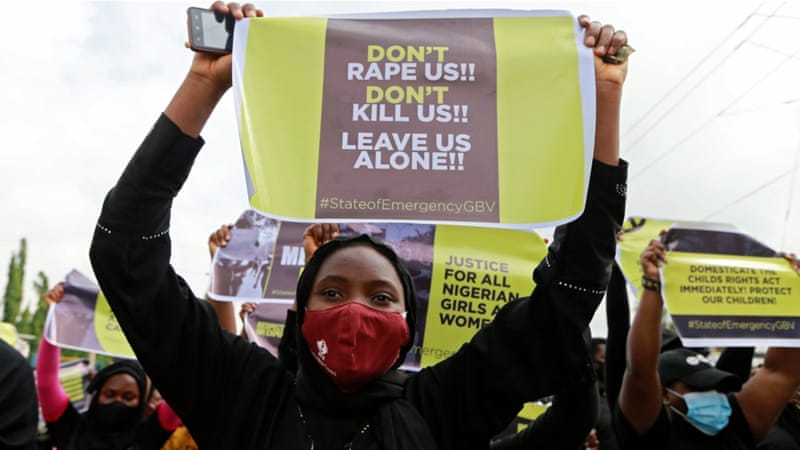
When allegations of sexual harassment are made, they should be taken seriously and thoroughly investigated. In Nigeria where a majority of cases of sexual violence go unreported, and sexual victims go unprotected, social media has brought the issue into the open. But there’s one problem—people are quick to publish ‘he raped me,’ ‘she raped me’, sometimes with their entire identity hidden, leaving the accused with no chance of defence. Even with social media, allegations deserve identity to itself, if those, they shouldn’t count.
As a society, where do we draw the line between two important principles, ‘protect the victim’ and ‘innocent until proven guilty’? Currently, we are walking on a fine line in regards to rape allegations. Do we “believe victims en masse,” or question each person who comes forward with rape allegations? Truth is, whichever road is taken, they both can damage innocent lives.
Answering the question, ‘What happens when false allegations are made?’ If not properly investigated can alter an accused’s life or mean the beginning of a whole new one. We have seen it in the autobiographical movies, ‘Brian Banks’ ‘If Beale street could talk’ and other accounts of sexual assaults. We have seen it on our social media platforms. Where rape allegations are concerned, there is a gray area in some cases. These gray areas include what some consider mixed signals, memories deluded by alcohol, and the misunderstanding of what actually constitutes a sexual assault. Instances of false rape accusations are actually cries for attention or an attempt to cover up what might be considered an embarrassing moment.
It’s easy to say it’s just 2% – 10% of rape accusations are false and completely dismiss it. After all, 2 out of 100 is such a small insignificant number, right? I believe those 2 individuals would beg to differ. Daniel who was able to get his accuser medically examined, after spending a day in prison, he says “she wanted revenge, I don’t know why she did it, but she did. I am not the same anymore, the anxiety and stigma that comes with it is worse than the vindication” Is it rare? Yes. But should it be ignored? No. We should not minimize other people’s issues based on our biases. Every life is precious, man, woman, or otherwise, and the less we let things like this happen, the better.
For The Man
It’s easy to say it’s just 2% – 10% of these cases are false and dismiss it out of hand. After all, 2 out of 1000 is such a small insignificant number! According to Daniel who was able to get his accuser medically examined, after spending a day in prison, ‘she wanted revenge, I don’t know why she did it, but she did. I am not the same anymore, the anxiety and stigma that comes with it is worse than the vindication’ Is it rare? Yes. But should it be ignored? No. We should seek to understand it. And put in place processes to make sure we minimize it.
You do not have to be scared:
- Do not touch women inappropriately. It is that simple.
- If you have not done anything, you do not have anything to hide.
- Rapists and sexual assaulters who have been convicted deserved it.
- Feminism is not for women only.
Nevertheless, it is important to note that rape is never the victim’s fault. We have gone beyond the point where we only tell women ‘how to not get raped’ and spend that energy and time ‘teaching boys to understand consent.’ She does not need you to protect her, she needs you not to harm her.
To Other Survivors.
When a false allegation is made, you trivialise all rape victims and survivors, saying to them. “I am sorry for what happened to you, but it is not that important” False charges of rape over consensual sexual relationships serve only to dilute genuine cases and distort the debate about rape.
Up Against False Accusations?
Accept that there is no way you can erase what has happened. Even though the accusations may be unfair and untrue, the situation is real. You need to get out of denial about that in order to deal with it in the here and now.” False allegations are upsetting. No one appreciates being called a “liar” when there’s so much at stake. Still, you can’t let it get to you. Ensure to get legal representation. As much as rapists do not deserve to roam the society, false accusers also do not deserve a place in the society, but behind bars.
What To Do:
The vast majority of rapes are committed by persons known to the victim: only between five and 15 percent of assaults are perpetrated by a stranger. Therefore, the identity of the perpetrator is frequently reported. Proof may be hard to find but there are certain measures to take. Let me state that ‘assumptions do not convict rapists’ do not make assumptions that there are no constitutional centres that would listen, there are centres and organisations that help with rape cases in Nigeria.
- Be safe first.
- Visit the hospital for a SANE exam. (Sexual Assault Nurse Exam)
- Early reports, allow for evidence to be taken.
- If possible, take pictures of yourself after, it helps in evidence.
- Inform a friend immediately so you have an alibi. A voice recording of yourself after the incident could help as well.
It is important, that rapists and sexual offenders are brought to book and kept behind bars, they do not deserve to be in the society, therefore your prosecution helps us all. Most importantly, note that the shame does not belong to you but your assaulter. Know that nothing you do will ever make rape your fault. Before you even start thinking about preventing a potential rape, you have to understand that if you are raped, it is 100% the rapist’s fault and that nothing you did, wore, or said could have caused you to be raped.
We need to underline here that a real victim of sexual violence should be believed, report the crime and deserves all the support, encouragement and help they need.