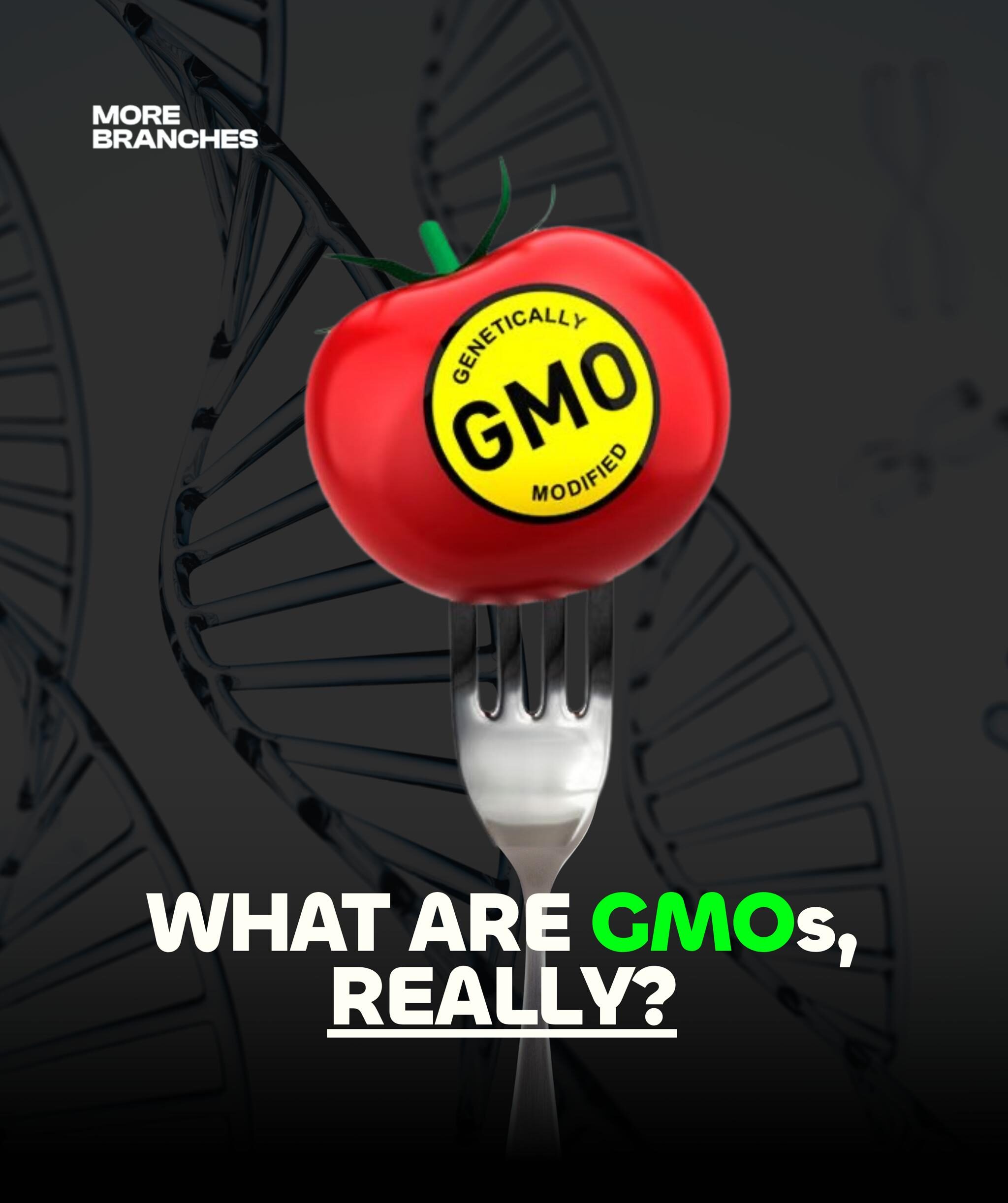
Genetically Modified Organisms. This is when scientists tweak the DNA of a plant, animal, or microorganism to give it new traits, such as making a tomato survive harsh heat or corn that’s naturally pest-resistant. Simply put, science acts as a matchmaker for DNA.
Why Modify Organisms?
The goal is to improve the final product. Think:
- Better resistance to pests or drought
- Longer shelf life
- More nutrition (like vitamin-rich rice)
- Bigger harvests
- Less need for pesticides or herbicides
What GMOs Mean for the World
GMOs touch almost everything in agriculture, the environment, health, and business.
- Food security: They help us grow more food on less land.
- Farming: Less pesticide use, more stress-resistant crops.
- Concerns: Corporate control, biodiversity loss, and long-term ecological impacts.
Pros of GMOs
- Bigger harvests = more food
- Less pesticide = safer environment
- Added nutrients = healthier meals
- Drought resistance = climate-smart crops
- Longer shelf life = less food waste
- Lower costs = more profit for farmers (sometimes)
- Disease-resistant crops = more stable food supply
Cons of GMOs
- Superweeds & superbugs: Resistance can build up
- Loss of crop variety: Monocultures = risky
- Cross-pollination: GM genes spreading to other plants
- Allergen worries: Though no solid proof yet
- Antibiotic resistance concerns
- Corporate control: Big companies + patented seeds = tricky
- Ecological unknowns: We’re still learning
- Public mistrust
It is complicated, however. Many countries restrict or ban them entirely (especially in Europe). This includes countries like France, Germany, Austria, Italy, Russia, Switzerland, Turkey, Mexico (mixed stance), Algeria, Madagascar, and Tanzania. These bans are often about safety, ethics, or preserving local agriculture.
On the other end of the spectrum, many countries like Canada, the USA, Brazil, Argentina, India, China, Philippines. South Africa, Nigeria, Kenya, Ghana, and Australia use GMOs to grow corn, cotton, canola, and soybeans.
They view GMOs as a tool for feeding growing populations and adapting to climate change.
So, What’s the Bottom Line?
GMOs are powerful tools, but like any tool, it depends on how it is used. They could help solve hunger and food waste, but they also raise questions about control, health, and long-term safety.
It is not black and white. Just science, society, and a lot of debate.