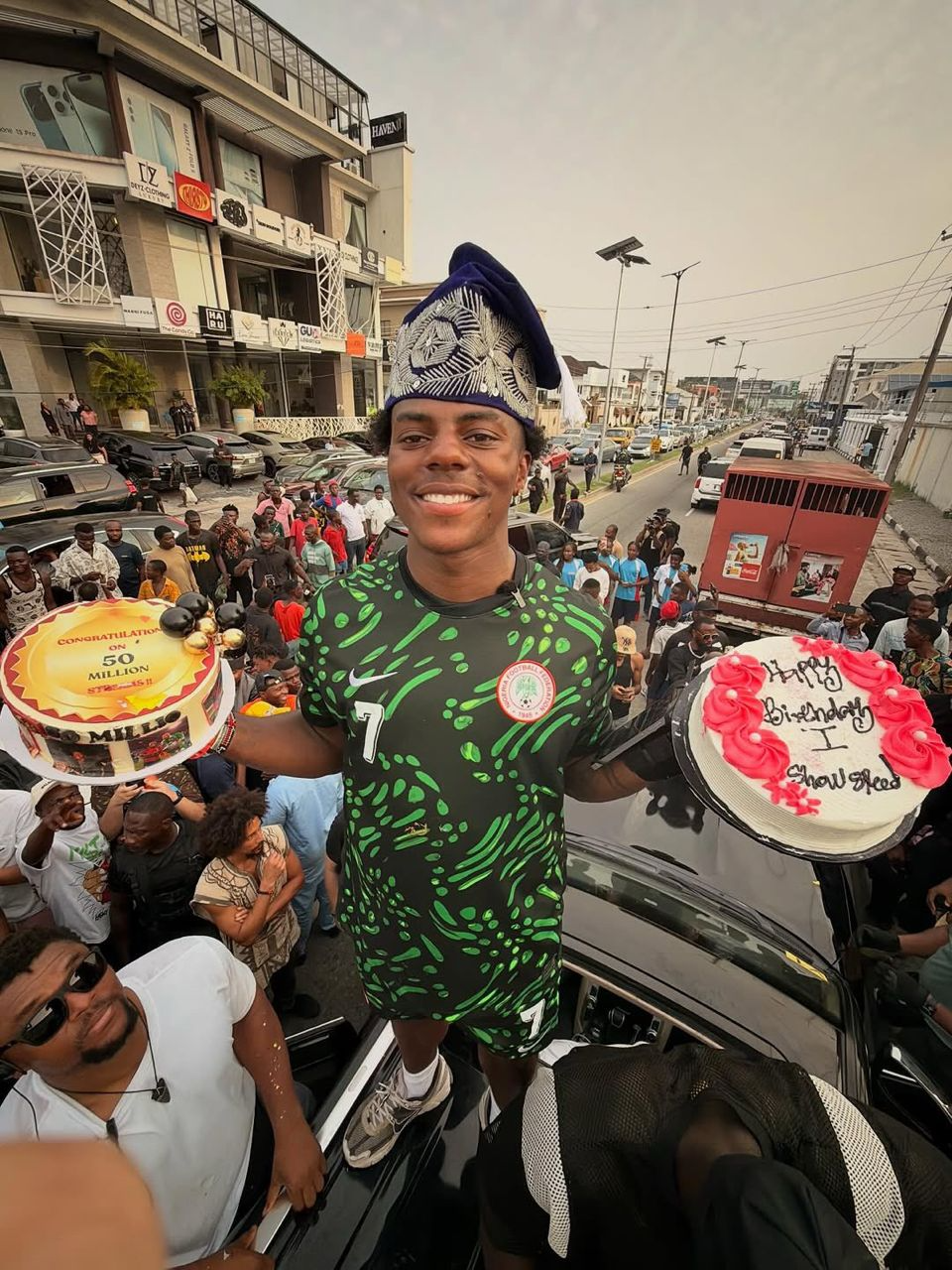
American YouTuber and streamer Darren Jason Watkins, popularly known as IShowSpeed or Speed, was recently on a streaming tour in Lagos. And again, one was reminded from the eyes of an outsider that urban Nigerian cities like Lagos have a begging culture that reveals a lot about the stark economic reality and the state of our national values.
The 21-year-old African American streamer started a Lagos live stream on the 21st of January, visiting key parts of Lagos central to the pulse of the city. However, in now widely circulated videos, his entourage was seen visibly harassed by those believed to be thugs and area boys who trailed his car and kept asking for money. This singular act has opened a discourse on what exactly fuels the begging culture on the streets of Lagos and why it seems to be on the increase.
In Lagos, it is not uncommon to be accosted by well-dressed men and women who have made begging a professional career. With the rise of food prices, inflation, and economic hardship that threatens to unravel the seams of most Nigerians, there has been a rise in begging, with children even joining and trailing strangers until they are given money.
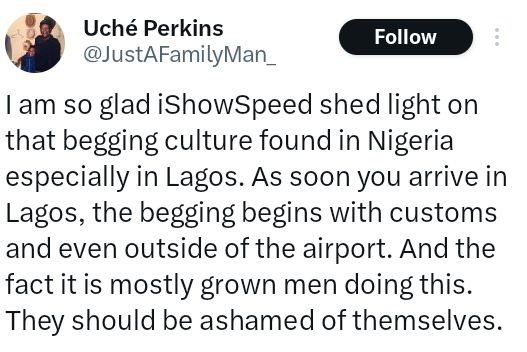
While one can rightly point to the fact that Nigeria has been deemed the poverty capital of the world, IShowSpeed’s stream reveals a more uncomfortable truth about Lagos living. The truth that the economic hardship has created a group of people who are enamored with the possibility of free things coming from someone with affiliations to the West. By seeing Lagos from the eyes of an outsider, one can understand why the conversation on Black Tax and the financial expectations of Nigerians living in the diaspora is an ever-recurring one.
This culture of begging is not limited to only street boys and low-income people. It is also not limited to Lagos or even other urban Nigerian cities. Popular Kenyan model Elsa Majimbo highlighted how there are unfair burdens placed on Kenyans living in the diaspora, such that there is no duty of care assigned to them when they say they do not have money to remit home. It is obvious that years of poor governance and corruption have normalised the belief that wealth is something to be accessed rather than earned, and that anyone perceived as rich should be generous by default. This is why phrases like “show me love” have become common. Asking for money is no longer seen as shameful, but as a survival response to a system that consistently fails them.
In this sense, Speed’s experience in Lagos reflects a wider social reality that extends beyond street begging. The same expectations are often placed on Nigerians in the diaspora, where financial support is assumed rather than requested, and refusal is rarely accepted without guilt or resentment. The concept of Black Tax shows how deeply hardship has altered social values and personal boundaries.
What makes Speed’s tour significant is not the embarrassment it caused online, but the conversation it forces Nigerians to have about dignity, responsibility, and the kind of society that’s being shaped by prolonged economic struggle. Until these root issues are addressed, moments like this will continue to play out in public.