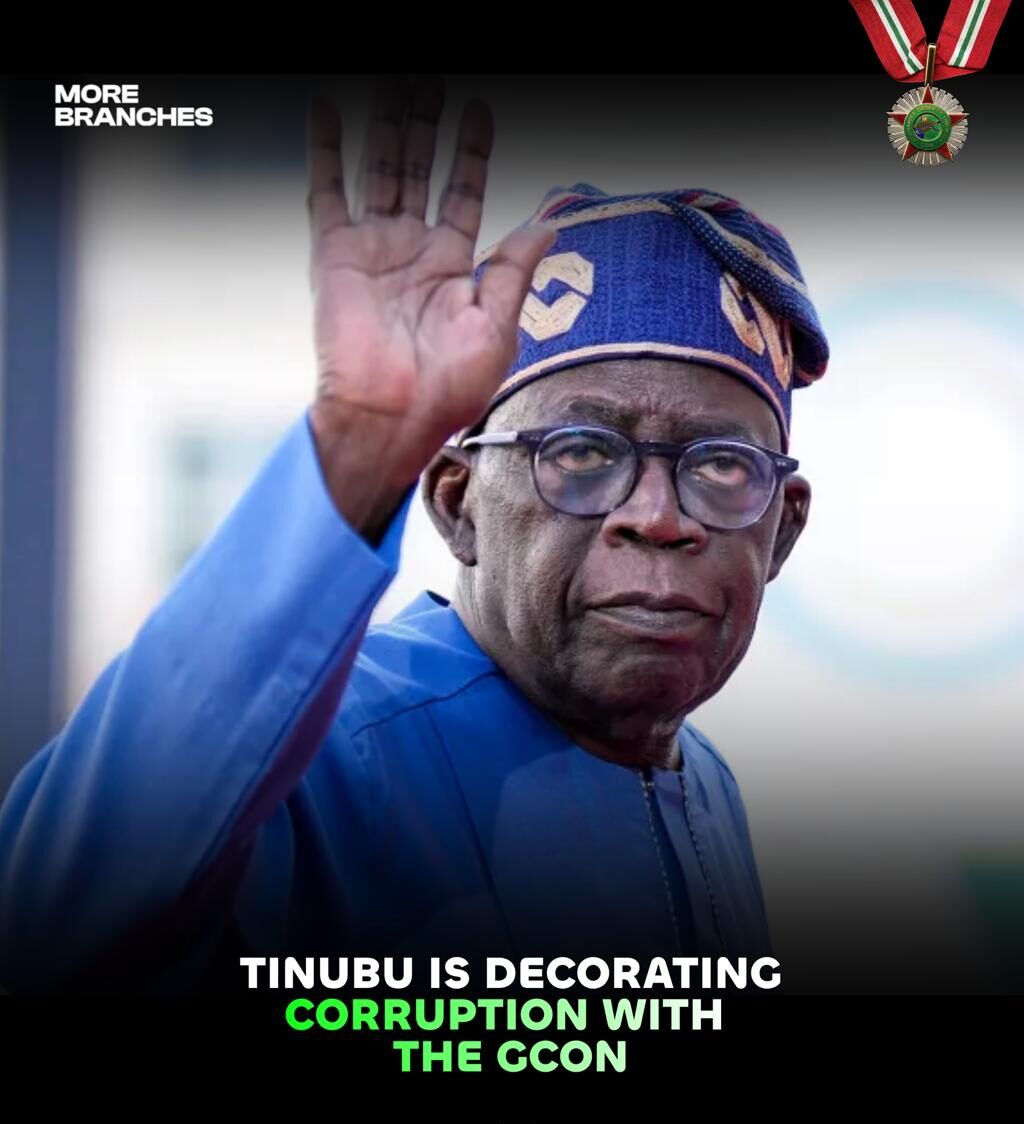
The Grand Commander of the Order of the Niger (GCON) is one of Nigeria’s highest national honours, traditionally reserved for individuals whose service is considered exceptional and of lasting national value. Recipients are typically former heads of state, senior public servants, or figures widely seen as having made clear, measurable contributions to Nigeria’s development and public good.
President Bola Tinubu’s decision to confer the GCON on Gilbert Chagoury has drawn attention because of Chagoury’s long and controversial history within Nigeria’s political economy.
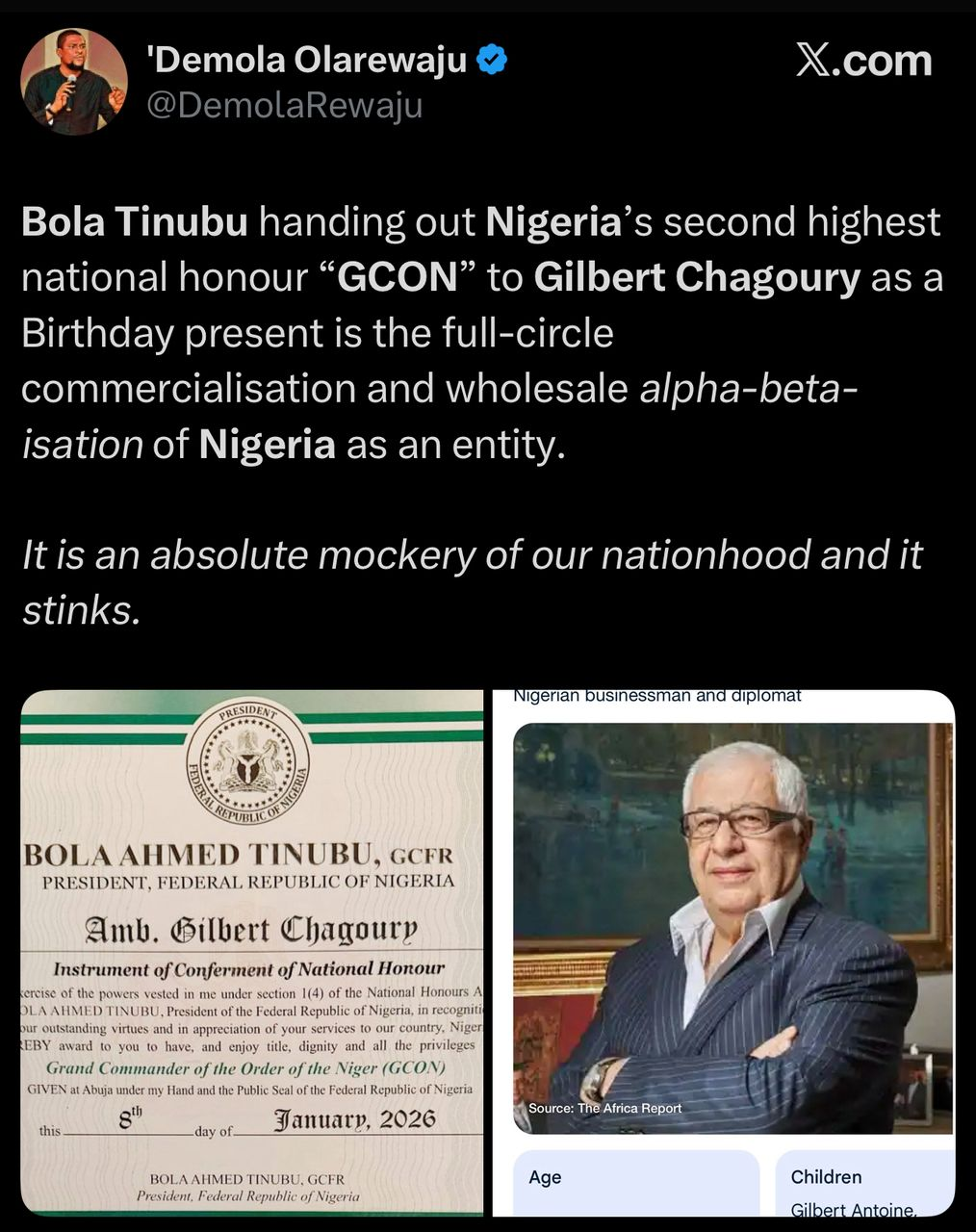
Gilbert Chagoury was a close associate of military ruler General Sani Abacha between 1993 and 1998. During this period, an estimated $2 billion to $5 billion was stolen from Nigeria’s public treasury. International investigations identified Chagoury as one of the facilitators who helped move and conceal portions of these funds through foreign financial systems.
In 2000, Swiss authorities convicted Gilbert Chagoury of money laundering connected to Abacha-era stolen funds.
- He forfeited $66 million to the Swiss government for repatriation to Nigeria.
- Additional settlements over time reportedly brought total returned funds to approximately $300 million.
These payments allowed him to avoid prison and secure indemnity from further prosecution. Notably, no criminal trial or conviction occurred in Nigeria.
Gilbert Chagoury has maintained a long-standing relationship with President Bola Tinubu, dating back to Tinubu’s tenure as Lagos State governor. In 2024, Chagoury-owned firm Hitech was awarded the Lagos–Calabar Coastal Highway project, valued at approximately $11 billion, without open competitive bidding. Seyi Tinubu, the president’s son, sits on the board of a Chagoury-affiliated company, intensifying conflict-of-interest concerns.
Awarding the GCON to Gilbert Chagoury elevates a figure with a documented corruption history into Nigeria’s highest moral and civic ranks. It signals that past involvement in grand corruption does not disqualify individuals from national honour, even when current business ties to political power remain active. In this context, the GCON functions less as a reward for national service and more as a symbol of elite continuity and impunity.