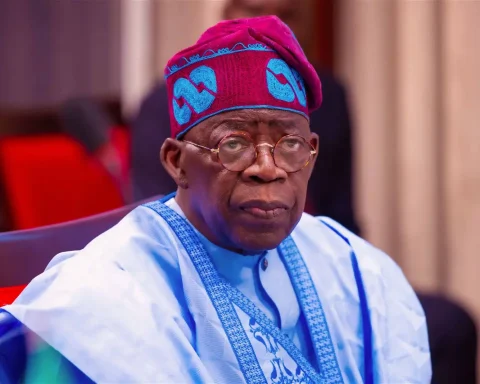
In one of the few interviews President Tinubu gave as part of his campaign—a rare event by a man who did his best to project as little of himself as he could to the electorate—he responded to a question about his plans for office. His agenda was simple: to immediately ‘hit the ground running’.
What has followed in the months since his inauguration, however, has left many Nigerians wondering if they should not have been more particular about what direction our president, and country, would be running in.
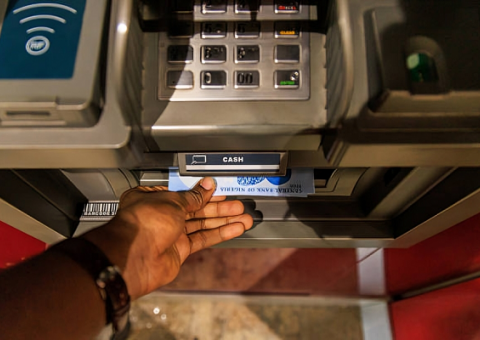
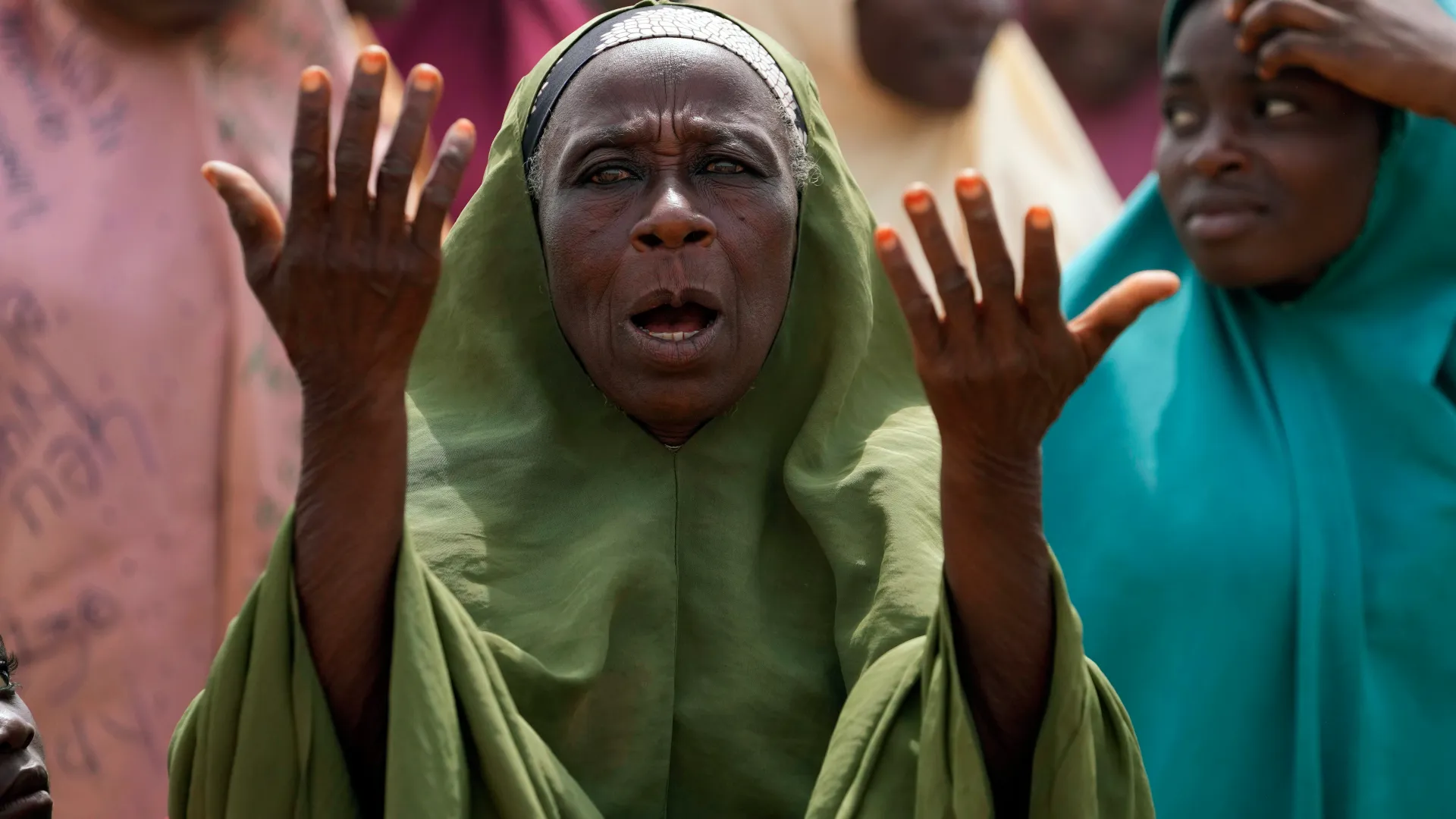
The past ten months have brought hardship on a scale unprecedented since the civil war: our Naira continues its drastic fall against the Dollar and Pound, mounting insecurity and kidnapping has made road travel a dangerous venture, food inflation that means a basic three square meal has now become luxury for many families.
As these indices continue to drop at an alarming rate, one wonders just how long Nigerians can continue to pretend that our current predicament is within the realm that we easily bounce back from.
Nigeria’s economic problems did not begin yesterday, or a year ago when a new government was inaugurated. In truth, the signs of our potential decline were visible even in our most prosperous days. While Nigeria’s economy flourished, watered by high global oil prices and a relatively high Nigerian oil export, not enough effort was put into actively diversifying our economy and preparing it for a time when these conditions would not be so favorable.
Analysts call it the ‘resource curse’—when an overdependence on one resource eventually leads to economic collapse. In Nigeria, a combination of corruption and incompetence at the highest levels of governance meant that by 2019, over 80% of Nigeria’s total exports was oil.
The widespread, deeply unselfish brand of corruption practiced by former governments also had them spending and looting lavishly in the days of plenty, simply uncaring of leaving funds and strong institutions for the rainy day.
After eight years of ex-President Buhari effectively reversing major gains made in the previous sixteen years of civilian rule, February 2023, the election month, was set to be a showdown that would decide the future of this country, and not just the next four years.
Already, whoever was going to replace Buhari in the chair had his work cut out for him: simply saving the ship from sinking would be good enough, to then steer it in the right direction would be a well-accepted bonus.
Ten months into the current regime, it does not appear we will be getting either of these. Tinubu’s first action in office after he was inaugurated was to declare that ‘fuel subsidy is gone’. In itself, it was the right action. Right since Olusegun Obasanjo, every administration of the fourth republic has attempted to put an end to fuel subsidies, the concession paid by the federal government that allowed Nigerians to buy petroleum products at cheaper prices.
If Tinubu deserves any criticism for putting an end to subsidy, it is for the rushed, unsympathetic way it was done. Perhaps more Nigerians would have been able to accommodate these changes—that pushed the pump price of fuel from N200 to over N600—if measures were put in place to soften the blow.
In the absence of this, the rapid surge in fuel price has gone on to have ripple effects on the economic realities of many Nigerians: rising transport costs in the presence of a fixed salary meant some Nigerians with low-paying jobs could not afford to continue them, manufacturing companies relying on power generators (an alternative to epileptic power supply) were forced to raise prices, shifting this burden to the consumer, and so on.
It hasn’t also helped that the gains that should be realized by removing a part of government spending are nonexistent: Nigeria had been funding subsidy costs with borrowed funds, so removing this expense would not free up more money to be used by other sectors, but slightly decrease the national debt profile.
To have to confront rising costs brought on by a rise in the cost of production and distribution of goods has been harrowing, but we have had to deal with this on the one hand while battling a runaway exchange rate with the other.
At Tinubu’s inauguration in May 2023, a dollar exchanged for 760 naira at the parallel market, a steep figure that was already a challenge to importers. Nigeria is highly import-dependent, with so few of the daily needs of its citizens—electronics, fabric, pharmaceuticals, even matches—actually produced in the country.
It means that every shift in the needle of the Naira-Dollar exchange rate is acutely reflected in the prices of most goods. In all of this economic woe, our government has begged for perseverance from its citizens and the need to endure this hardship, but that doesn’t inspire much patriotism when members of the ruling class are importing brand new cars.
The rise in the cost of food—food inflation—is the most dangerous of all indices. Apart from the dropping value of the naira and rising price of fuel, a number of factors have contributed to making food scarcer and ultimately more expensive, like insecurity due to violent herdsmen, ethnic crises and Boko Haram in the nation’s biggest food-producing states, losses due to transport costs caused by poor road networks, multiple taxations to the police and other agencies along the distribution chain and of course, poor electricity supply.
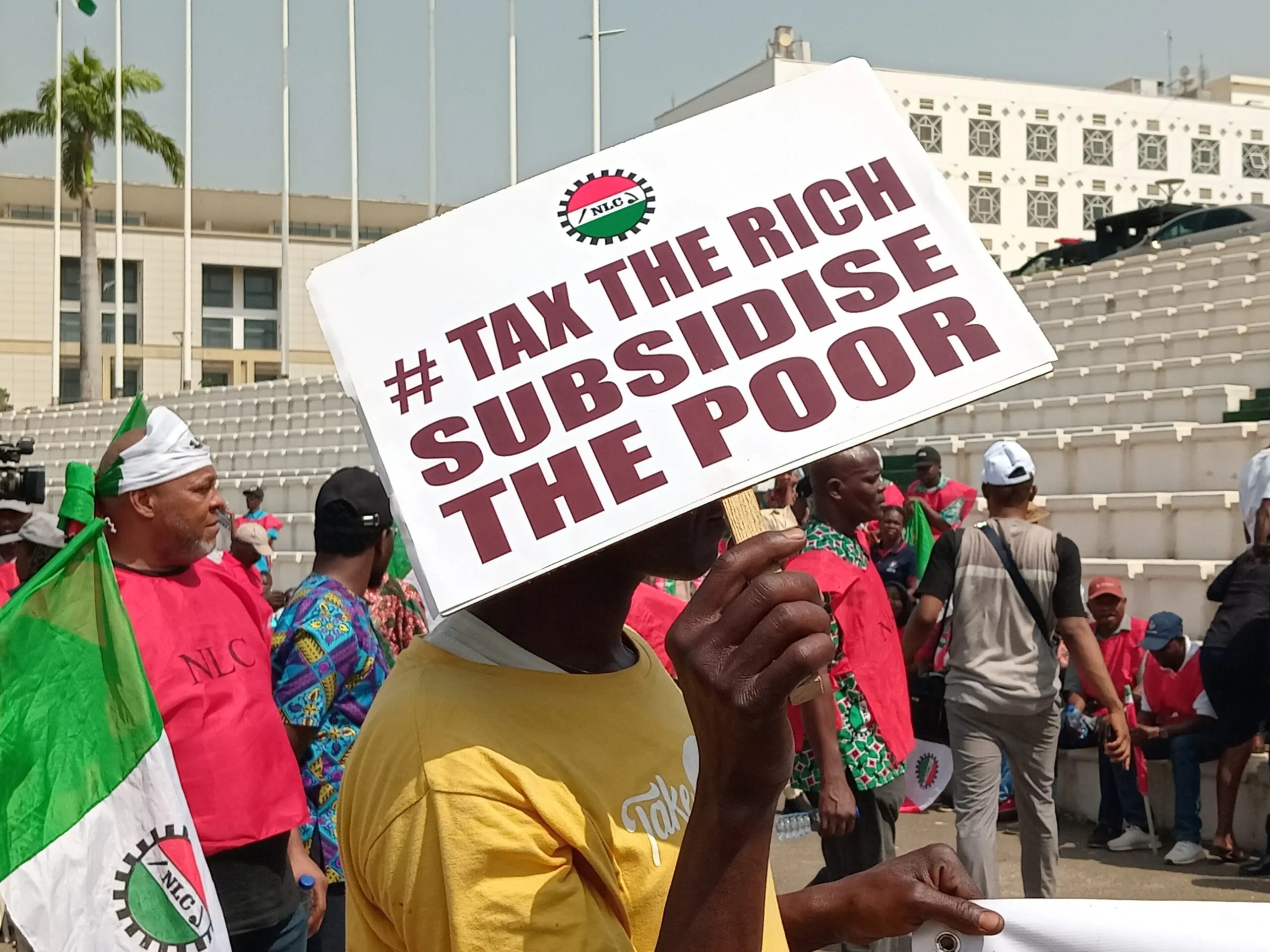
Each of these could be addressed and eased by a government that seeks to ameliorate the problems of the masses, but in the absence of that, we have become accustomed to a reality where food prices rise from week to week. The Nigerian Labour Congress has sought to pressure the government into taking up more greater responsibility to forestall this crisis, but so far all of its protests have fallen on deaf ears.
Already, the economic backslide that Buhari brought in had succeeded in eroding much of the middle class, now the lower section of the upper class is no longer safe from harsh economic realities. Most Nigerians simply earn to survive, with no thoughts of satisfaction and luxury, and not enough to save on. At a time it looked like Nigeria hit rock bottom when it was forcing thousands of young professionals to leave each year in search of greener pastures.
Now Nigerians are adjusting to the realization that there is yet another level beneath that—one where the exchange rate has crippled most people’s dreams of leaving the country, leaving the possibility of Japa to only the very wealthy. With the cost of leaving as high as the cost of living, many young Nigerians feel stuck between a rock and a hard place. A lot of people have resorted to staggered japa–leaving Nigeria to live and work in other African countries with more stable exchange rates to save up money before eventually migrating to first world countries.
As the economy slides further downwards and Nigerians run out of means to cope with rising prices of goods, perhaps it is time to pessimistically consider that the pit of economic downturn truly has no bottom. The average Nigerian’s ever-optimistic mindset, the same one that makes them say “e go better” to every setback and chant such phrases like “Nigeria will be great again” is not a strong enough armor for the current realities.
And unless we hold on to the belief that some supernatural force watches over Nigeria specifically that will limit our suffering to a certain extent, it is time to reflect on the examples of other failed states of the past that share a disturbingly similar picture with present-day Nigeria. Venezuela went from oil giant to destitute state in less than a decade, while many years of political and economic instability in Zimbabwe caused its inflation rate to peak at an astronomical 231 million percent in 2008.
Each of these countries had its unique factors that forced them into their current situations, but not without a few worrying parallels: Nigeria’s overdependence on oil as an export is similar to Venezuela’s, while our deep root of incredible scales of corruption, even in scarcity, is reminiscent of Zimbabwe. While Nigerians look upwards in search of a return to better days, in truth, even a further downward sink is possible, and all must be done to avoid it.
Nigerians are famed for our ability to adjust and adapt to the most unfavorable circumstances, but for too long this has been abused by governments preaching endurance to its citizens while they live in affluence. Perhaps it is time to dig deep and ask the question everyone prefers to avoid: Where is Nigeria headed?