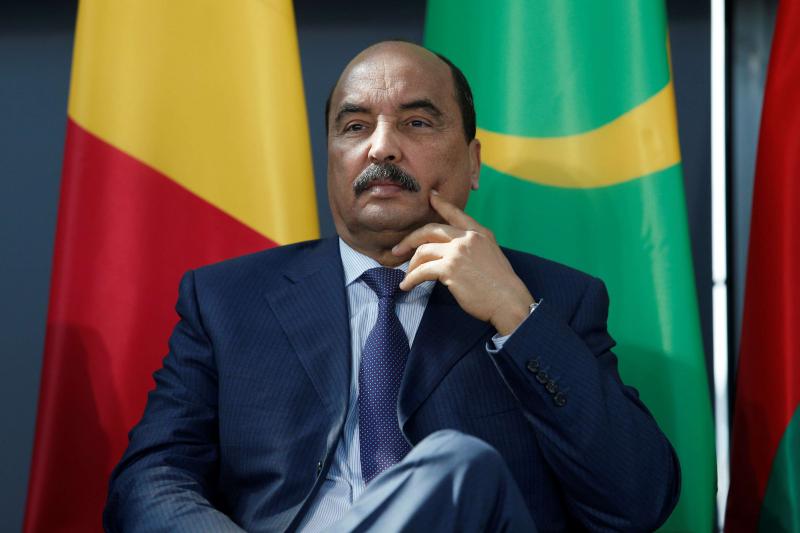
A Mauritanian appeals court on Wednesday increased the prison sentence of former President Mohamed Ould Abdel Aziz to 15 years and imposed a $3 million fine, up from a five-year term he received in 2023 on corruption charges.
Aziz, a former army general who seized power in two coups before leading the West African nation from 2009 to 2019, was convicted of money laundering and unlawful enrichment. Authorities say he accumulated more than $70 million in assets while in office. He has been held in custody since his conviction last year.
The case has drawn international scrutiny as a rare instance of a former African head of state being held legally accountable for alleged misconduct while in power. Aziz’s defense team has dismissed the charges as politically driven, claiming they stem from a rupture with his successor, President Mohamed Ould Cheikh Ghazouani.
Once close allies, the two men fell out following Mauritania’s first peaceful democratic transfer of power in 2019. Tensions mounted as Aziz sought to regain influence in the ruling party. In 2020, a parliamentary commission launched a broad inquiry into corruption during his tenure, ultimately implicating more than a dozen individuals.
In its ruling, the court acquitted six senior officials from Aziz’s administration but upheld a two-year sentence against his son-in-law on charges of influence peddling. Judges also ordered the dissolution of the Errahma (Mercy) Foundation, managed by Aziz’s son, and approved the seizure of its assets.
Despite Mauritania’s wealth in natural resources — including iron ore, copper, gold, oil, and natural gas — the country struggles with widespread poverty. The United Nations estimates nearly 60% of the population lives below the poverty line, with many working informal or agricultural jobs. Economic hardship continues to push young Mauritanians to seek opportunities abroad, often through dangerous migration routes to Europe and the United States.
Aziz’s sentencing may prove to be a landmark in Mauritania’s political and judicial evolution, suggesting a stronger stance against high-level corruption. However, the case remains highly politicized in a nation still working to strengthen democratic institutions.