Immigration and issues of identity as it concerns Black and Brown people, will always be of interest to Black artists, musicians and creatives. In art, there has been an increase in Nigerian-British and other diasporic Nigerians aiming to collaborate and bridge the gap with artists in Nigeria.
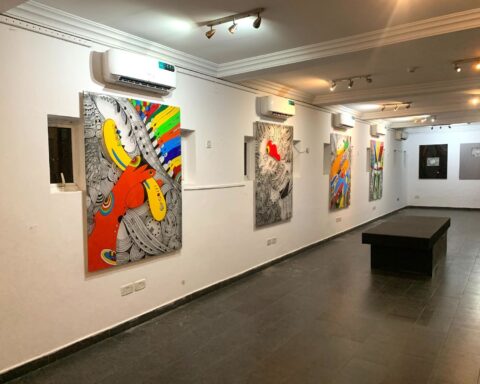
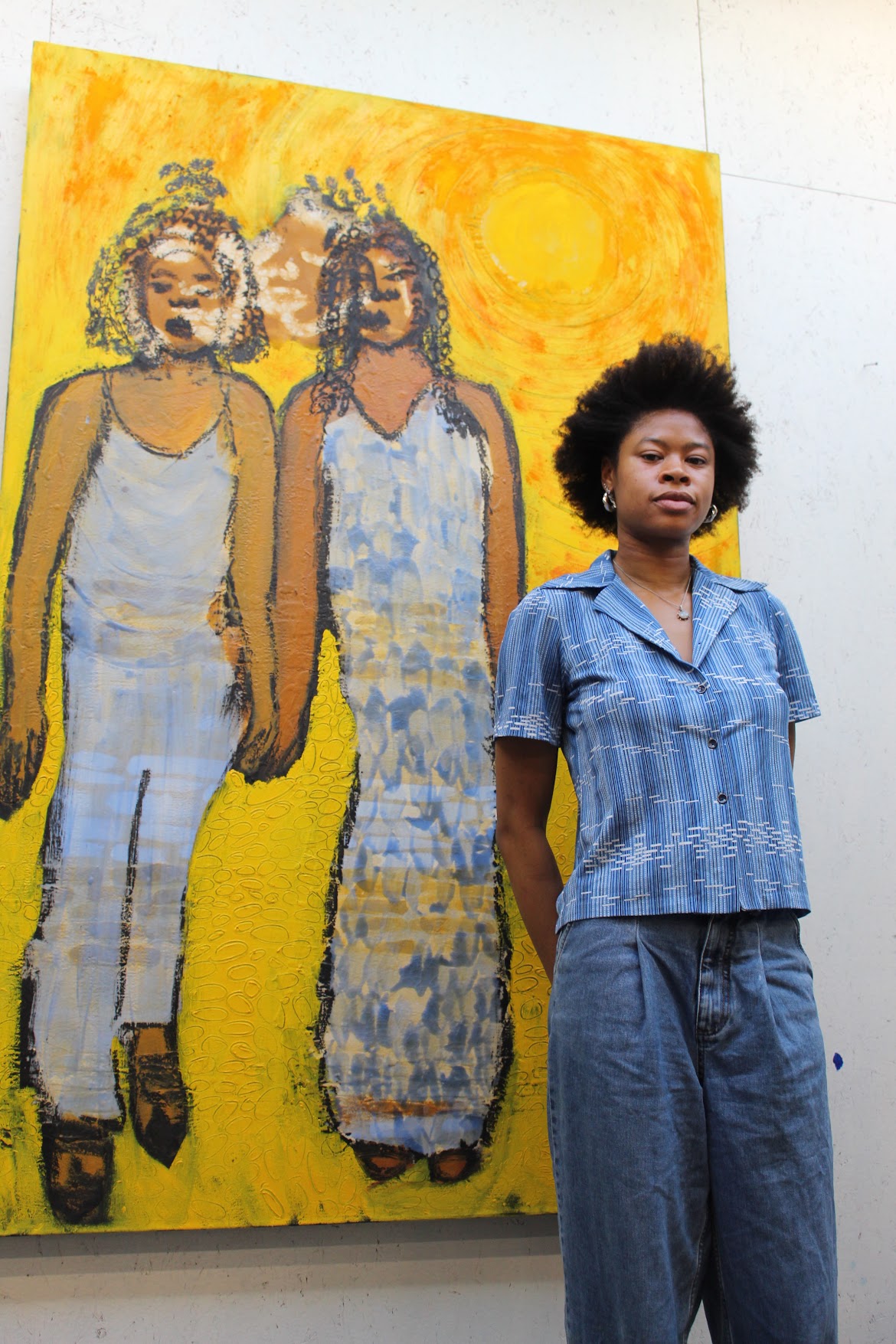
It is in this light that artists like Sola Olulode take center stage. A Nigerian-British visual artist with a BA in Fine Arts Painting from The University of Brighton, she recently held her first solo Nigerian exhibition titled Stars Fell On Lagos, which documents and aims to amplify issues of identity and Womanism as it pertains to Nigerian women in and out of the diaspora.
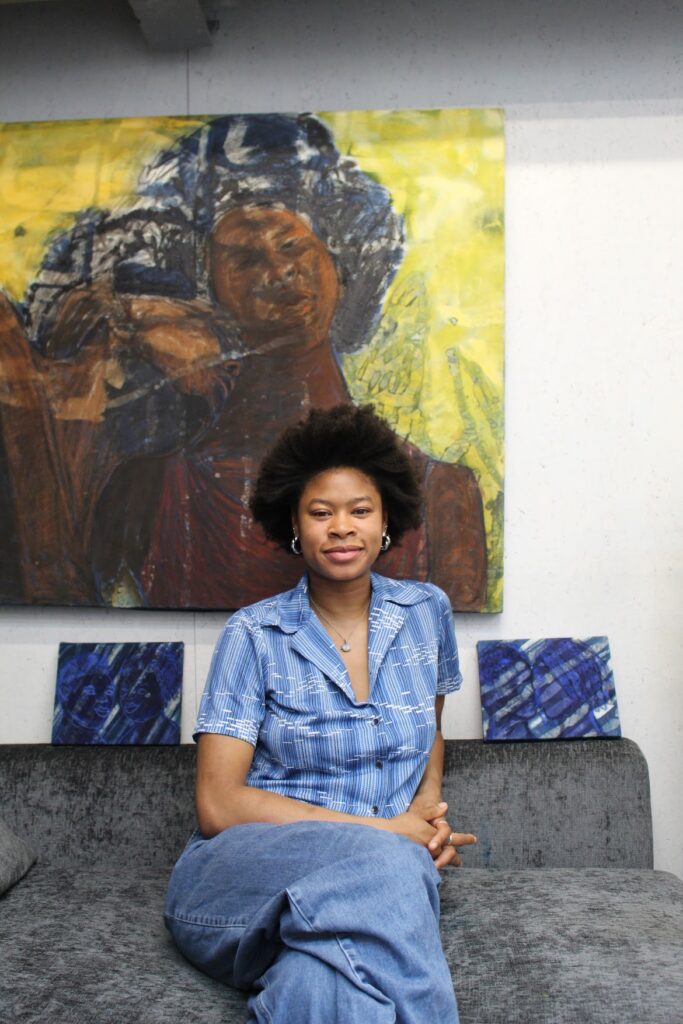
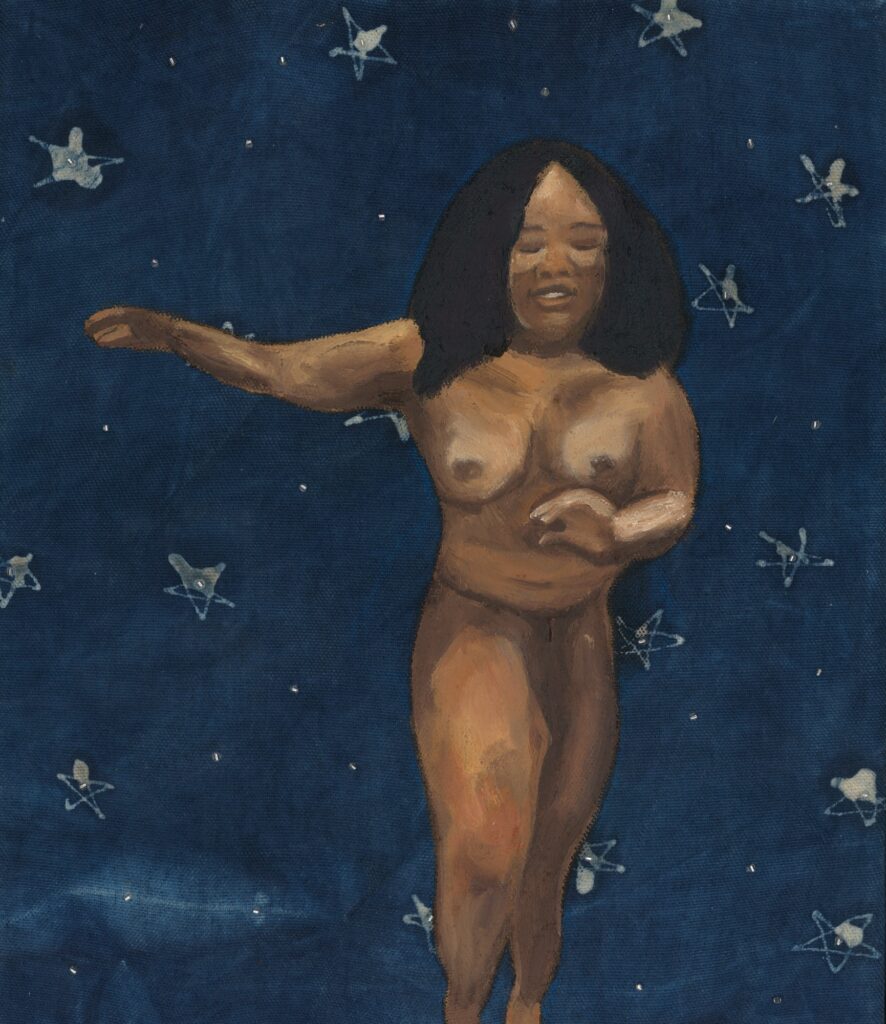
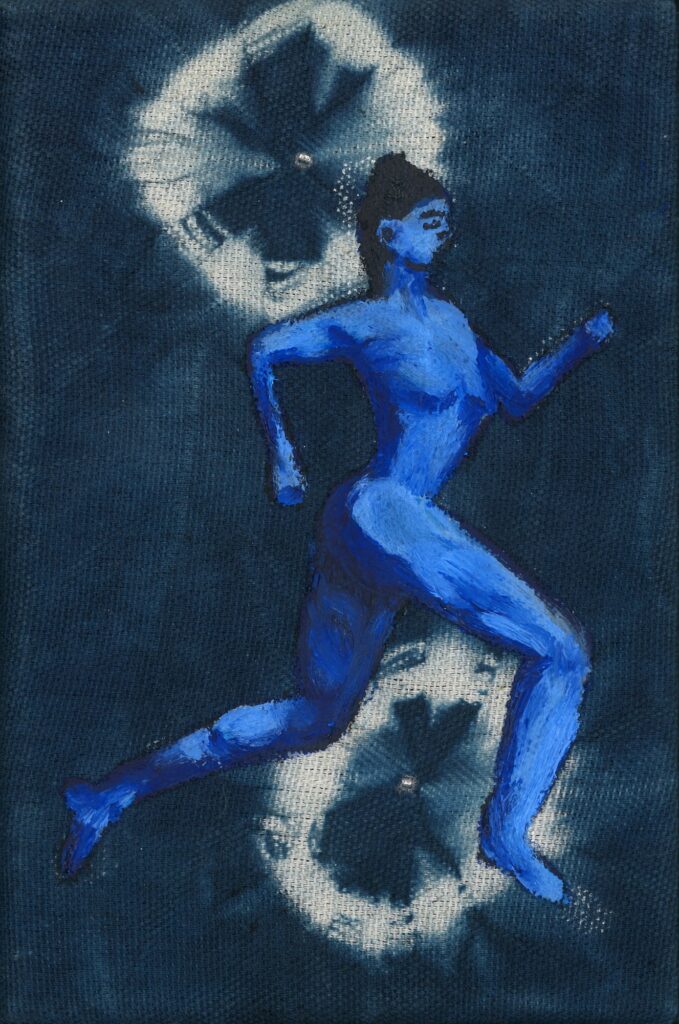
Her work explores the fluidity of identities, queer intimacies, and the celebration of Black identity through various mediums like natural dyeing, batik, wax, ink, pastel, oil bar, and impasto.
Olulode has showcased her work in several notable exhibitions, including solo shows at Berntson Bhattachrjee in London and Sapar Contemporary in New York. She has also participated in group exhibitions at Lisson Gallery and, Carl Freedman Gallery, among others.
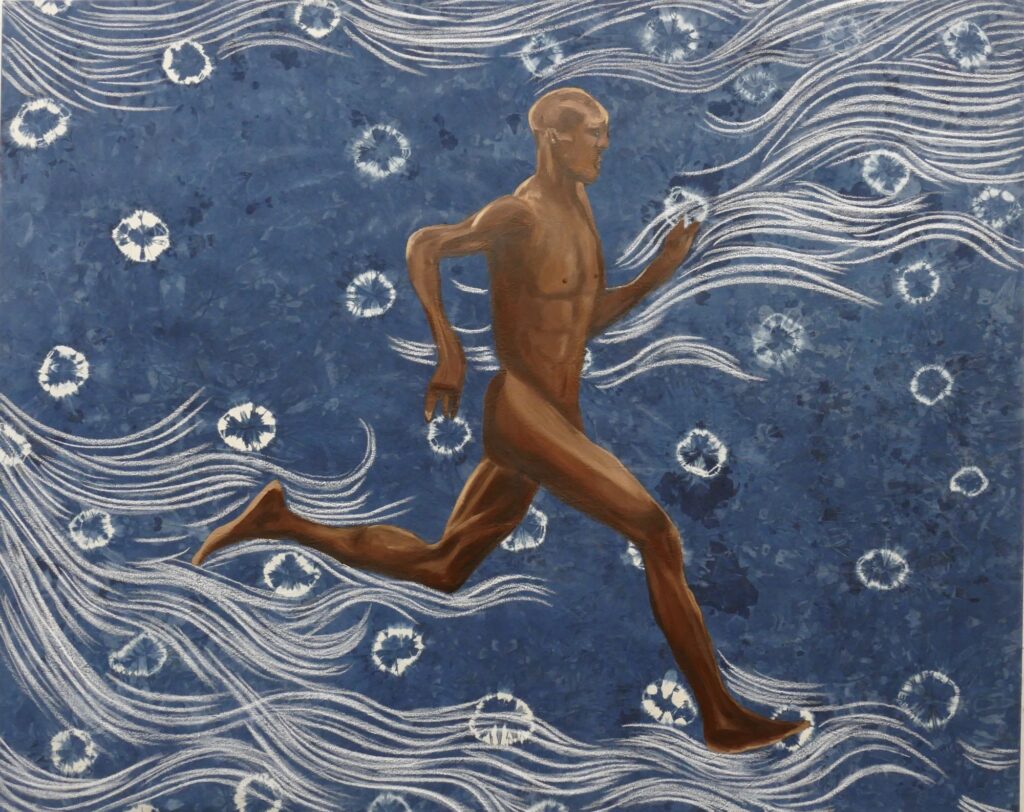
Her work has been recognized through features in Artsy’s “Portrayals of Black Joy” campaign and residencies at von Goetz and Lewisham Art House. Olulode’s art continues to center Black Queer women, drawing inspiration from Yoruba Adire textiles, lived experiences, and cultural reference points.
More Branches recently discussed with Sola Olulode about her exhibition and artistic inspirations.
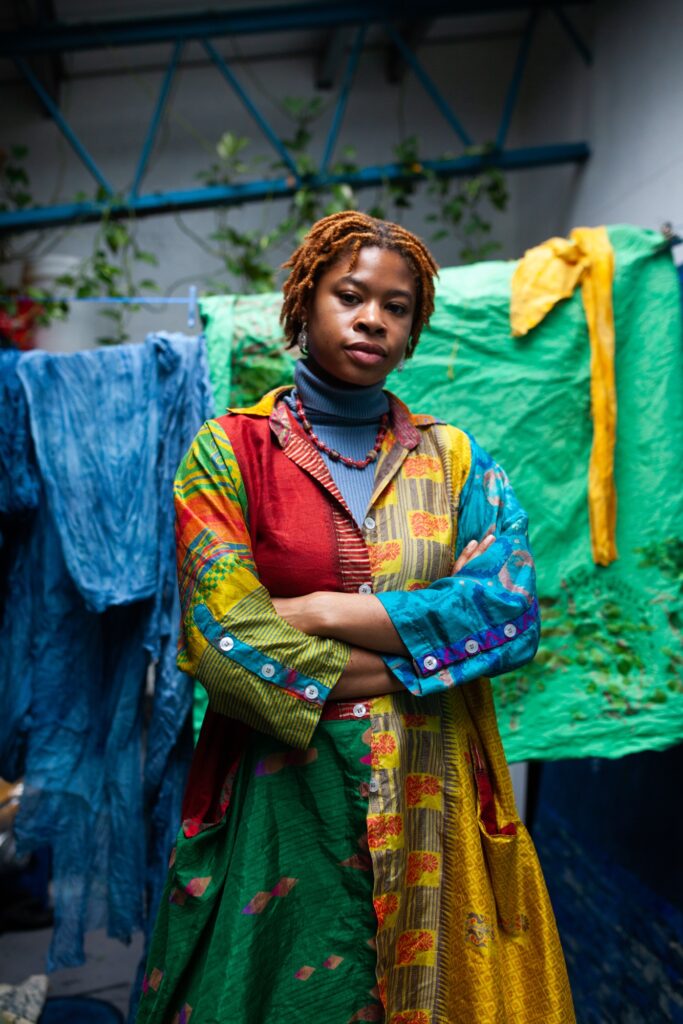
Stars Fell On Lagos is your first solo exhibition in Nigeria. As a Nigerian-British artist, what inspired this artistic homecoming?
I visited ArtX last year for the first time and was amazed at the artist community here in Lagos. There were so many things happening around the fair, exhibitions, talks , panels, performances, music, fashion. I wanted to be a part of this hub of creativity. It’s also really important for me to take my work back home so much of my work is influenced by the Nigerian textile industry and Nigerian modern and contemporary artists. As part of the diaspora I think it’s important to have a direct connection with Nigeria and to take my work back home to the source and be in conversation with artists living in Nigeria.
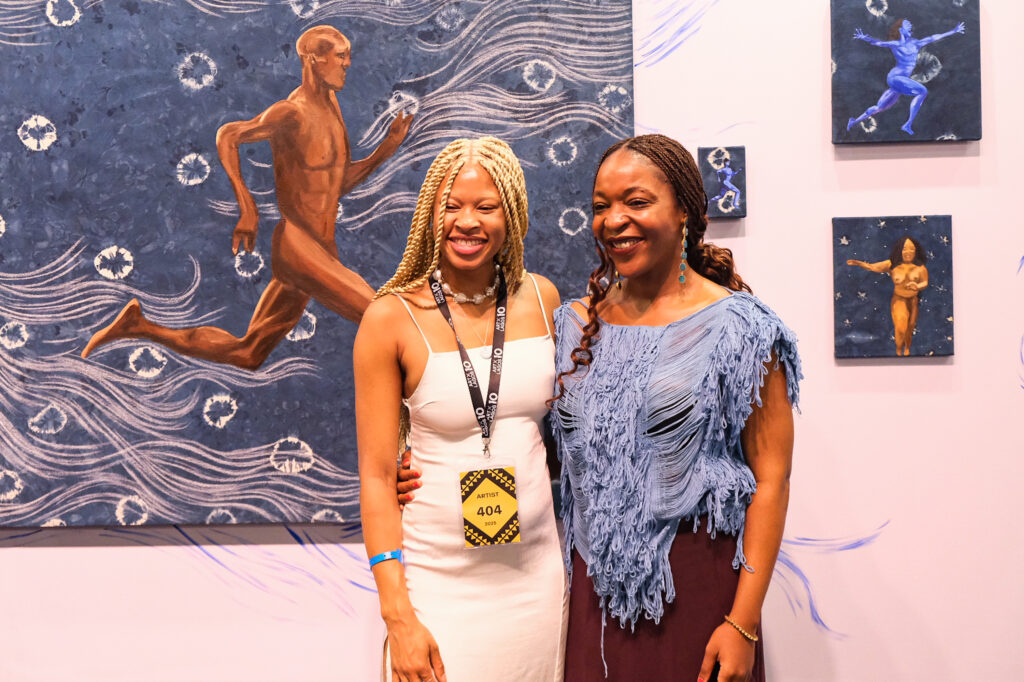
The tie-dye industry is seeing a reemergence, especially in Nigerian modern fashion. Your work explores artistic techniques such as batik, tie-dye, and beading. Why do you think it is important that local Nigerian tie-dye manufacturers are honored in the global creative, fashion, and artistic spaces?
For me living and growing in London fashion is one of the few ways in which my family stayed linked to Nigeria. Something I always saw around the house and saw my family wearing. As my interest in Nigerian craft grew it was natural for me to gravitate towards textiles. It felt familiar to me. I am always exploring vibrant colours which developed into an interest in dyeing my research that led to Adire and looking at the textile industry here in Nigeria and the ways in which they created fabric and the techniques they used.
While a lot of prints are now reproduced in factories abroad in imitation mass producing textiles. I think it’s important to celebrate these intricate processes that have been carried out for centuries and developed and refined. It’s beautiful to see Nigerian brands like This is us and Kílẹ̀ńtà being so successful worldwide and honouring and working with the artisans based here in Nigeria. They are my source of inspiration and it’s really fun to be able to fuse textiles techniques into my painting practice.
In addition to a first-class degree in Fine Arts Painting from the University of Brighton, you also have a diploma in Arts and Design from the University of the Arts London. Do you think your background as a designer influences your artistic direction as a multidisciplinary artist?
Actually my art and design foundation was quite limited in the amount of time we spent in design. The structure of the course was around six weeks in three different art disciplines: design, fine art and communications and then you choose your specialism. I specialised quite quickly in painting in the fine art department so I never got to fully explore much interest in fashion or design. I was more attracted to being a painter. Design has a lot more structure in it as an art form, I couldn’t really work to a brief. I like to do things at my own pace in my own way so I was much more suited to painting.
Your work as a visual artist and designer is heavily focused on exploring Black women’s lived experiences and womanist themes. Why do you think it is important that young Black girls see their experiences and features positively and adequately represented in visual and digital art?
Because we simply just don’t see enough positive images of black people. There is some much that we see in the media that really has an impact on our perception of self. I want us to be able to dream and imagine better lives for ourselves. Seeing these images of black people resting and being joyful is necessary for our mental health.
Wunika Mukan Gallery is the host of your solo exhibition to celebrate Art X Lagos’ 10th anniversary. What are your thoughts on the necessity of supportive initiatives, galleries, and structures for emerging and established Nigerian artists?
I think it’s so important to nurture artistic talent. Wunika is such an amazing supporting emerging artists encouraging them to create their own worlds and connect with each other. We need to see even more of that support for galleries, artists, curators and the whole art ecosystem.
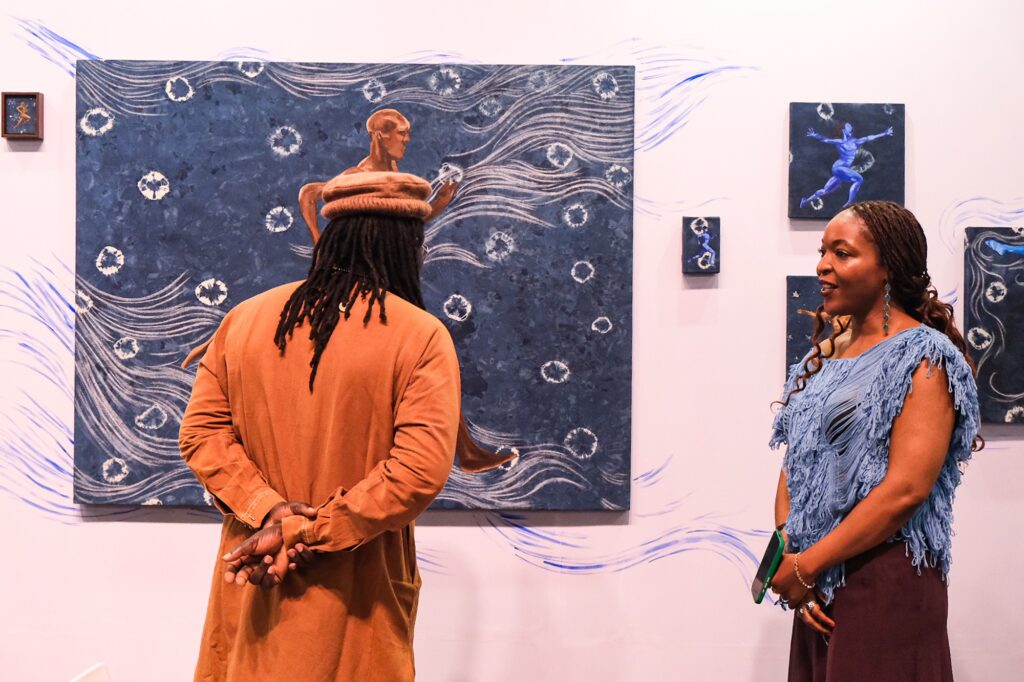
Can you describe your artistic process and routines while working on pieces for an exhibition?
I play a lot of music and I’m a Taurus so I need to eat. I always have a lot of snacks around in the studio. It takes me quite a while to get into the mood to create. I spend a lot of time thinking, looking through images prepping and then work in a very intense way, getting lost in the work and the different processes, each step of creating a piece or a series.
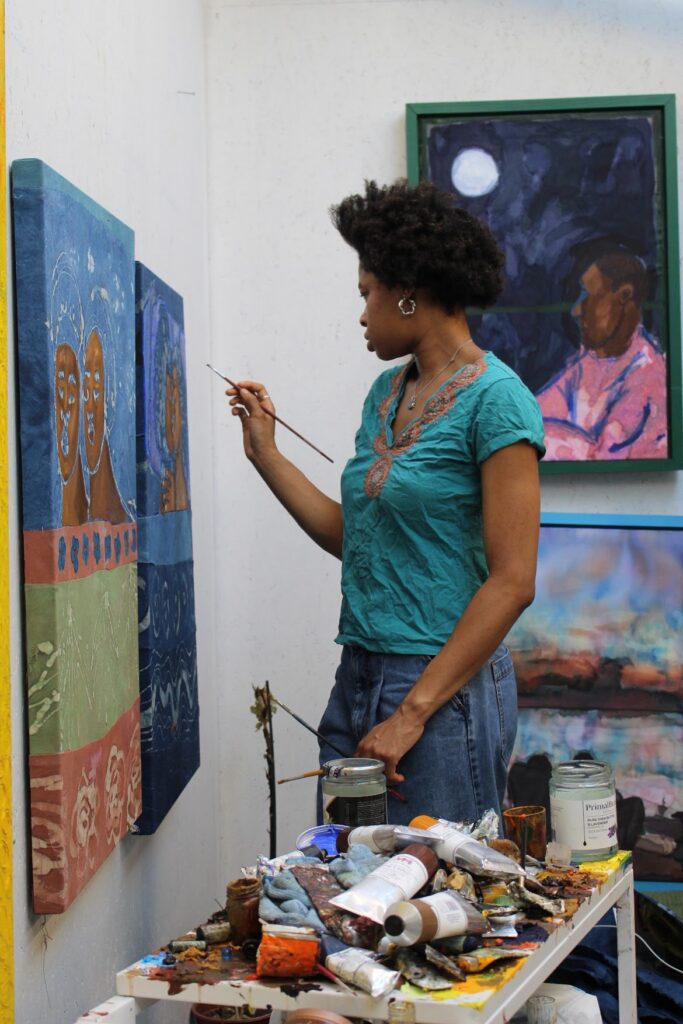
I spend very long hours in the studio working well into the night; those are my best hours
Finally, for those viewing the exhibition, what overall message would you want them to take away, and what areas would you love to see improvement when it comes to promoting Nigerian artists?
I want people to feel that they are capable of magic. Buy art from living Nigerian artists.