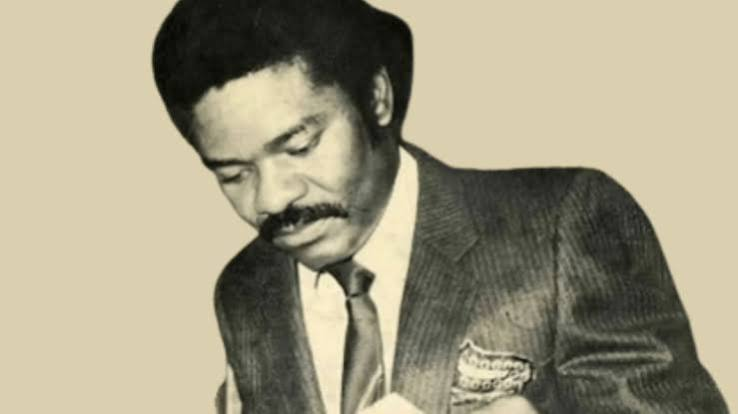
If you are under 35, you were born at least five years after Dele Giwa died. On the morning of Sunday, 19 October 1986, the 39-year-old editor was in his study at 25 Talabi Street, Ikeja, when a parcel his son had just handed him exploded on his lap. He died in hospital. Nobody has ever been convicted of killing him.
Who He Was
Dele Giwa was born on 16 March 1947 in Ile-Ife. He studied English at Brooklyn College, spent four years as a news assistant at The New York Times, then came home to the Daily Times. With Ray Ekpu, Dan Agbese and Yakubu Mohammed, he founded Newswatch, whose first edition hit the streets on 28 January 1985. Giwa served as editor-in-chief, and Ekpu as deputy. A 1989 description quoted on Wikipedia said the magazine “introduced bold, investigative formats to news reporting in Nigeria.”
General Ibrahim Babangida took power in August 1985. Newswatch was friendly at first. It did not stay that way.
30 Days Before the Bomb
On 19 September 1986, the State Security Service (SSS) invited Giwa over a column calling the new foreign exchange policy, SFEM, “God’s experiment”. Its deputy director, Lt Col A.K. Togun, reportedly said he found nothing offensive in it.
A month later, the pressure was back. Pulse’s 40th-anniversary account, drawing on Ekpu, says that on 16 October Col Halilu Akilu of the Directorate of Military Intelligence questioned Giwa by phone about alleged arms importation. The SSS summoned him again, and on 17 October Togun accused Newswatch of plotting a “socialist revolution” with labour, lecturers and students.
Giwa told Communications Minister Tony Momoh he feared for his life. According to Ekpu, Momoh brushed it off as security men trying to rattle him, though he promised to look into it. On 18 October, Giwa raised it with the Chief of General Staff, Augustus Aikhomu, who also promised to look into it. That same day, Ekpu says, Akilu phoned Giwa’s wife, Funmi, asking for directions to the house.
On the morning of the 19th, Ekpu said Giwa called Akilu, who said the matter had been resolved. Giwa said he had already briefed his lawyer, Gani Fawehinmi. About 40 minutes later the parcel arrived. His son Billy said it bore the Nigerian coat of arms.
At an off-the-record government press conference the next day, Akilu confirmed he had called to ask for directions, saying he wanted to visit Giwa as a friend.
The Probes
Police investigators went in different directions. Chris Omeben, then a deputy inspector-general of police, later said he was satisfied with the explanations Akilu and Togun gave. A special squad under Assistant Commissioner Abubakar Tsav took a different view. Testifying before the Oputa Panel on 3 July 2001, Tsav said he was refused permission to question Togun, Akilu and SSS director Ismaila Gwarzo, and that his report found enough circumstantial evidence to accuse Togun and Akilu of conspiracy to murder. He said none of his recommendations was implemented.
Fawehinmi spent years in court pushing for the two officers to be prosecuted. Murder and conspiracy charges against them were filed in Lagos, but on 23 February 1988 Justice Longe of the Lagos High Court quashed them, finding among other things that the evidence was insufficient.
At the Oputa Panel, Babangida refused to testify. He, Akilu and Togun went to court and got an order stopping the commission from summoning them. The chairman said the panel could have issued arrest warrants but chose not to, “in the overall interest of national reconciliation”.
The most recent legal step came on 16 February 2024, when Media Rights Agenda (MRA) won a Federal High Court judgment ordering the Federal Government to investigate Giwa’s murder and prosecute those responsible. On Monday, MRA said the government has reported no concrete steps since.
Still Unanswered
Babangida, now 85, has consistently denied any role, and Akilu and Togun never stood trial. Fawehinmi pursued the case until his own death in September 2009. To be fair to the record, no court has found anyone responsible. Rumours, including the long-running Gloria Okon theory, remain unproven, and Giwa’s Newswatch partners have rejected that one outright.
Why It Matters Now
Reporters Without Borders ranks Nigeria 112th of 180 in its 2026 index, up from 122nd, with a score of 48.11. On journalists’ safety alone, Nigeria is 149th. RSF’s verdict is blunt: crimes against journalists “continue to go unpunished, even when the perpetrators are known or apprehended.”
The local data says the same. The Centre for Journalism Innovation and Development’s Press Attack Tracker has logged 1,326 press freedom violations in Nigeria since it launched in 2017, including 28 deaths. MRA counted 86 incidents in 2025 across 27 states and Abuja, and not one led to a successful investigation or prosecution. The police were behind 41 of them. CPJ has mapped 91 journalists arrested, attacked or harassed since May 2023, even as Vice President Kashim Shettima asked whether anyone had “heard of any harassment of journalists”.
At Monday’s launch of Dele Giwa’s Granite Journalism, Ekpu remembered his five-year-old son giving up on journalism days after the killing: “I don’t want to be killed like Uncle Dele.”
That boy now works in another profession. The court order is two years and eight months old. MRA is still asking the Attorney-General of the Federation to say what has been done with it.