A post on X says INEC’s voter register carries more than 20 million AI-generated voters. A news site has since turned it into a headline. The post and the story built on it give no count, no method and no data behind that figure.
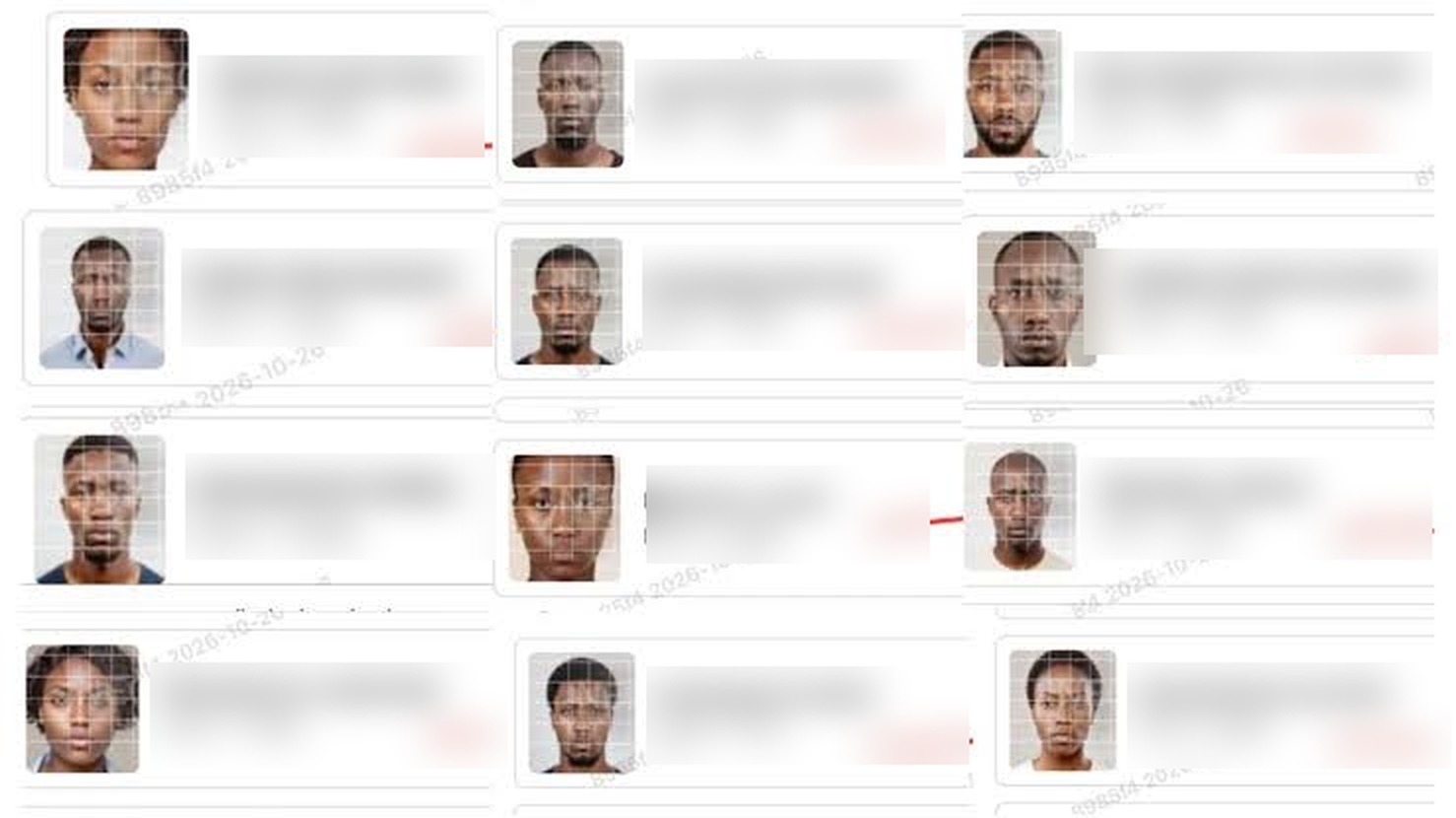
The post is dated 29 October and comes from the @KadunaResident account, which Parallel Facts attributes to a campaigner named Omotayo Williams. It tags INEC and its chairman, Joash Amupitan, and shows a video of voter entries from polling units in Edo State, with passport photos that carry grid-like patterns and unnatural features.
What INEC has said
INEC put the preliminary register online on 26 October. It is the same document that was displayed at registration areas from 9 to 15 October, and as MB reported on 28 October, screenshots of suspect photos shared online included entries from Etsako West LGA in Edo State. On 27 October, Mohammed Kudu Haruna, who chairs INEC’s Information and Voter Education Committee, said questionable records flagged during the display are under review and that the online version predates ongoing data cleanup. He called it a preliminary register, not the final one.
INEC has not said how many records or officers are involved. Its 27 October statement named no cause, saying only that it was looking at possible technical or procedural lapses.
Then, on 30 October, Lawrence Bayode, INEC’s Director of ICT, went on Arise Television’s The Morning Show. “Some of our officers were compromised at each state level,” he said. He told the programme that some registration officers used their official login credentials to add questionable records to the preliminary register, across several states, though not all officers were involved. “Some of these pictures are AI-generated,” he said. “Some of them not AI-generated, but very bad registration.” INEC used its biometric system, ABIS, to identify the irregularities, and Bayode said the commission knows who did it and how, but not why.
Where 20 million falls short
INEC says the register stands at more than 103 million voters, so 20 million would be about one in five. The recent Continuous Voter Registration drive added about 10.6 million people across three phases of 2,611,266, 4,121,835 and 3,867,997, and INEC described those figures as subject to ABIS verification. By MB’s arithmetic, the claim is nearly double the entire intake of that drive. For it to hold, it would have to cover older records too, and nobody has shown that.
What has been shown is smaller. Bayode spoke of “some” records, and INEC has put no figure on them. Sahara Reporters found seven voter profiles with suspect photos on the online register. Yiaga Africa’s Samson Itodo has separately pointed out that voters aged 18 to 34 make up 28.79 percent of the 2026 preliminary register, down from 39.6 percent in 2023, and asked INEC to publish a full age breakdown.
The pressure is building from other directions. The Kwankwasiyya Amana X group said a preliminary register is no excuse for compromised data and asked INEC to explain how the photos passed its checks. Concerned Citizens for Nigerian Democracy had given INEC until 30 October to publish the register online or face court action, arguing that the Electoral Act 2026 required it by 18 October.
Atiku Abubakar has since demanded that INEC name every officer involved, explain why none has been suspended or referred for prosecution, preserve all records and access logs, and commission an independent forensic audit before any disputed record is certified. He says he will go to court if INEC refuses.
INEC plans to certify the final register on 15 December, about a month before the presidential election on 16 January 2027.
Sources: Parallel Facts, Pulse, Sahara Reporters, ThisDay, TechEconomy, Arise, Voice of Nigeria, Yiaga Africa, Tribune.