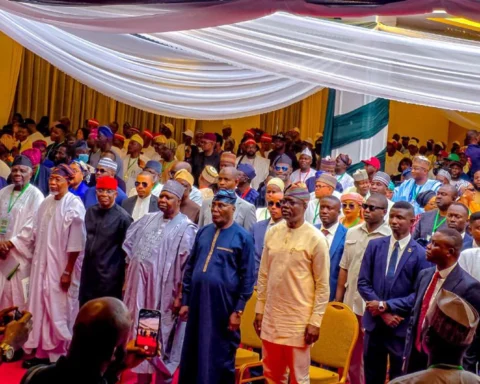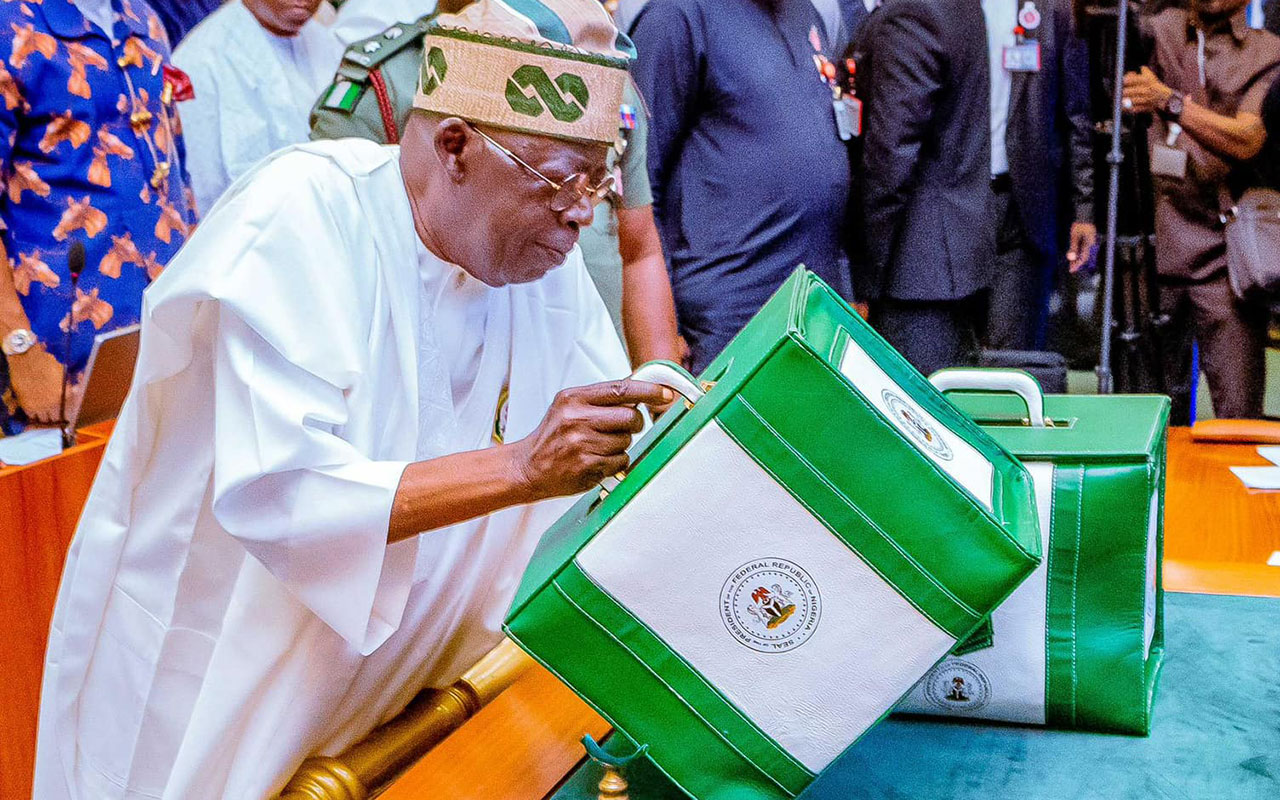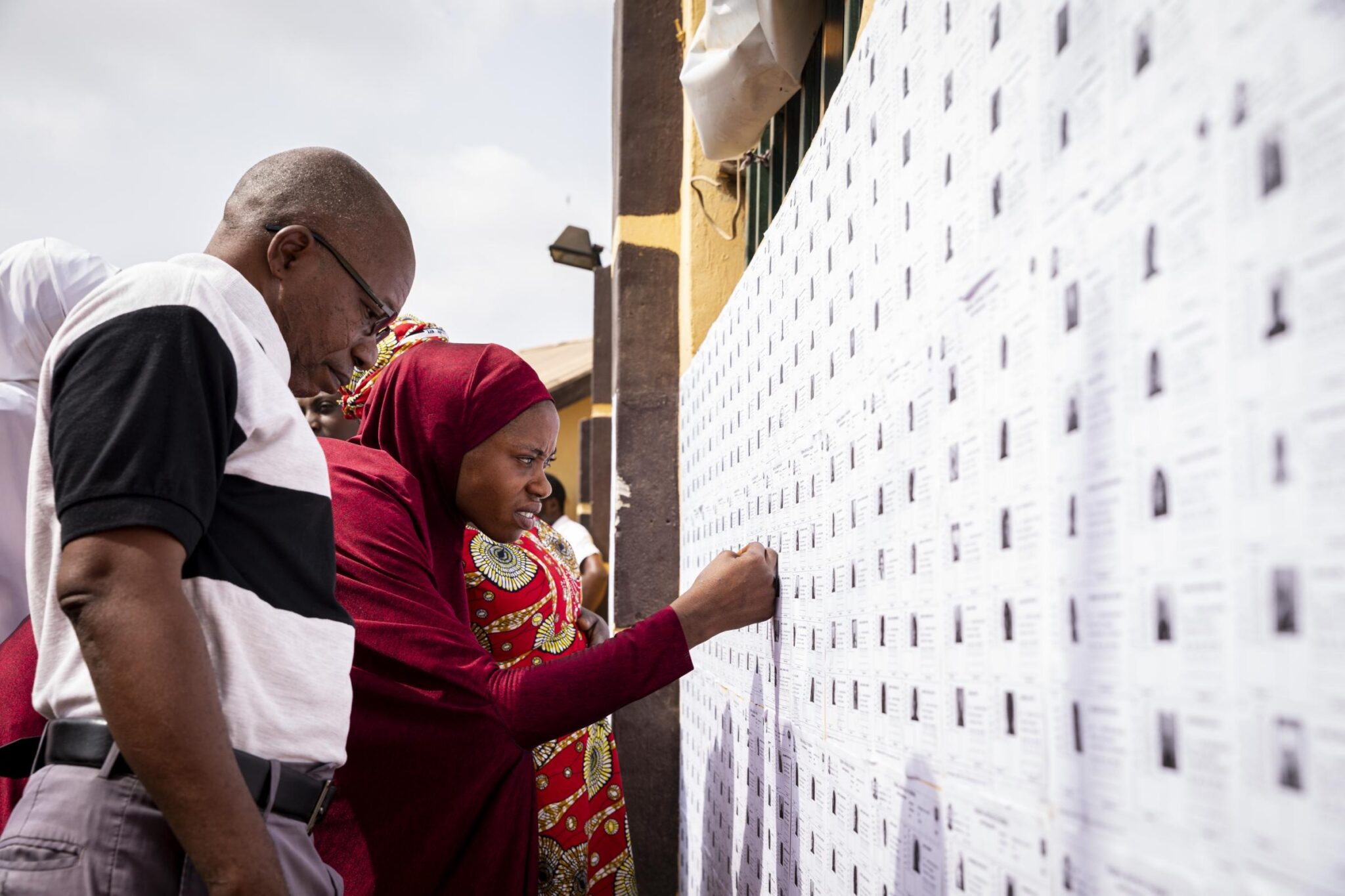
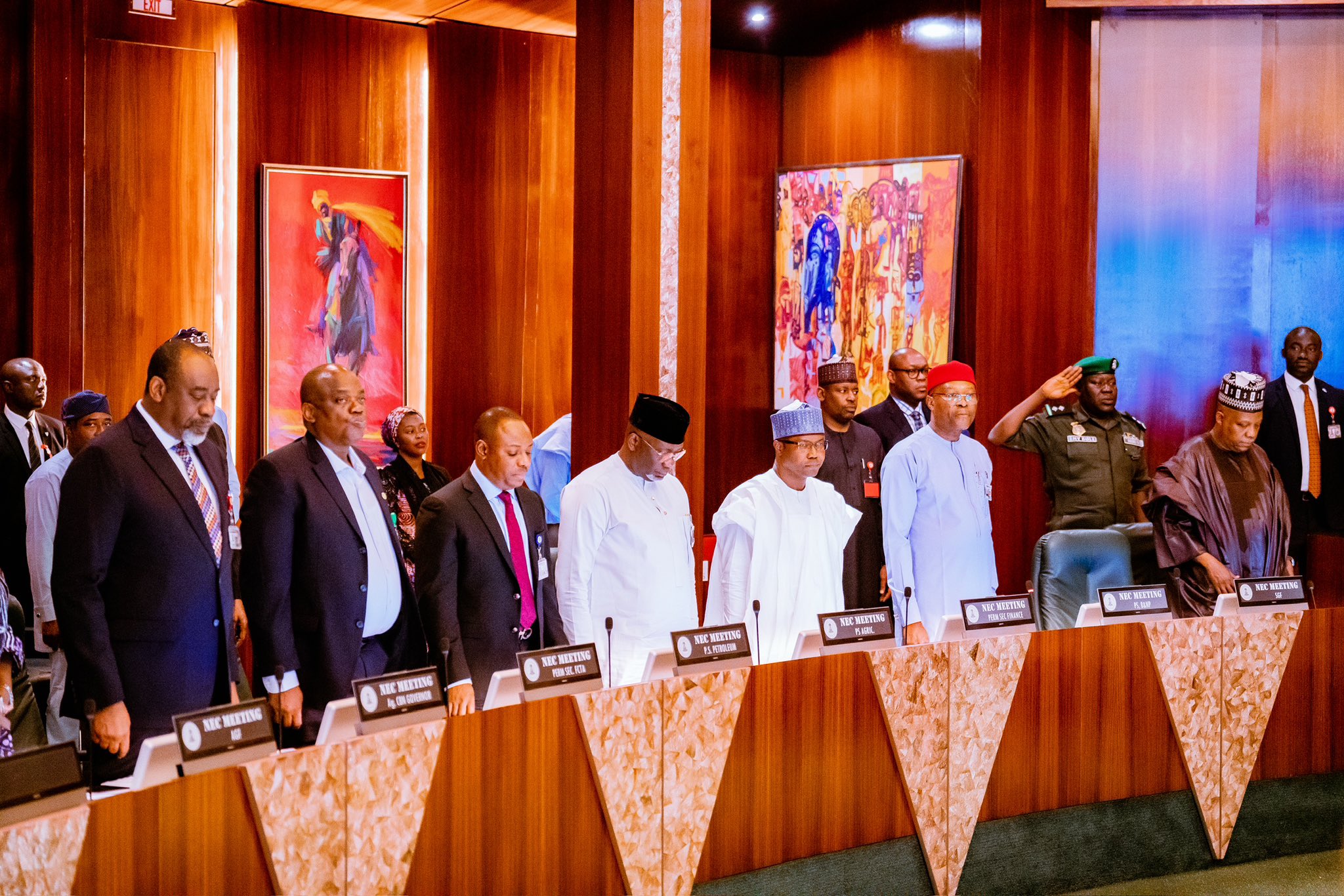
On 10 November the All Progressives Congress launched Bola Tinubu’s re-election manifesto. It is called From Reform to Prosperity, and it is the fullest account the president has given of what a second term would do. Nigerians vote in January 2027. Peter Obi and Atiku Abubakar are the main challengers.
The document is built on numbers, which is useful, because numbers can be checked. Six per cent annual growth by 2031. Seventy-eight thousand new security personnel. Two hundred thousand affordable homes. Youth unemployment halved.
Every one of those promises lands in a country that already has a number for the same thing. Set side by side, the distance between the two is the whole argument of this election.
From Reform to Prosperity: Renewed Hope 2.0 Beckons.
— APC Nigeria (@OfficialAPCNg) October 25, 2026
The scorecard
| The promise | The number that already exists | What that means |
|---|---|---|
| 200,000 affordable homes | A housing deficit of 14.9 million units, estimated by a technical committee set up by the housing ministry in 2025 | The promise covers 1.3 per cent of the gap |
| 50,000 additional police officers | Tinubu already ordered a 50,000-officer intake on 26 November 2025, under a nationwide security emergency | Not a new promise. The question is how many have been recruited in the year since |
| 28,000 additional military personnel | The police force alone has about 371,800 officers, of whom more than 100,000 are assigned to VIP protection, per an EU report | Deployment is the constraint, not headcount |
| 6 per cent annual growth by 2031 | GDP grew 4.43 per cent in Q2 2026, the fastest quarter in five years, after 3.89 per cent in Q1 | A jump of more than 1.5 points from the best quarter in half a decade, then held every year |
| Halve youth unemployment | Headline unemployment has sat near 4.1 per cent since the NBS adopted the ILO one-hour threshold in 2023, down from 33.3 per cent in Q4 2020 under the old framework | Halving 4 per cent and halving 33 per cent are not the same promise. The manifesto does not say which it means |
| Lower the cost of living | Inflation was 14 per cent in September 2026, down from a 34 per cent peak in 2024. Imported rice rose 184 per cent between May 2023 and October 2025, per the ICIR | Prices are climbing more slowly. They have not come down |
| Growth led by oil and agriculture | Most of Nigeria’s agricultural output is in the north, where insecurity has pushed farmers off their land | The growth plan and the security plan are the same plan |
| All of the above, funded | The 2026 budget is ₦68.32 trillion, of which ₦15.8 trillion goes to debt service | Twenty-three kobo in every naira is spent before anything is built |
Housing: one and a third per cent
The manifesto promises 200,000 affordable homes. In 2025 a technical committee set up by the housing ministry put Nigeria’s housing deficit at 14.9 million units. Two hundred thousand homes, delivered in full and on schedule, would close 1.3 per cent of it. That is not a small number of houses. It is a small number of houses relative to the problem it is offered as the answer to.
The honest version of the promise is that no single term closes a 14.9 million unit gap, and that what matters is whether the rate of building goes up. The manifesto does not frame it that way. Which means the first thing to check is not the 200,000. It is how many homes the first term actually finished.
Security: a promise that is already a year old
The manifesto proposes recruiting 28,000 additional military personnel and 50,000 additional police officers. The 50,000 is not new. On 26 November 2025, declaring a nationwide security emergency, Tinubu ordered the police to recruit an extra 20,000 officers, bringing the planned intake to 50,000. A year later the same 50,000 reappears in a manifesto as a forward-looking commitment.
2027: Tinubu Repackages 2023 Campaign Promises in New Manifesto
— Daily Trust (@daily_trust) November 11, 2026
So the question is not whether 50,000 officers would help. It is how many of the 50,000 already ordered have been recruited, trained and deployed since November 2025. That number exists. It has not been published.
There is a second problem underneath the first. The Nigeria Police Force already has roughly 371,800 personnel, and an EU report found that more than 100,000 of them — close to a third — are assigned to VIP protection. Adding 50,000 officers to a force that already spends 100,000 guarding individuals is a deployment question dressed up as a recruitment question. Ikenna Okonkwo of SBM Intelligence put the northern version of it plainly: the security situation there is more complex than a matter of recruiting more soldiers.
Growth: 6 per cent, starting from 4.43
Nigeria’s economy grew 4.43 per cent in the second quarter of 2026, its fastest quarter in five years, after 3.89 per cent in the first. The manifesto wants 6 per cent a year by 2031. That is more than a point and a half above the best quarter in half a decade, sustained every year for five years.
Where it is meant to come from is oil and agriculture. Oil is a price Nigeria does not set. Agriculture is concentrated in the north, where farmers are being pushed off their land. Joshua Osiyemi, who heads Tracka at the BudgIT Foundation, described the problem in human terms: farmers are not sure that when they go to their farms they have the chance of coming back home to meet their family.
Which makes the growth plan and the security plan the same plan. If the second one fails, the first one cannot work.
Unemployment: halve which number?
The manifesto promises to halve youth unemployment. Nigeria’s headline unemployment rate has sat near 4.1 per cent since 2023, when the National Bureau of Statistics adopted the ILO standard counting anyone who worked one hour in a week as employed. Under the previous framework, which required twenty hours, the rate was 33.3 per cent in the fourth quarter of 2020. The economy did not transform in between. The definition did.
Halving 4 per cent and halving 33 per cent are not the same promise. The manifesto does not say which number it is measuring against, and until it does the commitment cannot be graded at all. That is a large omission on a promise aimed at the biggest bloc of voters in the country.
The cost of living is the whole election
The macro picture is real and it is better. Headline inflation was 14 per cent in September 2026, down from a peak near 34 per cent in 2024. The gap between the official and parallel exchange rates has narrowed. SBM Intelligence’s Jollof Index, which tracks what it costs to cook a pot of jollof rice, fell 11.5 per cent between June and September 2026 — the sharpest decline in the index’s ten-year history. The World Bank and the IMF have both praised the reforms. Tinubu says removing the fuel subsidy freed over ₦1 trillion in its first two months, and ₦125bn has been put behind small businesses as grants and loans.
None of that is the same as things being cheaper. Inflation falling from 34 to 14 means prices are still rising, only more slowly, on top of everything they already rose. The ICIR found the price of imported rice up 184 per cent between May 2023 and October 2025. Osiyemi’s summary of what families tell his team is the sentence this election turns on: most Nigerian families are saying they cannot survive on ₦10,000 a day.
Okonkwo’s warning is shorter. These kinds of things can get punished in polls.
What all of it has to fit inside
Atiku Abubakar’s answer is to reverse. He said so again on 9 November, three days before the manifesto was read out.
My position stands! I will restore subsidy to make life easier and more affordable for Nigerians. -AA
— Atiku Abubakar (@atiku) November 9, 2026
The arithmetic says he cannot. Nigeria’s 2026 budget is about ₦68.32 trillion, of which ₦15.8 trillion goes to servicing debt — twenty-three kobo in every naira spent before a single house is built or officer recruited. Osiyemi’s verdict: we are not fiscally strong enough to say that we want to return to the subsidy. It is the same arithmetic we wrote about when the government asked the National Assembly for another ₦10.79 trillion in external borrowing.
And it binds both campaigns equally. Whoever wins in January inherits a budget where almost a quarter is already spent.
What to watch between now and January
Everything above is checkable, which is the point of writing it down.
- Housing completions in the first term, not units announced. The denominator is 14.9 million.
- How many of the 50,000 police ordered in November 2025 have actually been recruited, and where they were posted.
- Whether Q3 and Q4 2026 growth holds above 4 per cent, and whether any of it comes from agriculture.
- Which unemployment baseline the APC names when pressed. Until it names one, the promise cannot be scored.
- Food prices, not the inflation rate. The Jollof Index and the price of a bag of rice tell the story the headline number hides.
Tinubu won in 2023 with 8.79 million votes. The manifesto is an argument that the hard part is finished and the payoff comes next. The counter-argument does not need a manifesto. It is the price of rice.