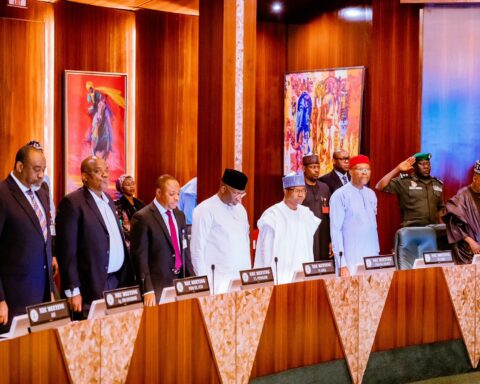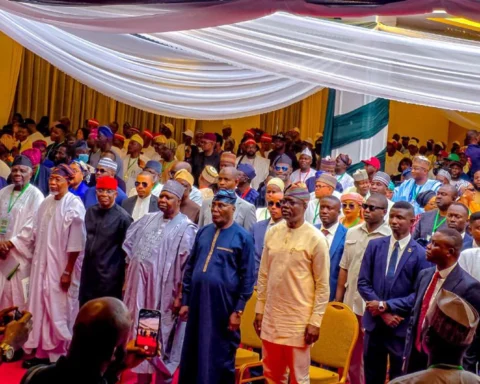
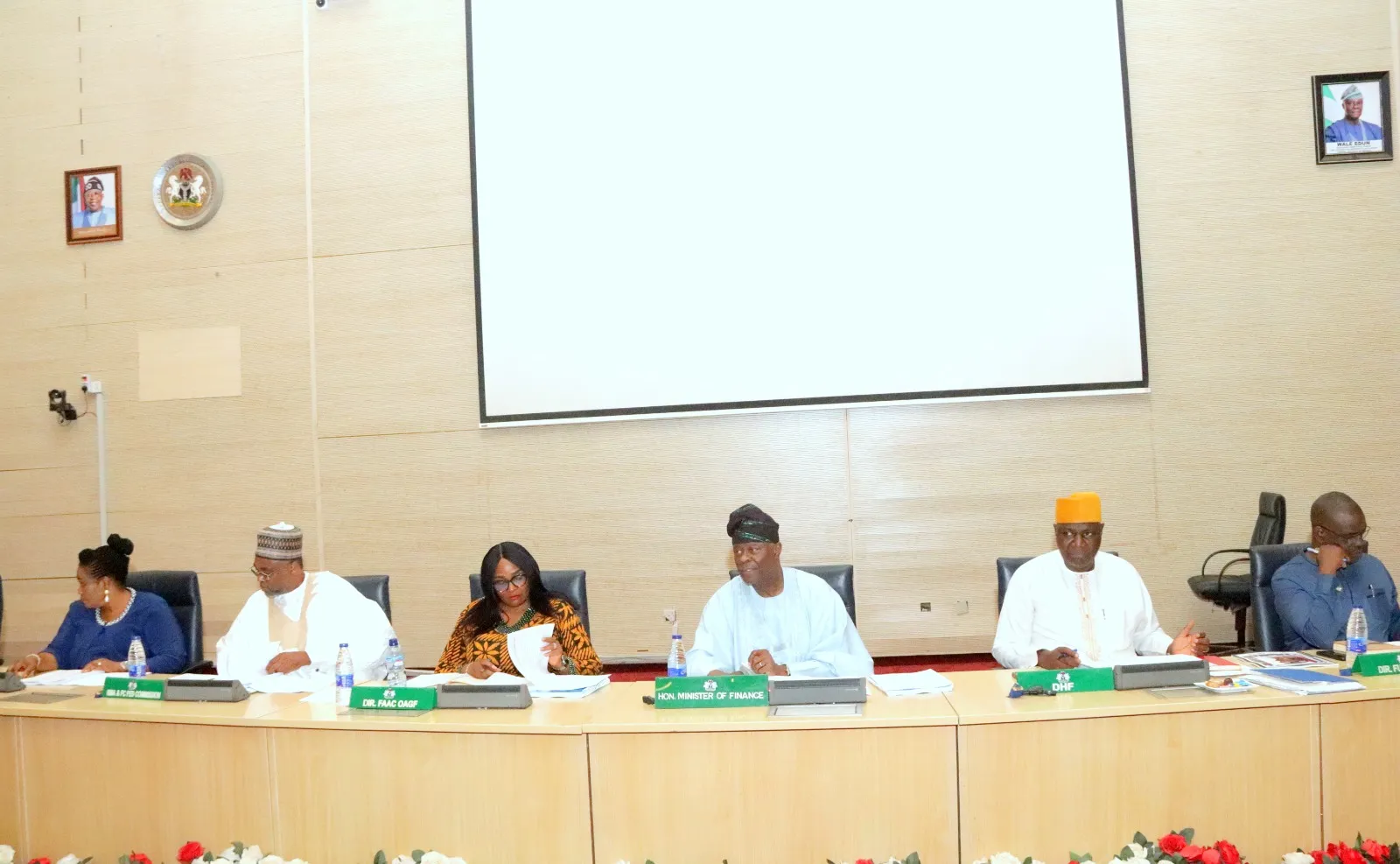
The Federal Government, the 36 states and the 774 local government councils shared ₦17.12 trillion from the Federation Account between January and August 2026. The Federal Government took ₦6.53 trillion, or 38.2 per cent. States took ₦6.21 trillion, or 36.2 per cent. Local governments took ₦4.38 trillion, or 25.6 per cent.
That is the most money ever to reach Nigeria’s sub-national governments in an eight-month stretch. The figures come from an analysis of the monthly FAAC reports published by the Office of the Accountant-General of the Federation.
The question is not whether the money arrived. It is what the money bought.
More money, more dependence
The intuitive assumption is that states flush with cash become less reliant on Abuja. The opposite happened.
BudgIT’s 2026 analysis of state finances found that FAAC allocations to states rose from ₦3.43 trillion in 2022 to ₦11.38 trillion in 2025 — a 232 per cent increase at a compound annual growth rate of 50.2 per cent. Over the same period, FAAC’s share of aggregate state revenue rose from 68.7 per cent to 73.3 per cent. Internally generated revenue’s share fell from 31.4 per cent to 26.7 per cent.
States are earning more from their own economies in absolute terms. They are just earning far less of it relative to what Abuja sends.
The clearest test of that is payroll. In 2025, 26 of the 34 states BudgIT assessed could not cover their personnel costs from internally generated revenue. Those 26 states generated ₦1.16 trillion internally and spent ₦1.91 trillion on salaries — a gap of ₦747 billion. Only eight states cleared their own wage bill: Lagos, Enugu, Ogun, Delta, Kaduna, Kwara, Abia and Anambra.
For the rest, the monthly FAAC cheque is not development finance. It is the salary account.
Johnson Chukwu, managing director of Cowry Asset Management, calls it a “feeding bottle or a cap-in-hand system of governance.” His assessment is blunter still: “Only very few states are in a position to fund their operations without FAAC allocation.”
The dependence runs deepest where it is least discussed. FAAC makes up roughly 90 per cent of Akwa Ibom’s recurrent revenue, 86.47 per cent of Anambra’s and 82.90 per cent of Abia’s.
The one thing states were handed, and did not take
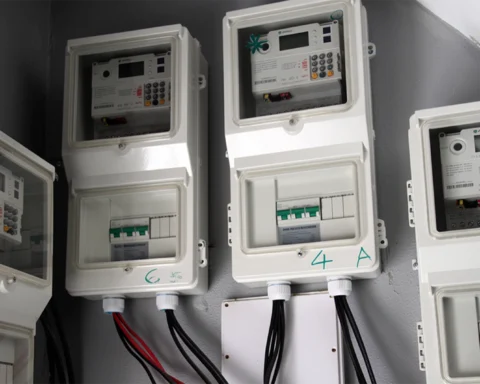
Electricity is where this stops being an accounting argument.
For decades, governors could say power was Abuja’s problem — generation, transmission and distribution all sat with federal institutions. The constitutional amendment and the Electricity Act 2023 removed that defence. States can now establish their own regulatory commissions, license independent power producers, attract private investment and build electricity infrastructure inside their own territories.
Three years on, NERC reported in May 2026 that only 15 of the 36 states had transitioned to regulating their own electricity markets. Fewer than half have started.
This is not a funding problem. ₦6.21 trillion reached state governments in eight months. It is a decision problem.
And the country is not short of the raw material. Nigeria holds roughly 209 trillion cubic feet of proven natural gas reserves, the largest in Africa, while households and businesses run on generators.
Money alone has already been tried at federal level. The managing director of FGN Power Company, Kenny Anuwe, put federal investment in the electricity sector at more than ₦10 trillion since privatisation in 2013. Senator Adams Oshiomhole has separately recalled Atiku Abubakar’s acknowledgement that the Obasanjo administration spent $16 billion on power. Nigerians are still buying diesel.
What is actually being built
The one new national instrument aimed at sub-national finances this month is a measurement tool, not an accountability one — and the distinction matters.
On 10 November, the Central Bank of Nigeria began digitalising its Sub-National Fiscal Survey across the 36 states, the FCT and all 774 local government areas. Run through the CBN’s Statistics Department, it replaces a largely manual reporting process with a digital platform, standardises submissions and allows a move to quarterly rather than occasional data. Sixteen states had been covered by 6 November, with the nationwide exercise due to finish in December.
That is a real improvement. Better data on what states collect and spend is the precondition for every argument about whether they spend it well. But it is a survey for policymakers, not a public register. It does not tell a resident of Aba what their local government did with its share, and it does not oblige anyone to answer for it.
The gap between what arrives and what gets delivered remains unmeasured in the only place it counts — in public.
The numbers that matter
| Figure | Amount |
|---|---|
| Shared by FG, states and LGs, Jan–Aug 2026 | ₦17.12trn |
| Federal Government share | ₦6.53trn (38.2%) |
| 36 states’ share | ₦6.21trn (36.2%) |
| 774 LGs’ share | ₦4.38trn (25.6%) |
| FAAC to states, 2022 → 2025 | ₦3.43trn → ₦11.38trn (+232%) |
| FAAC share of state revenue, 2022 → 2025 | 68.7% → 73.3% |
| States that could not pay salaries from IGR, 2025 | 26 of 34 |
| Their combined shortfall | ₦747bn |
| States regulating their own electricity market, May 2026 | 15 of 36 |
| Federal spend on electricity since 2013 | Over ₦10trn |
| Nigeria’s proven gas reserves | 209tcf — Africa’s largest |
What to watch
Three things will show whether this changes.
The first is the count of states regulating their own electricity markets. It was 15 in May. If it is still around 15 next May, the Electricity Act will have been law for four years without most governors using it.
The second is the IGR-to-payroll ratio. A state that cannot pay its own staff from its own revenue has no capacity to absorb a bad FAAC month, and FAAC months do move — the August 2026 distribution was the highest on record at ₦3.007 trillion, and the next one came in 19.3 per cent lower.
The third is what the CBN does with the data once it has it. Quarterly sub-national fiscal statistics are only useful to citizens if citizens can see them.
₦6.21 trillion went to the states in eight months. Fewer than half of them have taken up the one power that would let them fix the thing their residents complain about most.